

Lord of the Flies
by William Golding
“A deserted island strips away civilization, revealing the primal savagery that festers beneath the thin veneer of human society.”
Key Takeaways
- 1Civilization is a fragile, imposed construct. Without the external enforcement of laws and social consequences, the innate human impulse toward chaos and violence rapidly dismantles order.
- 2Fear is the most potent tool for control. The manipulation of an amorphous, imagined threat proves more effective in securing power than appeals to reason or collective good.
- 3The desire for power corrupts absolutely. Leadership, when divorced from ethical responsibility, devolves into a tyrannical pursuit of dominance and the subjugation of others.
- 4The beast resides within the human heart. The true source of monstrosity is not external but internal, born from unchecked id, collective hysteria, and moral abdication.
- 5Symbols of order are violently dismantled. The conch and Piggy's glasses—representing democratic discourse and rational intellect—are systematically destroyed by the rising savage faction.
- 6Innocence is not inherent but circumstantial. Childhood innocence proves to be a conditional state, swiftly eradicated by an environment devoid of adult supervision and moral guardrails.
Description
William Golding’s seminal novel strands a group of British schoolboys on an uninhabited coral island after a wartime evacuation goes awry. Initially, this absence of adults feels like liberation, and the boys, led by the fair-minded Ralph and guided by the intellectual but socially ostracized Piggy, attempt to replicate the structures of the world they left behind. They establish a rudimentary democracy using a conch shell as a symbol of the right to speak and prioritize the maintenance of a signal fire as their tether to hope and rescue.
This fragile order is immediately besieged by competing impulses. Jack, the head choirboy, embodies a charismatic, authoritarian alternative, his obsession with hunting pigs quickly morphing into a bloodlust for power and dominance. The boys fracture into two tribes: one clinging to Ralph’s eroding civility, the other surrendering to Jack’s rule of fear, ritual, and face paint that liberates them from individual accountability. The island itself becomes a character—a deceptive paradise that transforms into a psychological landscape reflecting their internal decay.
The novel’s central, haunting tension revolves around the ‘beast,’ a figment of the younger boys’ nightmares that gains terrifying substance in the collective psyche. This externalized fear is masterfully exploited by Jack, but the book’s profound revelation is that the true beast is an internal malignancy. This is crystallized in the harrowing, hallucinatory confrontation between the saintly, epileptic Simon and the ‘Lord of the Flies’—a pig’s head on a stake that articulates the evil innate within them all.
More than a survival adventure, *Lord of the Flies* is a relentless anthropological and psychological experiment. It interrogates the Hobbesian state of nature, the origins of social contract, and the dark underpinnings of human nature that societal structures merely suppress. Its enduring power lies in its allegorical precision, mapping the boys’ micro-society onto the macro failures of the adult world from which they came and to which they will return, irrevocably scarred.
Community Verdict
The critical consensus acknowledges the novel's undisputed status as a literary landmark, a brutally effective allegory that retains its disturbing power decades after publication. Readers are unanimously gripped by its core philosophical inquiry into the darkness of human nature and the fragility of social order, with many describing it as a terrifyingly plausible depiction of societal collapse.
However, a significant divide exists regarding its execution. Admirers praise Golding's stark, evocative prose and the potent, timeless symbolism of the conch, the fire, and the central parable itself. Detractors find the prose occasionally dense or choppy, the pacing uneven with long descriptive passages, and the characterizations—particularly of Piggy and Simon—deliberately archetypal to the point of feeling underdeveloped. The abrupt, irony-laden ending is a frequent point of debate, seen by some as a masterstroke and by others as a jarring deus ex machina. The novel's unrelenting pessimism is noted as both its greatest strength and its most polarizing feature.
Hot Topics
- 1The terrifying plausibility of the boys' rapid descent into savagery and what it reveals about inherent human nature.
- 2The symbolic meaning of the 'Lord of the Flies' (the pig's head) and its confrontation with Simon.
- 3Debate over the novel's pessimistic view of humanity versus being a realistic reflection of historical and social truths.
- 4The effectiveness and heavy-handedness of Golding's use of allegory and character archetypes (Ralph, Jack, Piggy, Simon).
- 5The jarring nature and profound irony of the naval officer's rescue at the climax of the story.
- 6The disturbing, almost ritualistic violence in the sow's killing scene and its symbolic implications.
Related Matches

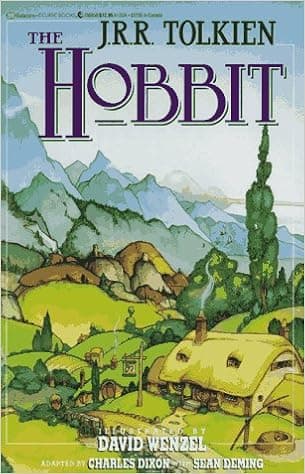
Popular Books

Harry Potter and the Deathly Hallows (Harry Potter, #7)
J.K. Rowling, Mary GrandPre

The Body Keeps the Score: Brain, Mind, and Body in the Healing of Trauma
Bessel A. van der Kolk

The House of Hades (The Heroes of Olympus, #4)
Rick Riordan

Never Split the Difference: Negotiating As If Your Life Depended On It
Chris Voss, Tahl Raz

The Hobbit: Graphic Novel
Chuck Dixon, J.R.R. Tolkien, David Wenzel, Sean Deming

Harry Potter and the Order of the Phoenix (Harry Potter, #5)
J.K. Rowling, Mary GrandPre

We Should All Be Feminists
Chimamanda Ngozi Adichie

Evicted: Poverty and Profit in the American City
Matthew Desmond

A Game of Thrones (A Song of Ice and Fire, #1)
George R.R. Martin

Why We Sleep: Unlocking the Power of Sleep and Dreams
Matthew Walker

Unbroken: A World War II Story of Survival, Resilience, and Redemption
Laura Hillenbrand

A Monster Calls
Patrick Ness, Jim Kay, Siobhan Dowd
Browse by Genres
History
Business
Leadership
Marketing
Management
Innovation
Economics
Productivity
Psychology
Mindset
Communication
Philosophy
Biography
Science
Technology
Society
Health
Parenting
Self-Help
Wealth
Investment
Relationship
Startups
Sales
Money
Fitness
Nutrition
Sleep
Wellness
Spirituality
AI
Future
Nature
Politics
Classics
Sci-Fiction
Fantasy
Thriller
Mystery
Romance
Literary
Historical
Religion
Law
Crime
Arts
Habits
Creativity