

Of Mice and Men
by John Steinbeck
“A devastating portrait of the American Dream as a shared delusion that cannot protect the innocent from a brutal world.”
Key Takeaways
- 1The American Dream is a collective, fragile fantasy. The shared vision of land ownership offers temporary solace but ultimately proves unattainable, exposing systemic hopelessness.
- 2Innocence paired with brute strength is a tragic formula. Lennie's childlike mind cannot govern his physical power, rendering him a perpetual danger to what he loves most.
- 3Loneliness is the universal condition of the dispossessed. Every character, from the isolated Crooks to the nameless wife, suffers a profound, corrosive isolation.
- 4True friendship demands unbearable moral sacrifice. George's final act redefines loyalty as a mercy killing, sparing Lennie a more cruel fate at the hands of others.
- 5Society fails to protect its most vulnerable members. The narrative exposes a world with no safety net for the mentally disabled, the aged, or the racially marginalized.
- 6Foreshadowing creates an inescapable atmosphere of doom. From the dead mouse to Candy's dog, the novella meticulously builds toward its inevitable, tragic conclusion.
Description
Set against the stark backdrop of Depression-era California, John Steinbeck’s novella follows the fate of two migrant ranch hands, George Milton and Lennie Small. George is shrewd and wiry; Lennie, a man of immense size and strength, possesses the mind of a young child. Bound by a shared history and a desperate camaraderie, they drift from job to job, their existence defined by grueling labor and profound loneliness. Their fragile stability hinges on George’s ability to manage Lennie’s innocent but dangerous fascination with soft things—a fascination that has forced them to flee previous employment.
Their latest position on a ranch in the Salinas Valley initially offers a glimmer of hope. They articulate a cherished, ritualistically repeated dream of owning a small plot of land, “living off the fatta the lan’,” where Lennie can tend rabbits. This vision briefly expands to include Candy, an aging, one-handed swamper with savings, and momentarily tempts even the bitter, segregated stable hand Crooks. The dream becomes a talisman against the pervasive despair of bunkhouse life.
However, the ranch is a powder keg of frustration and malice. Curley, the boss’s petty and aggressive son, immediately targets Lennie, while Curley’s lonely, unnamed wife seeks attention in the strictly male world, her presence a perceived threat. Steinbeck constructs these tensions with the precision of a stage play, each scene escalating the sense of impending catastrophe. The inevitable tragedy, born of Lennie’s fear and misunderstood strength, shatters the dream utterly.
More than a simple tragedy, *Of Mice and Men* is a piercing examination of the human need for connection and the brutal mechanisms that thwart it. It captures the specific plight of the itinerant worker while speaking universally about the longing for place, purpose, and companionship. Its enduring power lies in its uncompromising realism, its deeply empathetic characterizations, and its haunting exploration of what one must do for love in a merciless world.
Community Verdict
The critical consensus holds *Of Mice and Men* as a masterfully crafted, emotionally devastating classic. Readers universally praise Steinbeck’s concise, potent prose and his ability to forge profound empathy for deeply flawed characters within a remarkably short narrative. The relationship between George and Lennie is celebrated as a heartbreakingly authentic portrait of burdensome, yet genuine, friendship.
However, a significant and recurring point of contention is the treatment of Curley’s wife. A vocal segment of the community criticizes her characterization as a nameless “tart” or “jailbait,” arguing that the narrative itself participates in the sexist blame levied against her by the ranch hands, reducing a complex, lonely woman to a mere catalyst for tragedy. This critique tempers otherwise overwhelming admiration, creating a debate about authorial perspective versus social critique. The ending is almost unanimously described as a brutal, foreshadowed gut-punch that remains powerful even when anticipated, cementing the book’s unforgettable impact.
Hot Topics
- 1The moral justification and profound tragedy of George's final, merciful act toward Lennie.
- 2Critique of the novel's perceived sexism in the characterization and blaming of Curley's nameless wife.
- 3The potency of the American Dream as a shared, sustaining fantasy versus a cruel, unattainable illusion.
- 4Lennie as a symbol of innocent strength and society's failure to protect the mentally vulnerable.
- 5The pervasive theme of loneliness connecting all characters, from Crooks to Candy to Curley's wife.
- 6The effectiveness of Steinbeck's foreshadowing, from the dead mouse to the shooting of Candy's dog.
Related Matches

Popular Books

Harry Potter and the Deathly Hallows (Harry Potter, #7)
J.K. Rowling, Mary GrandPre

The Body Keeps the Score: Brain, Mind, and Body in the Healing of Trauma
Bessel A. van der Kolk

The House of Hades (The Heroes of Olympus, #4)
Rick Riordan

Never Split the Difference: Negotiating As If Your Life Depended On It
Chris Voss, Tahl Raz

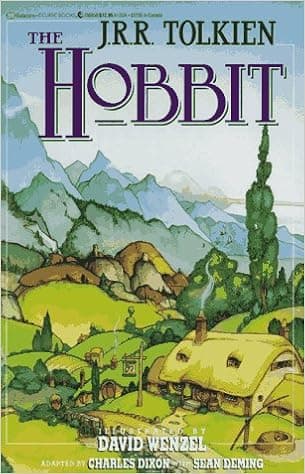
The Hobbit: Graphic Novel
Chuck Dixon, J.R.R. Tolkien, David Wenzel, Sean Deming

Harry Potter and the Order of the Phoenix (Harry Potter, #5)
J.K. Rowling, Mary GrandPre

We Should All Be Feminists
Chimamanda Ngozi Adichie

Evicted: Poverty and Profit in the American City
Matthew Desmond

A Game of Thrones (A Song of Ice and Fire, #1)
George R.R. Martin

Why We Sleep: Unlocking the Power of Sleep and Dreams
Matthew Walker

Unbroken: A World War II Story of Survival, Resilience, and Redemption
Laura Hillenbrand

A Monster Calls
Patrick Ness, Jim Kay, Siobhan Dowd
Browse by Genres
History
Business
Leadership
Marketing
Management
Innovation
Economics
Productivity
Psychology
Mindset
Communication
Philosophy
Biography
Science
Technology
Society
Health
Parenting
Self-Help
Wealth
Investment
Relationship
Startups
Sales
Money
Fitness
Nutrition
Sleep
Wellness
Spirituality
AI
Future
Nature
Politics
Classics
Sci-Fiction
Fantasy
Thriller
Mystery
Romance
Literary
Historical
Religion
Law
Crime
Arts
Habits
Creativity