

The Mother Tongue: English and How It Got That Way
by Bill Bryson
“A witty, anecdotal tour of English, celebrating its chaotic history and improbable global triumph.”
Key Takeaways
- 1English is a linguistic magpie, not a purebred. Its vast vocabulary is a patchwork of borrowings from Norse, Norman French, Latin, and countless other languages, forged through conquest and cultural exchange.
- 2Most grammar rules are arbitrary historical accidents. Prescriptive rules like not splitting infinitives were often imposed by 18th-century scholars attempting to force English into a Latin mold, with little linguistic basis.
- 3Spelling is a fossil record of pronunciation history. Our chaotic spelling preserves sounds from centuries past, like the 'k' in 'knight' or the 'gh' in 'night,' which were once pronounced.
- 4American English often preserves older British forms. Many so-called Americanisms, like 'gotten' or 'fall' for autumn, are original English usages that Britain later abandoned.
- 5Swearing reveals deep cultural and linguistic taboos. The evolution of profanity, from religious oaths to bodily functions, maps shifting societal anxieties and power structures over centuries.
- 6Language is fashion, not fixed science. Usage, pronunciation, and accepted vocabulary are in constant flux, driven by popular adoption rather than any central authority.
Description
Bill Bryson’s *The Mother Tongue* is not a formal linguistic treatise but a spirited, digressive romp through the history and eccentricities of the English language. It traces the improbable journey of a minor Germanic dialect, spoken by oppressed peasants, to its current status as a global lingua franca. The narrative revels in the chaotic, absorptive nature of English, shaped by Viking raids, Norman conquests, and centuries of borrowing from every language it encountered.
Bryson structures his exploration thematically, delving into the origins of English’s vast and stolen vocabulary, the historical quirks that produced its bewildering spelling, and the great schism between American and British English. He examines the haphazard development of grammar rules, often invented by self-appointed pedants, and the equally haphazard creation of dictionaries. The book is packed with linguistic curiosities, from the evolution of place names and surnames to the global spread of English and its endless capacity for wordplay.
The final chapters consider more playful aspects, including the history and sociology of swearing, and the intellectual games language enables. While celebratory of English’s flexibility and richness, the book also acknowledges its many inconsistencies and the immense difficulty it presents to learners. Bryson’s work serves as an accessible and entertaining primer, appealing to anyone curious about the words they use daily and the strange historical forces that shaped them.
Community Verdict
The critical consensus acknowledges Bryson's signature wit and engaging prose, which transform a potentially dry subject into a compulsively readable collection of anecdotes and trivia. Readers are charmed by his enthusiasm and the sheer volume of fascinating, often hilarious linguistic oddities he unearths.
However, this enthusiasm is shadowed by a pervasive and serious critique of the book's factual reliability. A significant portion of the readership, including many with linguistic knowledge or multilingual backgrounds, identifies numerous errors—from misrepresentations of Welsh pronunciation and Finnish profanity to the perpetuation of debunked myths like the multiplicity of Eskimo words for snow. This repeated pattern of sloppy scholarship erodes trust, leaving readers to wonder which delightful facts are genuine and which are fabrications bent for a punchline. The book is thus enjoyed as a light, entertaining diversion but dismissed as an authoritative source.
Hot Topics
- 1Widespread factual inaccuracies and sloppy scholarship, particularly regarding non-English languages like Welsh, Finnish, and German, undermining the book's credibility.
- 2The entertaining yet superficial anecdotal approach, prioritizing witty tangents over coherent, scholarly historical analysis.
- 3Bryson's Anglocentric and occasionally chauvinistic perspective, celebrating English's 'superiority' while mischaracterizing other languages.
- 4The enduring charm of Bryson's humorous writing style, which makes a complex subject accessible and enjoyable despite its flaws.
- 5Debates over the book's value as a populist introduction versus its danger as a source of misinformation for casual readers.
- 6The tension between prescriptive and descriptive grammar, with Bryson effectively debunking arbitrary rules imposed by historical pedants.
Related Matches
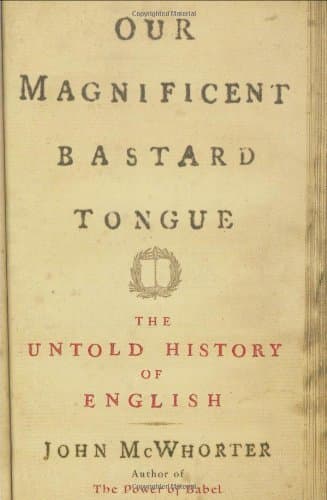
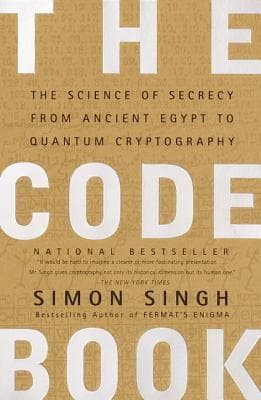
Popular Books

Harry Potter and the Deathly Hallows (Harry Potter, #7)
J.K. Rowling, Mary GrandPre

The Body Keeps the Score: Brain, Mind, and Body in the Healing of Trauma
Bessel A. van der Kolk

The House of Hades (The Heroes of Olympus, #4)
Rick Riordan

Never Split the Difference: Negotiating As If Your Life Depended On It
Chris Voss, Tahl Raz

The Hobbit: Graphic Novel
Chuck Dixon, J.R.R. Tolkien, David Wenzel, Sean Deming

Harry Potter and the Order of the Phoenix (Harry Potter, #5)
J.K. Rowling, Mary GrandPre

We Should All Be Feminists
Chimamanda Ngozi Adichie

Evicted: Poverty and Profit in the American City
Matthew Desmond

A Game of Thrones (A Song of Ice and Fire, #1)
George R.R. Martin

Why We Sleep: Unlocking the Power of Sleep and Dreams
Matthew Walker

Unbroken: A World War II Story of Survival, Resilience, and Redemption
Laura Hillenbrand

A Monster Calls
Patrick Ness, Jim Kay, Siobhan Dowd
Browse by Genres
History
Business
Leadership
Marketing
Management
Innovation
Economics
Productivity
Psychology
Mindset
Communication
Philosophy
Biography
Science
Technology
Society
Health
Parenting
Self-Help
Personal Finance
Investment
Relationship
Startups
Sales
Fitness
Nutrition
Wellness
Spirituality
Artificial Intelligence
Future
Nature
Classics
Sci-Fiction
Fantasy
Thriller
Mystery
Romance
Literary
Historical Fiction
Politics
Religion
Crime
Art
Creativity