
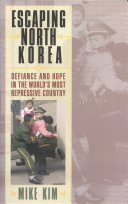
Escaping North Korea
"A harrowing journey through the modern underground railroad, revealing the human cost of survival under a totalitarian regime."
- 1The regime maintains power through systematic psychological control. Citizens are subjected to intense propaganda and ideological conditioning from birth, creating a pervasive atmosphere of fear and manufactured loyalty that isolates them from external truths.
- 2Famine is a political tool, not merely a natural disaster. The Arduous March of the 1990s, which killed millions, was exacerbated by state policy, revealing how food distribution is weaponized to control the population and enforce compliance.
- 3Escape is a six-thousand-mile odyssey of perpetual danger. The path to asylum involves navigating a clandestine network through China and Southeast Asia, with refugees facing constant threats of capture, trafficking, and repatriation to severe punishment.
- 4The borderlands are a zone of exploitation, particularly for women. Female refugees are acutely vulnerable to sex trafficking and forced marriages, caught between the brutality of the regime they fled and the predatory economies of the regions meant to offer sanctuary.
- 5Personal testimony dismantles the regime's fabricated reality. The candid confessions of soldiers, prisoners, and ordinary citizens to the author provide irrefutable, human-scale evidence that contradicts the state's mythology of unanimous support and prosperity.
- 6Faith can operate as both a sanctuary and a mobilizing force. For many refugees, Christianity provides not only spiritual solace but also a framework for resistance and a community that facilitates escape, though it places them at further risk.
Mike Kim’s 'Escaping North Korea' is not a distant geopolitical analysis but a visceral, ground-level account from the front lines of a humanitarian crisis. As one of the few Americans to operate extensively along the China-North Korea border, Kim spent four years embedded within the clandestine networks that assist refugees, offering an unparalleled view into the desperation and resilience of those fleeing the Hermit Kingdom. The book functions as a guided tour through the layers of repression, beginning with the psychological architecture of the state—the brainwashing, surveillance, and enforced idolatry that shape a North Korean’s consciousness from childhood.
Kim structures his narrative around the harrowing personal testimonies entrusted to him, moving from the systemic causes of suffering to the individual quest for survival. He details the catastrophic famine of the 1990s, known as the Arduous March, not as an abstract tragedy but through the memories of children who foraged for bark and roots. The account then follows the perilous escape routes, depicting a modern underground railroad where guides, brokers, and activists navigate a landscape fraught with Chinese security forces and traffickers. The journey reveals the grim paradox of escape: for many, especially women, the freedom sought beyond the border dissolves into new forms of bondage and exploitation.
The narrative gains its moral weight from Kim’s unique position as both witness and participant. He recounts tense border crossings, safe-house dramas, and the complex ethical calculations of aid work, all while preserving the centrality of the refugees' own voices. These voices—of defecting soldiers, former political prisoners, and trafficked women—collectively strip away the regime’s propagandistic veneer, confessing private doubts and traumas that contradict the image of monolithic loyalty.
Ultimately, the book serves as a crucial document of contemporary history and a testament to the human capacity for defiance. It is targeted at readers seeking to understand the human reality behind the headlines about nuclear threats and military parades, emphasizing that the true story of North Korea is written in the silent struggles of its people. Kim’s work stands as an essential, sobering counter-narrative to the regime’s fabricated reality, preserving stories that the dictatorship has tried desperately to erase.
Readers universally acknowledge the book's power as a devastating and essential eyewitness account, praising its unflinching dive into the horrors of the regime and the trauma of escape. The predominant critique centers on the author's Christian perspective, which some find occasionally prominent, though others defend it as a natural and non-proselytizing element of his humanitarian work. A frequent comparative note is that while profoundly moving, some find other journalistic accounts of North Korea, like 'Nothing to Envy,' to offer a more polished or comprehensive narrative.
- 1The role and prominence of the author's Christian faith in framing the humanitarian narrative and refugee testimonies.
- 2Comparisons to other works on North Korea, particularly Barbara Demick's 'Nothing to Envy,' regarding depth and narrative style.
- 3The emotional impact of the harrowing, first-person accounts of famine, trafficking, and torture on the reader.
- 4The book's value as a primary source versus a more structured historical or journalistic analysis of the regime.

How to Win Friends & Influence People
Dale Carnegie

The Artist's Way
Julia Cameron
Out of Control
Kevin Kelly
The Road to Financial Freedom
Bodo Schäfer
The Crash Course
Chris Martenson

Chip War: The Quest to Dominate the World's Most Critical Technology
Chris Miller
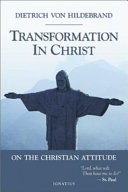
Transformation in Christ
Dietrich Von Hildebrand
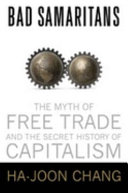
Bad Samaritans
Ha-Joon Chang

The Book of Basketball: The NBA According to The Sports Guy
Bill Simmons

Just Listen: Discover the Secret to Getting Through to Absolutely Anyone
Mark Goulston
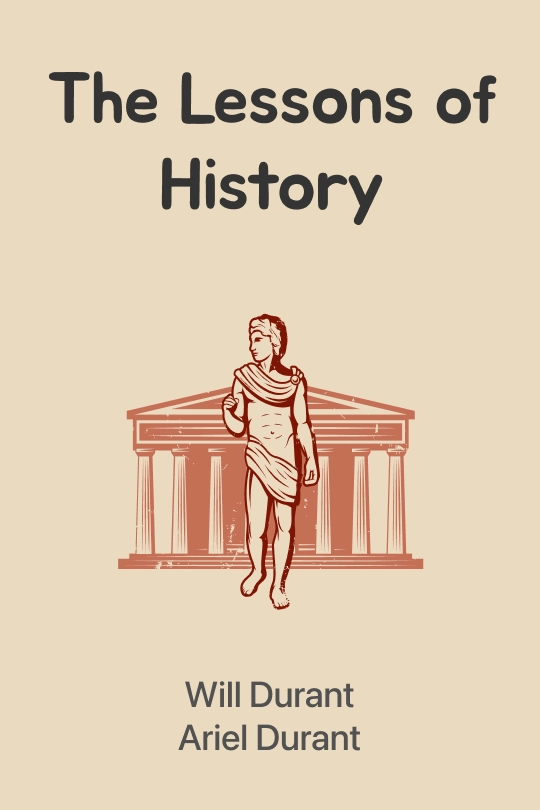
The Lessons of History
Will Durant

The Creative Habit
Twyla Tharp, Mark Reiter