
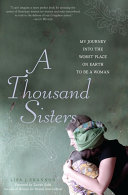
A Thousand Sisters
"A privileged American life is irrevocably shattered by a televised glimpse into the systematic rape and terror of Congolese women."
- 1Confront the commodification of suffering in humanitarian work. The memoir exposes the uncomfortable transactional nature of aid, where Western guilt can inadvertently reduce profound human tragedy to a fundraising metric, demanding a more relational and humble approach to intervention.
- 2Recognize that local conflicts are complex webs of militia power. The violence in Congo is not monolithic but a chaotic ecosystem of competing local militias, whose shifting allegiances and internal power struggles create a perpetual state of terror for civilians caught in the crossfire.
- 3Understand the cultural barriers to truth-telling in trauma. Deep-seated cultural taboos against accusing fellow Congolese can distort testimonies, forcing translators to alter narratives. This necessitates active, nuanced listening to decode the true perpetrators of violence beneath protective social codes.
- 4Move from paralyzed empathy to tangible, scalable action. The narrative charts a path from the overwhelming despair induced by distant atrocities to the creation of a concrete, replicable model of sponsorship and advocacy, proving individual initiative can catalyze systemic support.
- 5Accept the psychological cost of bearing witness to atrocity. Engaging directly with survivors of extreme violence carries a profound emotional and psychological toll, forcing a confrontation with one's own limits, privileges, and the haunting weight of secondary trauma.
Lisa Shannon’s memoir, A Thousand Sisters, begins not in the war-torn hills of the Democratic Republic of Congo, but in the comfortable confines of an American living room. The catalyst is a 2005 episode of The Oprah Winfrey Show that graphically detailed the ongoing humanitarian catastrophe in central Africa, a region then—and still—described as the worst place on earth to be a woman. Confronted with images of mass rape, mutilation, and a death toll in the millions, Shannon’s previously secure existence as a successful entrepreneur and fiancée fractures. The book documents her visceral, almost compulsive, response to this awakening, rejecting the paralysis of horror for the momentum of action.
Her initial act is a solo 30-mile run, a physical penance and fundraiser that evolves into the national organization Run for Congo Women. The memoir’s core, however, lies in her subsequent journeys into eastern Congo itself. Here, Shannon transitions from distant advocate to proximate witness, meeting the women whose sponsorships she helped secure. She listens to their harrowing testimonies of survival amid a conflict fueled by a lucrative scramble for mineral resources, where sexual violence is wielded as a weapon of war to destroy community fabric. The narrative meticulously avoids simplifying the conflict into a binary struggle, instead revealing a fragmented landscape of myriad local militias, Rwandan Interahamwe remnants, and national armies, all vying for control and terrorizing the populace.
The book operates on two parallel tracks: the external journey through a broken landscape and the internal journey of Shannon’s own disillusionment and growth. She confronts the ethical ambiguities of her role—the savior complex, the cultural gaffes, the frustrating inefficiencies of aid work, and the profound disconnect between Western intention and Congolese reality. Her education is steeped in humility as she learns that help is not a one-way transaction but a fraught exchange laden with power dynamics, mistrust, and the sheer logistical nightmare of operating in a failed state.
Ultimately, A Thousand Sisters is less a traditional travelogue or policy analysis and more a moral and psychological map of engagement. It targets readers seeking to understand the human reality behind headlines of African conflict, as well as those grappling with how to respond to global injustice from a position of privilege. Its legacy is its unflinching honesty, portraying advocacy not as a saintly pursuit but as a messy, heartbreaking, and essential struggle to reclaim humanity in the face of its systematic obliteration.
The consensus positions this as a vital, if harrowing, entry point into the Congolese conflict, praised for its raw honesty and accessible narrative that avoids academic dryness. Readers deeply value Shannon’s willingness to expose her own naivete and mistakes, finding this humility makes the humanitarian journey more relatable. The graphic depictions of violence, while acknowledged as necessary, are frequently cited as profoundly disturbing, limiting the book's accessibility to a general audience. Criticisms are sparse but note a lingering discomfort with the memoir’s focus on the author’s personal transformation alongside the Congolese women’s suffering.
- 1The ethical complexity of the author's position as a privileged Western woman documenting African trauma.
- 2The shocking revelation of numerous local militias, not just foreign groups, perpetrating violence against civilians.
- 3The cultural taboo against accusing fellow Congolese and how it obstructs accurate testimony and justice.
- 4The book's unflinching and graphic content, which is deemed essential yet extremely difficult to read.
- 5The model of moving from awareness to concrete action through sponsorship and organized runs.
Transformation in Christ
Dietrich Von Hildebrand

Chip War: The Quest to Dominate the World's Most Critical Technology
Chris Miller

Bad Samaritans
Ha-Joon Chang

Amusing Ourselves to Death: Public Discourse in the Age of Show Business
Neil Postman

Permanent Record
Edward Snowden

The Intelligent Investor
Benjamin Graham

The Lessons of History
Will Durant
Radical Markets: Uprooting Capitalism and Democracy for a Just Society
Eric A. Posner, E. Glen Weyl

How to Win Friends & Influence People
Dale Carnegie

Code: The Hidden Language of Computer Hardware and Software
Charles Petzold
Breath: The New Science of a Lost Art
James Nestor

The Book of Basketball: The NBA According to The Sports Guy
Bill Simmons