

The Treatment
by C.L. Taylor
“A teenage girl infiltrates a reform academy to rescue her brother from a state-sanctioned program of psychological brainwashing.”
Key Takeaways
- 1Institutional authority can mask profound ethical corruption. The novel exposes how systems of control, presented as benevolent reform, can systematically strip individuals of their autonomy and identity.
- 2Sibling loyalty can forge an unbreakable moral compass. Drew's mission is propelled not by grand ideology but by a primal, protective love that proves more resilient than institutional programming.
- 3True conformity is achieved through psychological dismantling. The 'Treatment' represents the ultimate coercion: not merely punishing bad behavior, but erasing the rebellious self to create compliant citizens.
- 4The most potent resistance often comes from the marginalized. A bullied, introverted girl becomes the catalyst for dismantling a powerful conspiracy, demonstrating that strength emerges from perceived weakness.
- 5Near-future dystopia feels chillingly plausible. The setting leverages contemporary anxieties about government overreach and behavioral science to create a threat that feels immediately recognizable.
- 6Friendship is a strategic asset in oppressive environments. Alliances formed in captivity, like Drew's with Mouse, become essential for survival and executing a successful resistance.
Description
In a near-future Britain, the Residential Reform Academy at Norton House promises to rehabilitate society's most disruptive teenagers. When sixteen-year-old Drew Finch's brother, Mason, is sent there following another expulsion, her initial relief curdles into dread. A mysterious encounter with a doomed psychologist delivers a frantic message from Mason: the academy is not a school but a facility for systematic brainwashing. The so-called 'Treatment' is a state-backed program designed to obliterate individual personality and produce perfectly obedient subjects.
Disbelieved by her family, Drew engineers her own admission to the academy. Inside the deceptively grand estate, she finds a prison-like environment of surveillance, psychological manipulation, and escalating coercion. Forging a crucial alliance with her roommate, Mouse, Drew navigates a social hierarchy filled with hostile peers and watchful staff. She discovers the Treatment's horrific methodology, which employs isolation, sensory deprivation, and advanced behavioral conditioning to break and rebuild minds.
The narrative accelerates as Drew's investigation reveals the conspiracy's staggering scale and governmental complicity. Her mission evolves from a simple rescue to a desperate fight for her own sanity and the liberation of all the academy's victims. The climax is a tense battle of wits and wills against a system that has anticipated every form of rebellion, forcing Drew to confront the limits of her own courage and resilience.
Community Verdict
The critical consensus positions *The Treatment* as a gripping and unnervingly plausible entry into the YA thriller genre. Readers praise its relentless, fast-paced narrative and the compelling evolution of Drew from a withdrawn introvert into a determined and resourceful heroine. The core concept of psychological brainwashing is widely regarded as the novel's greatest strength, generating palpable tension and a chilling sense of realism that lingers beyond the final page.
However, a segment of the audience, particularly adult readers, finds certain elements simplistic. Criticisms focus on some supporting characters, like the bullies, being perceived as one-dimensional archetypes, and a final act that feels somewhat rushed in its resolution. The novel is celebrated for its clean, propulsive prose and its ability to translate complex psychological concepts into an accessible and thought-provoking thriller for its target audience.
Hot Topics
- 1The frightening plausibility of the brainwashing 'Treatment' and its roots in real behavioral science, which made the dystopia feel immediate and credible.
- 2Drew Finch's character arc from a bullied, isolated teenager to a resilient and strategic leader, driving the narrative's emotional core.
- 3The novel's pacing and short chapters, which created a relentlessly suspenseful and 'unputdownable' reading experience for many.
- 4Comparisons to other dystopian and psychological thrillers, such as Cecelia Ahern's *Flawed* or *The Demon Headmaster*, situating it within a broader genre conversation.
- 5The portrayal of adult authority figures and institutional power as uniformly corrupt or incompetent, a classic but effective YA trope.
- 6The ending's execution, with some readers desiring a more extended or detailed resolution to the escape and the aftermath of the conspiracy.
Related Matches
Popular Books

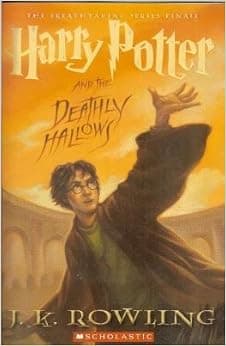
Harry Potter and the Deathly Hallows (Harry Potter, #7)
J.K. Rowling, Mary GrandPre

The Body Keeps the Score: Brain, Mind, and Body in the Healing of Trauma
Bessel A. van der Kolk

The House of Hades (The Heroes of Olympus, #4)
Rick Riordan

Never Split the Difference: Negotiating As If Your Life Depended On It
Chris Voss, Tahl Raz

The Hobbit: Graphic Novel
Chuck Dixon, J.R.R. Tolkien, David Wenzel, Sean Deming

Harry Potter and the Order of the Phoenix (Harry Potter, #5)
J.K. Rowling, Mary GrandPre

We Should All Be Feminists
Chimamanda Ngozi Adichie

Evicted: Poverty and Profit in the American City
Matthew Desmond

A Game of Thrones (A Song of Ice and Fire, #1)
George R.R. Martin

Why We Sleep: Unlocking the Power of Sleep and Dreams
Matthew Walker

Unbroken: A World War II Story of Survival, Resilience, and Redemption
Laura Hillenbrand

A Monster Calls
Patrick Ness, Jim Kay, Siobhan Dowd
Browse by Genres
History
Business
Leadership
Marketing
Management
Innovation
Economics
Productivity
Psychology
Mindset
Communication
Philosophy
Biography
Science
Technology
Society
Health
Parenting
Self-Help
Wealth
Investment
Relationship
Startups
Sales
Money
Fitness
Nutrition
Sleep
Wellness
Spirituality
AI
Future
Nature
Politics
Classics
Sci-Fiction
Fantasy
Thriller
Mystery
Romance
Literary
Historical
Religion
Law
Crime
Arts
Habits
Creativity