

The Postmortal
by Drew Magary
“A chilling thought experiment where humanity's greatest triumph—a cure for aging—becomes the catalyst for its own slow, violent, and inevitable collapse.”
Key Takeaways
- 1Immortality amplifies humanity's worst impulses. The removal of a natural endpoint erodes long-term commitment, fuels hedonistic excess, and accelerates resource hoarding, revealing a profound societal selfishness.
- 2The cure for aging is not a cure for death. It merely guarantees a violent or accidental end, trading a peaceful decline for a lifetime of accumulating risk and trauma.
- 3Overpopulation is an immediate and catastrophic consequence. A halted death rate against an unchanged birth rate creates unsustainable population pressure, leading to resource wars and societal breakdown within decades.
- 4Fundamental human institutions become obsolete. Marriage, career, retirement, and even religion are rendered meaningless or dangerously distorted when framed against an infinite timeline.
- 5The government becomes a manager of death, not life. To manage overpopulation, state-sanctioned euthanasia evolves from a voluntary service into a tool of population control and social cleansing.
- 6Psychological endurance has a finite limit. The human psyche is not built for eternity; witnessing endless cycles of loss and decay leads to profound emotional exhaustion and nihilism.
Description
In the near future of 2019, a geneticist stumbles upon a "cure" for aging—a simple injection that halts the biological clock. While it does not prevent death from disease or violence, it promises eternal youth. The novel is presented as the recovered digital journal of John Farrell, a 29-year-old lawyer who secures the illegal treatment, locking himself into the physique and perspective of a young man for what becomes a terrifyingly long lifetime.
Through Farrell's blog-like entries and interspersed news articles, the narrative charts the chaotic societal rollout of "the Cure." Initial euphoria gives way to stark new realities: the collapse of permanent marriage, the rise of pro-death terrorist cells, and the chilling phenomenon of "freezer moms" who administer the cure to infants. As decades pass, the unchecked global population explodes, straining food, water, and energy resources to the breaking point. Farrell’s personal journey mirrors the world’s decay, as he drifts from aimless hedonism into the grim profession of an "end specialist," a government agent facilitating assisted suicide for a fee.
The world descends into a pre-apocalyptic dystopia characterized by roving gangs, totalitarian state interventions, and new, brutal religious cults like the Church of Man. Technological progress stagnates while social order unravels. Farrell, now emotionally hollowed by cumulative loss and the burden of his work, becomes a passive witness to the systemic failure of civilization.
Spanning over sixty years, *The Postmortal* is a rigorous and harrowing work of sociological speculation. It functions as a cautionary tale about unintended consequences, exploring the profound philosophical question of whether mortality is not a flaw to be fixed, but the essential boundary that gives human life its shape, urgency, and meaning.
Community Verdict
The critical consensus positions *The Postmortal* as a brilliantly conceived but unevenly executed thought experiment. Readers universally praise the chilling plausibility of its core premise and the relentless, logical extrapolation of a world without aging. The novel is celebrated for its intellectual ambition, generating fervent discussion about overpopulation, marriage, religion, and the psychological weight of eternity. Many find its first half masterful, a page-turning descent into a terrifyingly recognizable dystopia.
However, a significant portion of the community finds the execution lacking, particularly in the latter sections. The protagonist, John Farrell, is frequently criticized as a shallow, passive vessel whose emotional numbness fails to sustain reader investment over the decades-long narrative. The novel's structure—jumping forward in time via blog snippets—is seen by some as clever, but by others as disjointed, leading to underdeveloped world-building and a reliance on sensational, action-oriented plot turns. The final act, especially a sudden romantic subplot, strikes many as a contrived and tonally inconsistent attempt to inject meaning into an otherwise bleak trajectory.
Hot Topics
- 1The terrifying plausibility of the novel's societal collapse, with many readers citing its logical extrapolation of overpopulation and resource depletion as its greatest strength.
- 2Frustration with the passive and emotionally shallow protagonist, John Farrell, whose lack of depth undermines the emotional weight of the decades-spanning tragedy.
- 3Debate over the novel's structure and pacing, with some praising the blog-style format and others criticizing its disjointed time jumps and underdeveloped world-building.
- 4The ethical and philosophical dilemmas posed by the Cure, particularly regarding government-sanctioned euthanasia and the distortion of marriage and religion.
- 5Strong division over the final act, where a sudden romantic storyline is seen as either a poignant human counterpoint or a jarring, unearned narrative contrivance.
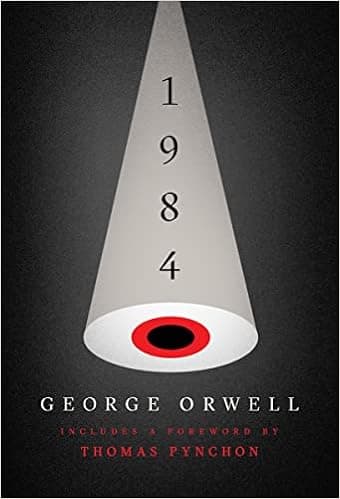
- 6Comparisons to other dystopian works, with readers debating whether it stands alongside classics like 1984 or suffers in comparison due to its character and plot execution.
Related Matches

Popular Books

Harry Potter and the Deathly Hallows (Harry Potter, #7)
J.K. Rowling, Mary GrandPre

The Body Keeps the Score: Brain, Mind, and Body in the Healing of Trauma
Bessel A. van der Kolk

The House of Hades (The Heroes of Olympus, #4)
Rick Riordan

Never Split the Difference: Negotiating As If Your Life Depended On It
Chris Voss, Tahl Raz

The Hobbit: Graphic Novel
Chuck Dixon, J.R.R. Tolkien, David Wenzel, Sean Deming

Harry Potter and the Order of the Phoenix (Harry Potter, #5)
J.K. Rowling, Mary GrandPre

We Should All Be Feminists
Chimamanda Ngozi Adichie

Evicted: Poverty and Profit in the American City
Matthew Desmond

A Game of Thrones (A Song of Ice and Fire, #1)
George R.R. Martin

Why We Sleep: Unlocking the Power of Sleep and Dreams
Matthew Walker

Unbroken: A World War II Story of Survival, Resilience, and Redemption
Laura Hillenbrand

A Monster Calls
Patrick Ness, Jim Kay, Siobhan Dowd
Browse by Genres
History
Business
Leadership
Marketing
Management
Innovation
Economics
Productivity
Psychology
Mindset
Communication
Philosophy
Biography
Science
Technology
Society
Health
Parenting
Self-Help
Wealth
Investment
Relationship
Startups
Sales
Money
Fitness
Nutrition
Sleep
Wellness
Spirituality
AI
Future
Nature
Politics
Classics
Sci-Fiction
Fantasy
Thriller
Mystery
Romance
Literary
Historical
Religion
Law
Crime
Arts
Habits
Creativity