
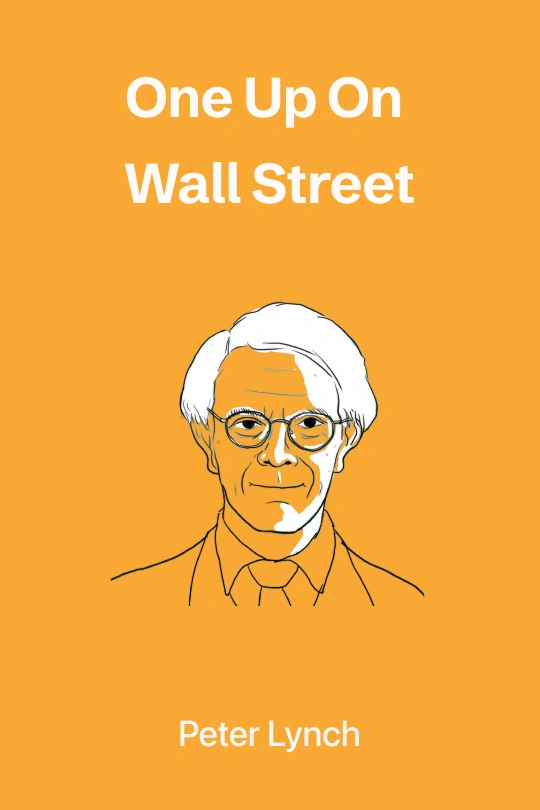
One Up On Wall Street: How To Use What You Already Know To Make Money In The Market
"Democratizes investing by teaching individuals to leverage their everyday observations into market-beating stock picks."
- 1Invest in what you know and understand firsthand. Superior returns come not from complex financial models, but from recognizing promising companies through personal experience as a consumer or professional before Wall Street does.
- 2Classify stocks to manage expectations and risk. Lynch's taxonomy—slow growers, stalwarts, fast growers, cyclicals, asset plays, and turnarounds—provides a framework for understanding a company's potential and appropriate holding period.
- 3Seek ten-baggers but maintain a diversified portfolio. While the goal is to find stocks that increase tenfold, achieving this requires patience and a portfolio where the gains from a few winners can offset the inevitable losses from others.
- 4Ignore short-term market noise and economic forecasts. Attempting to time the market is a fool's errand. Long-term success depends on a company's fundamental performance, not macroeconomic predictions or daily price fluctuations.
- 5Conduct fundamental analysis with a checklist. Evaluate a company's financial health, competitive advantage (moat), debt levels, and earnings growth potential. Favor simple, understandable businesses over complex, trendy ones.
- 6Recognize that personal biases are a primary obstacle. Fear and greed often lead to poor decisions like selling winners too early or holding losers too long. Discipline and emotional detachment are critical components of strategy.
Peter Lynch’s One Up on Wall Street dismantles the myth that successful investing requires professional expertise or insider information. Instead, Lynch argues that the individual investor possesses a potent, underutilized advantage: the ability to spot exceptional investment opportunities through ordinary life. As the legendary manager of Fidelity’s Magellan Fund, Lynch delivered unprecedented returns by applying this very principle, turning mundane observations about retail trends, product quality, and workplace innovation into billion-dollar portfolio decisions.
The book’s core methodology is the systematic exploitation of this "edge." Lynch provides a pragmatic framework for evaluating stocks, famously categorizing them into six types—from slow-growing "stalwarts" to high-potential "fast growers" and speculative "turnarounds." This taxonomy helps investors set realistic expectations and tailor their strategies. He emphasizes rigorous, yet accessible, fundamental analysis, advising readers to understand a company’s business model, financial strength, and competitive moat before investing a single dollar.
Beyond mechanics, Lynch offers profound psychological counsel. He warns against the paralysis of market timing and economic forecasting, advocating for a long-term, research-driven approach. The narrative is rich with anecdotes from his own career, illustrating both triumphant ten-baggers and humbling mistakes, which serve to demystify the process and normalize the inevitability of some losses within a diversified portfolio.
Its enduring significance lies in its democratizing ethos. Lynch translates the opaque world of finance into a logic of common sense, empowering amateurs to become confident, disciplined investors. The book remains a foundational text not for promoting get-rich-quick schemes, but for teaching a sustainable philosophy of observation, analysis, and patience that is as applicable today as it was during his tenure.
The consensus celebrates the book as a timeless, accessible masterpiece that demystifies investing. Readers universally praise its clear, narrative-driven prose, which contrasts sharply with denser financial texts, making complex concepts digestible for novices. The primary critique is minor, acknowledging that some specific tactics may seem more feasible for those with certain professional resources, though this is overwhelmingly viewed as a footnote to the book's universally valuable core principles.
- 1The unparalleled accessibility and clarity for non-financial readers compared to classics like *The Intelligent Investor*.
- 2Debating the relevance of Lynch's specific examples in today's digital market versus the enduring nature of his core philosophy.
- 3The practical challenge for average investors in applying the "invest in what you know" principle to find genuine market advantages.
The Creative Habit
Twyla Tharp, Mark Reiter
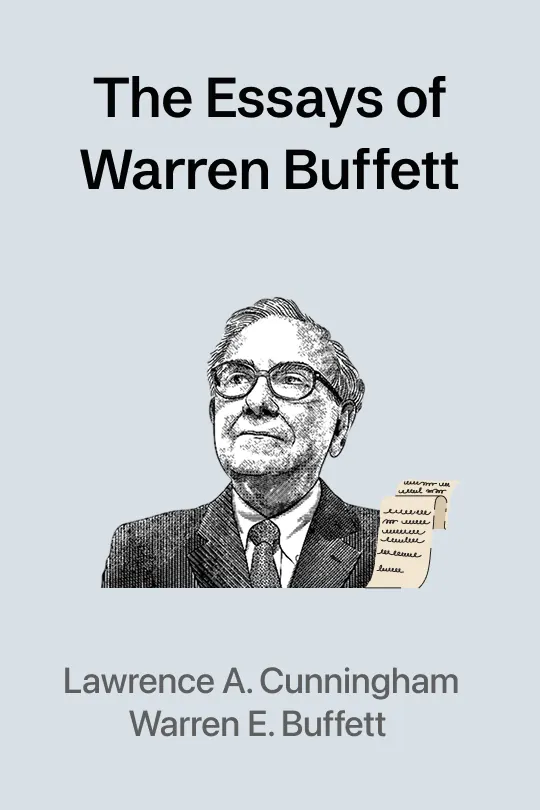
The Essays of Warren Buffett: Lessons for Corporate America
Lawrence A. Cunningham, Warren Buffett
Blueprints: How mathematics shapes creativity
Marcus du Sautoy
The Art of Contrarian Trading
Carl Futia

Breakthrough: The Quest for Life-Changing Medicines
Dr William Pao
The Crash Course
Chris Martenson

The Almanack of Naval Ravikant
Naval Ravikant, Eric Jorgenson
The Intelligent Investor
Benjamin Graham
Boom: Bubbles and the End of Stagnation
Byrne Hobart

The Road to Financial Freedom
Bodo Schäfer

The Norwegian Method
Brad Culp
Bad Samaritans
Ha-Joon Chang