
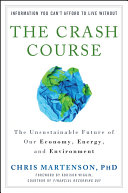
The Crash Course
"A biological imperative dismantles the myth of perpetual economic growth, revealing the coming collision with energy and environmental limits."
- 1Treat the economy as a subsystem of the environment. Conventional economics operates in a vacuum, ignoring the biophysical foundations of energy and resource flows. True sustainability requires recognizing that all economic activity is constrained by planetary boundaries.
- 2Exponential growth in a finite system always leads to a crash. Drawing from biological models, Martenson argues that our relentless pursuit of GDP growth mirrors the unsustainable expansion of a bacterial colony, destined for a precipitous decline when critical resources are exhausted.
- 3Peak oil and energy depletion are imminent economic threats. The era of cheap, abundant energy is ending. The declining energy return on investment (EROI) for fossil fuels will act as a powerful drag on industrial civilization, making current consumption patterns untenable.
- 4The financial system is a fragile proxy for real wealth. Mounting debt and complex financial instruments have decoupled monetary value from tangible assets like food, energy, and minerals. This paper wealth is vulnerable to a severe correction when resource scarcity reasserts itself.
- 5Prioritize resilience and local preparedness over abstract optimism. Given the converging crises, individual and community resilience—through local food systems, skill diversification, and financial prudence—becomes a rational response, not a pessimistic one.
- 6Challenge the dogma of technological salvation. While innovation is crucial, blind faith in future technological miracles to solve resource depletion is a dangerous form of procrastination. Action based on current physical realities is essential.
Chris Martenson’s The Crash Course is not a conventional economic treatise but a systems-level autopsy of modern civilization, diagnosing its fatal reliance on the impossible trinity of infinite growth, finite resources, and exponential debt. Framing the global economy through the unyielding laws of biology and physics, Martenson argues that we have built a spectacular but fragile edifice on a foundation of depleting fossil fuels and ecological overshoot.
The book meticulously deconstructs three interconnected pillars: the economy, energy, and the environment. It begins by explaining the exponential function—how seemingly slow growth suddenly hits a wall—and applies this to population, resource consumption, and debt. The energy analysis confronts the concept of peak oil and the critical metric of Energy Return on Investment (EROI), demonstrating how declining fuel quality threatens every facet of industrialized life. Concurrently, it examines the financial system as a lagging indicator, revealing how currency, debt, and compounding interest create illusory wealth detached from tangible assets.
Martenson then synthesizes these threads into a compelling narrative of convergence. He illustrates how food production, freshwater access, and mineral extraction are all directly tied to energy flows, and how their simultaneous strains will amplify economic shocks. The work avoids mere doom-mongering by grounding its predictions in historical precedents of collapsed societies and current, measurable trends in resource depletion and environmental degradation.
Ultimately, The Crash Course serves as a stark primer for the twenty-first century, targeting readers unprepared by traditional education or mainstream media for the coming era of contraction. Its legacy lies in reframing ‘progress’ and providing the analytical tools to see beyond short-term market fluctuations to the underlying physical realities that will dictate our long-term future.
The consensus positions the book as an essential yet challenging wake-up call. Readers universally praise its compelling synthesis of complex systems and its power to fundamentally shift one's worldview regarding energy and finance. The primary criticism centers on a repetitive narrative structure and a dated feel in some predictive passages, with a few finding its tone relentlessly grim. It is deemed most valuable for those new to the concepts of peak resources and seeking a foundational, interdisciplinary framework.
- 1The book's repetitive structure and pacing, seen as either necessary reinforcement or a tedious flaw.
- 2The accuracy and relevance of its decade-old predictions in light of subsequent economic and energy events.
- 3The tension between its alarming, dystopian outlook and its pragmatic value for personal and community preparedness.

How to Win Friends & Influence People
Dale Carnegie

The Road to Financial Freedom
Bodo Schäfer
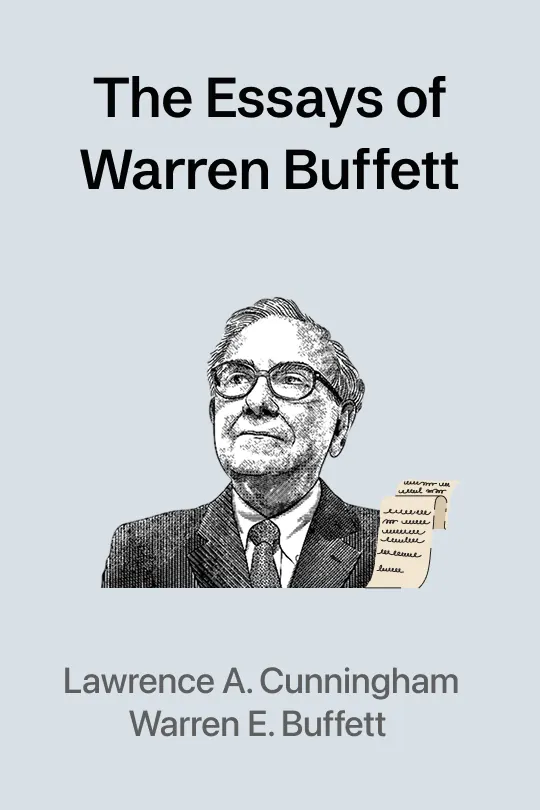
The Essays of Warren Buffett: Lessons for Corporate America
Lawrence A. Cunningham, Warren Buffett

The Intelligent Investor
Benjamin Graham
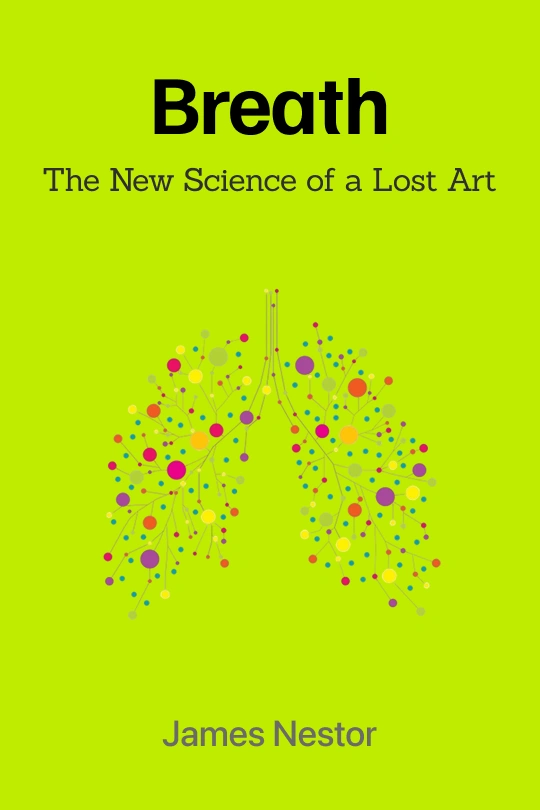
Breath: The New Science of a Lost Art
James Nestor

Permanent Record
Edward Snowden
Blueprints: How mathematics shapes creativity
Marcus du Sautoy

The Almanack of Naval Ravikant
Naval Ravikant, Eric Jorgenson

Sapiens: A Brief History of Humankind
Yuval Noah Harari
The Creative Habit
Twyla Tharp, Mark Reiter

Just Listen: Discover the Secret to Getting Through to Absolutely Anyone
Mark Goulston
Bad Samaritans
Ha-Joon Chang