
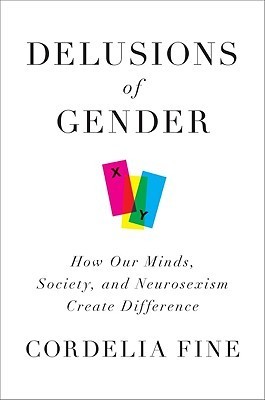
Delusions of Gender: How Our Minds, Society, and Neurosexism Create Difference
"Debunks the myth of the 'hardwired' brain, revealing gender as a cultural construct sculpted by unconscious bias."
- 1Neurosexism masquerades as objective science. Popular neuroscience often presents culturally convenient stereotypes about male and female brains as biological fact, using flawed methodologies and over-interpreted brain scans to validate pre-existing social hierarchies.
- 2The brain is profoundly plastic and context-dependent. Neural structure and function are not fixed but are continuously shaped by experience, environment, and, critically, by the pervasive cultural expectations associated with one's perceived gender.
- 3Stereotype threat powerfully inhibits performance. The mere awareness of a negative stereotype—such as women being bad at math—can create anxiety that measurably undermines performance, creating a self-fulfilling prophecy that is mistaken for innate difference.
- 4Methodological flaws plague gender difference research. Studies claiming hardwired differences frequently suffer from small sample sizes, publication bias, lack of replication, and the misinterpretation of statistically insignificant findings as major discoveries.
- 5Unconscious bias shapes perception from infancy. Parents, teachers, and media interact differently with children based on perceived gender, creating divergent environments that reinforce stereotypical skills and interests long before any potential biological factors could manifest.
- 6The 'status quo' is defended by pseudoscientific narratives. Claims of intrinsic brain difference serve a potent political function, naturalizing social inequality and absolving society of the need to address systemic sexism and discriminatory structures.
In Delusions of Gender, cognitive neuroscientist Cordelia Fine launches a meticulous and devastating critique of the popular science claiming that innate, hardwired differences between male and female brains explain behavioral disparities. She identifies this trend as 'neurosexism'—a modern, biologically-sanitized form of prejudice that uses the authority of neuroscience to justify traditional gender roles. The book enters a cultural moment eager to find a simple biological story for complex social phenomena, revealing how these narratives gain traction despite shaky empirical foundations.
Fine systematically dismantles the evidence, guiding the reader through a forensic examination of flawed studies, overhyped brain imaging results, and logical fallacies. She demonstrates how researchers frequently mistake correlation for causation, ignore the plasticity of the brain, and fail to control for the profound effects of social context. The narrative moves from critiquing specific claims about spatial reasoning, empathy, and mathematical ability to exposing the broader pattern of confirmation bias that permeates the field.
Beyond critique, Fine synthesizes research in social psychology to offer a more compelling alternative: the concept of the 'gendered brain' as a product of continuous feedback between biology and culture. She explores mechanisms like stereotype threat, implicit bias, and prenatal hormone exposure, showing how small initial influences are amplified by social environment into significant disparities. The argument shifts the focus from static, deterministic biology to dynamic, reciprocal influences.
Ultimately, the book serves as both a vital consumer guide to interpreting scientific claims and a powerful argument for social change. Its significance lies in freeing the discussion of gender from biological essentialism, highlighting how the belief in hardwired difference itself becomes a barrier to equality. It is essential reading for anyone interested in psychology, neuroscience, feminism, or the subtle ways culture writes itself onto our minds.
The critical consensus celebrates Fine's work as a revelatory and necessary corrective, praised for its rigorous scholarship, incisive wit, and accessible dismantling of neurosexist dogma. Readers report a profound shift in perspective, describing the book as intellectually liberating and a masterclass in critical thinking. The primary critique, from a minority, is a desire for more prescriptive solutions beyond the diagnostic critique, though most agree its power lies in this foundational demolition of flawed assumptions.
- 1The book's effectiveness as a tool for changing minds on deeply held beliefs about innate gender difference.
- 2Discussions of Fine's witty, engaging writing style making dense scientific critique accessible and enjoyable.
- 3Debate over the shocking extent of methodological flaws and bias within published gender difference research.
- 4Reflections on personal experiences of stereotype threat and implicit bias following the book's explanations.

The Creative Habit
Twyla Tharp, Mark Reiter

The Artist's Way
Julia Cameron

Outliers: The Story of Success
Malcolm Gladwell

Stumbling on Happiness
Daniel Gilbert

Radical Markets: Uprooting Capitalism and Democracy for a Just Society
Eric A. Posner, E. Glen Weyl

Code: The Hidden Language of Computer Hardware and Software
Charles Petzold

Chip War: The Quest to Dominate the World's Most Critical Technology
Chris Miller

The Crash Course
Chris Martenson

The Intelligent Investor
Benjamin Graham

Amusing Ourselves to Death: Public Discourse in the Age of Show Business
Neil Postman

The Essays of Warren Buffett: Lessons for Corporate America
Lawrence A. Cunningham, Warren Buffett

Bad Samaritans
Ha-Joon Chang