
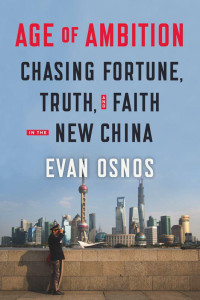
Age of Ambition: Chasing Fortune, Truth, and Faith in the New China
"A revelatory portrait of modern China's defining conflict: the explosive rise of the individual against the enduring grip of the Party."
- 1Understand the collision between individual aspiration and state control. The book frames contemporary China as a battleground where the Party's authoritarian mechanisms constantly strain against a populace empowered by new wealth, information, and global awareness.
- 2Recognize the profound psychological dislocation of rapid transformation. Decades of breakneck economic growth have created a society unmoored from tradition, where citizens scramble to find new sources of meaning, faith, and identity beyond mere materialism.
- 3Discard simplistic Western caricatures of China as monolithic. Osnos dismantles the binary of China as either unstoppable juggernaut or corrupt failure, revealing a complex, contradictory nation of immense energy and internal tension.
- 4See the entrepreneurial desperation as a primary national engine. A visceral, get-ahead mentality, born from recent poverty, fuels an intensity of ambition that outstrips Western norms and propels both innovation and social strain.
- 5Appreciate the courage embedded in ordinary acts of expression. The narratives highlight the personal risks taken by citizens who speak openly, illustrating the constant negotiation between self-censorship and the human desire for truth.
- 6Analyze nationalism as a deliberate response to ideological vacuum. The Party cultivates 'angry youth' patriotism and anti-Western sentiment not merely for control, but to fill a spiritual void left by the retreat of communism and traditional values.
Evan Osnos’s Age of Ambition captures China during the pivotal first decades of the 21st century, a period of staggering economic ascent and profound social dislocation. The book moves beyond geopolitical abstraction to ground its analysis in the lived experiences of a diverse cast—from migrant workers and internet entrepreneurs to artists, dissidents, and Party officials. Osnos identifies the central, volatile dynamic of the era: the historic unleashing of individual ambition after centuries of collective struggle, now crashing against the Communist Party’s determination to maintain ultimate political and ideological control.
Through intimate reportage, the work explores the manifestations of this clash. It charts the gold-rush mentality that followed Deng Xiaoping’s reforms, documenting a society scrambling for wealth as the primary measure of success. Yet, it simultaneously reveals the spiritual and moral hangover that accompanied this frenzy, tracing searches for meaning in everything from evangelical Christianity to Tibetan Buddhism, and from avant-garde art to fervent nationalism. The narrative meticulously details the tools of state containment—the Great Firewall, the cadre of online commentators, the calibrated repression—and the constant, ingenious methods of circumvention employed by citizens.
The book functions as an essential corrective to outsider perspectives, rejecting the twin caricatures of China as either a mechanistic superpower or a brittle autocracy. Instead, it presents a nation of overwhelming vitality and contradiction, where hope and frustration are inextricably linked. Osnos argues that understanding this internal tension—between the drive for personal fulfillment and the architecture of authoritarianism—is key to comprehending China’s trajectory and its impact on the world.
Age of Ambition is ultimately a work of historical portraiture, aimed at readers seeking to move beyond headlines and grasp the human texture of a global power in the throes of reinvention. It is less a policy primer than a deeply humanistic account of a society asking, and answering in myriad ways, fundamental questions about truth, faith, and the price of fortune in the modern age.
The critical consensus celebrates the book as a masterful, nuanced, and essential work of contemporary reportage. Readers praise its unparalleled access to the human stories behind China's meteoric rise, finding it both profoundly enlightening and deeply humane. The primary critique is not of the content but of the emotional weight it carries; some note the exhaustive, almost overwhelming nature of confronting such vast societal contradictions. It is universally regarded as a vital text for understanding the psychological and social realities of modern China.
- 1The book's ability to make an overwhelmingly complex subject feel intimate and comprehensible through personal narratives.
- 2Exhaustion and emotional drain as a response to the unrelenting tension between hope and oppression depicted.
- 3The work's value as an indispensable corrective to simplistic Western media portrayals of China.
- 4Debate on whether the portrayed 'ambition' is a uniquely Chinese force or a universal human drive amplified by specific historical conditions.

Sapiens: A Brief History of Humankind
Yuval Noah Harari
Radical Markets: Uprooting Capitalism and Democracy for a Just Society
Eric A. Posner, E. Glen Weyl

Chip War: The Quest to Dominate the World's Most Critical Technology
Chris Miller
The Crash Course
Chris Martenson

How to Win Friends & Influence People
Dale Carnegie
The Lessons of History
Will Durant
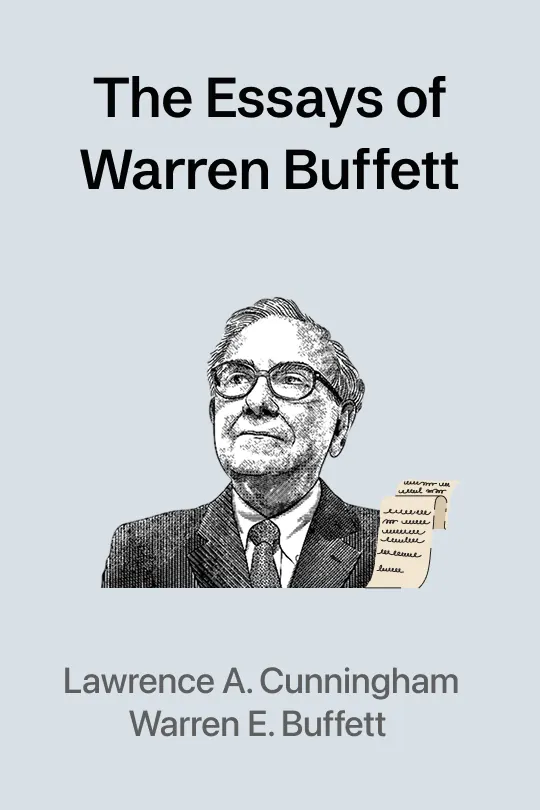
The Essays of Warren Buffett: Lessons for Corporate America
Lawrence A. Cunningham, Warren Buffett
Bad Samaritans
Ha-Joon Chang

The Intelligent Investor
Benjamin Graham

The Road to Financial Freedom
Bodo Schäfer

Amusing Ourselves to Death: Public Discourse in the Age of Show Business
Neil Postman

Out of Control
Kevin Kelly