
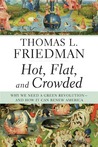
Hot, Flat, and Crowded: Why We Need a Green Revolution--and How It Can Renew America
"America's future leadership depends on pioneering a green revolution to solve our era's defining environmental and economic crises."
- 1Reframe the green revolution as a national renewal project. The climate crisis is not a burden but a historic opportunity for America to rebuild its economy, reassert its innovative leadership, and inspire a new era of nation-building focused on the common good.
- 2Confront the convergence of climate change, globalization, and population growth. Global warming, a flattening world with a burgeoning middle class, and rapid population expansion create a dangerously unstable 'hot, flat, and crowded' planet that demands systemic, not incremental, solutions.
- 3Lead through radical innovation in clean energy technology. Sustaining American influence requires outpacing global competitors in developing and deploying the renewable energy systems and efficiency standards that will define the next century's infrastructure.
- 4Recognize that superficial green consumerism is insufficient. Meaningful progress demands moving beyond commodified environmentalism to embrace profound cognitive shifts, structural economic overhaul, and significant changes in both consumption habits and civic priorities.
- 5Leverage strategic policy to catalyze systemic change. Government must play a decisive role through intelligent tax incentives, robust funding for research and development, and regulations that properly price carbon and environmental degradation.
- 6Connect environmental and financial sustainability directly. The same short-termism and irresponsible consumption that ravaged the natural world also precipitated the Great Recession, proving that ecological and economic health are fundamentally intertwined.
Thomas L. Friedman diagnoses the early 21st century’s central, converging crises: a planet growing hotter through climate change, flatter through hyper-connected globalization, and more crowded from rapid population growth. This volatile triad—the condition of being 'hot, flat, and crowded'—threatens to create unprecedented instability in resource distribution, economic opportunity, and geopolitical power. Friedman argues that this environmental challenge is inextricably linked to America’s economic and strategic standing, framing it not as a niche concern but as the definitive issue of our time.
At the heart of the book is a detailed case for a comprehensive Green Revolution, which Friedman posits as the only viable path forward. He meticulously outlines how the United States, by marshaling its historic capacity for innovation and large-scale mobilization, can develop the clean energy technologies and efficiency standards needed for sustainability. This revolution requires moving beyond token gestures and green consumerism to overhaul national infrastructure, rethink urban planning, and transform energy production. The project is presented as a modern analogue to the space race or the building of the interstate highway system—a unifying, national endeavor.
The narrative further draws a direct parallel between the causes of the ecological crisis and the 2008 financial meltdown, identifying a common root in reckless short-term thinking and a failure to account for long-term risks. Friedman contends that solving one crisis inherently addresses the flaws that caused the other, advocating for policies that price environmental externalities and incentivize long-term investment. He calls for a new political and social consensus that values conservation, innovation, and intelligent design as core economic principles.
Ultimately, Hot, Flat, and Crowded is a work of patriotic persuasion aimed at policymakers, business leaders, and engaged citizens. It seeks to replace the narrative of sacrifice with one of opportunity, arguing that leading the green revolution is the key to renewing America’s economy, restoring its global moral authority, and ensuring its national security in a resource-constrained world. The book’s legacy lies in its ambitious attempt to fuse environmentalism with a robust vision for American renewal.
Readers largely applaud the book's urgent, ambitious scope and its compelling framing of the climate crisis as a strategic opportunity for American renewal. The passionate argument for a systemic green revolution resonates strongly, though some find Friedman's detailed explanations occasionally long-winded and his optimistic faith in national mobilization somewhat naive given political realities. The consensus is that it remains a vital, thought-provoking, and necessary call to action that transcends superficial environmentalism.
- 1The book's optimistic faith in American innovation and mobilization versus the perceived political impracticality of its proposals.
- 2Friedman's detailed, information-dense style, seen as either comprehensively persuasive or occasionally verbose and overwhelming.
- 3The effectiveness of framing environmental action as a patriotic project for national renewal rather than a punitive burden.
- 4The direct parallel drawn between the causes of the ecological crisis and the 2008 financial recession.

The Psychology of Money: Timeless Lessons on Wealth, Greed, and Happiness
Morgan Housel
Bad Samaritans
Ha-Joon Chang

Code: The Hidden Language of Computer Hardware and Software
Charles Petzold
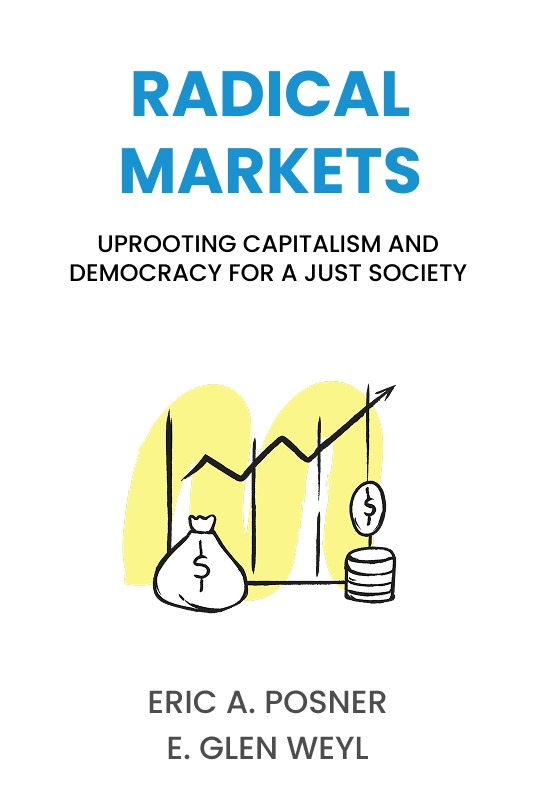
Radical Markets: Uprooting Capitalism and Democracy for a Just Society
Eric A. Posner, E. Glen Weyl

Sapiens: A Brief History of Humankind
Yuval Noah Harari

The Intelligent Investor
Benjamin Graham
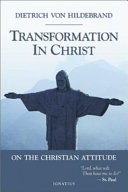
Transformation in Christ
Dietrich Von Hildebrand

The Uplift War (The Uplift Saga, #3)
David Brin

Out of Control
Kevin Kelly

Amusing Ourselves to Death: Public Discourse in the Age of Show Business
Neil Postman
The Crash Course
Chris Martenson

Chip War: The Quest to Dominate the World's Most Critical Technology
Chris Miller