
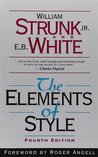
The Elements of Style
"A foundational manifesto for clear, vigorous, and direct communication in the English language."
Nook Talks
- 1Omit needless words to achieve clarity and force. Every superfluous word dilutes meaning and weakens prose. Precision emerges from ruthless editing, where each remaining word carries essential weight and purpose.
- 2Place emphatic words at the end of a sentence. Sentence structure dictates rhythm and impact. The terminal position holds the greatest weight, making it the natural home for a sentence's most important idea or image.
- 3Write with nouns and verbs, not adjectives and adverbs. Strong, specific nouns and active verbs create vivid imagery and propel narrative. Over-reliance on modifiers often signals a failure to find the precise core word.
- 4Prefer the active voice to energize your prose. The active voice establishes clear agency and creates more dynamic, confident sentences. It places the actor at the forefront, making statements direct and accountable.
- 5Express coordinate ideas in similar form for parallelism. Parallel construction creates rhythm, clarity, and logical balance. It signals the equality of ideas and allows the reader to comprehend complex relationships with ease.
- 6Revise and rewrite to discover what you truly mean to say. Writing is thinking made visible. The first draft captures raw thought; subsequent revisions refine and clarify that thought, distilling it into its most potent form.
First conceived by William Strunk Jr. for his Cornell students and later immortalized by his former pupil E.B. White, The Elements of Style stands as a slender, authoritative pillar in the landscape of English composition. It is less a comprehensive grammar than a concentrated philosophy of writing, advocating for a prose style defined by clarity, brevity, and vigor. Its enduring premise is that effective communication requires discipline—a conscious rejection of the vague, the pretentious, and the superfluous in favor of the direct and the concrete.
The book’s core is Strunk’s original "Elementary Rules of Usage" and "Principles of Composition," a series of axiomatic commands that range from grammatical fundamentals to stylistic imperatives. These are not gentle suggestions but firm directives: "Omit needless words," "Use the active voice," "Place the emphatic words of a sentence at the end." Each rule is illustrated with examples of flabby or erroneous writing contrasted with its corrected, more muscular counterpart. White’s celebrated contribution, "An Approach to Style," expands this foundation into a more nuanced discussion of the writer’s voice and attitude.
This section elevates the manual from a set of prescriptions to a guide for developing a personal yet disciplined style. It tackles subtler challenges: avoiding affectation, using figures of speech fresh, and ensuring the natural sound of the language. The book operates on the belief that rules exist not to stifle creativity but to provide the essential structure upon which genuine expression can be built.
Its significance lies in its transformative ambition for the writer-reader relationship. It targets anyone who wishes to write with greater precision and impact, from students and journalists to novelists and business professionals. More than a reference, it is a formative text that has shaped generations of writers by instilling the conviction that clean, honest prose is both a moral and a practical virtue, fundamental to clear thought and effective argument.
The consensus treats the book as a revered but dated classic, a necessary foundation rather than a final authority. Readers universally praise its unparalleled clarity and foundational wisdom for beginners, crediting it with instilling essential discipline. However, a significant critical thread argues its strict prescriptions can become a stylistic straitjacket, potentially stifling voice and leading to overly rigid, formulaic writing in those who follow it too dogmatically.
- 1The debate over whether its rules are timeless fundamentals or outdated prescriptions that inhibit modern stylistic freedom.
- 2Its role as an indispensable primer for writing beginners versus its limitations for advanced stylistic development.
- 3The value of its dogmatic, imperative tone as effective pedagogy versus criticism of its potential to encourage rigid thinking.
The Crash Course
Chris Martenson

Code: The Hidden Language of Computer Hardware and Software
Charles Petzold

Out of Control
Kevin Kelly
The Art of Contrarian Trading
Carl Futia
Bad Samaritans
Ha-Joon Chang
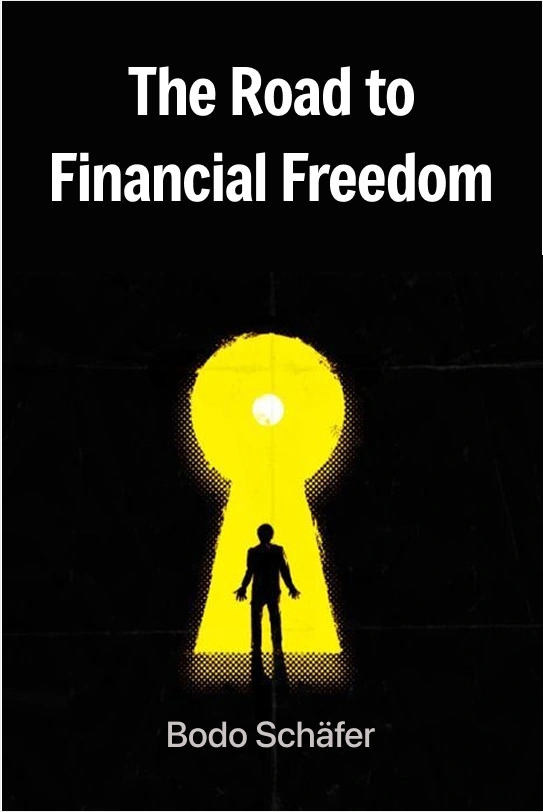
The Road to Financial Freedom
Bodo Schäfer
The Creative Habit
Twyla Tharp, Mark Reiter

The Intelligent Investor
Benjamin Graham
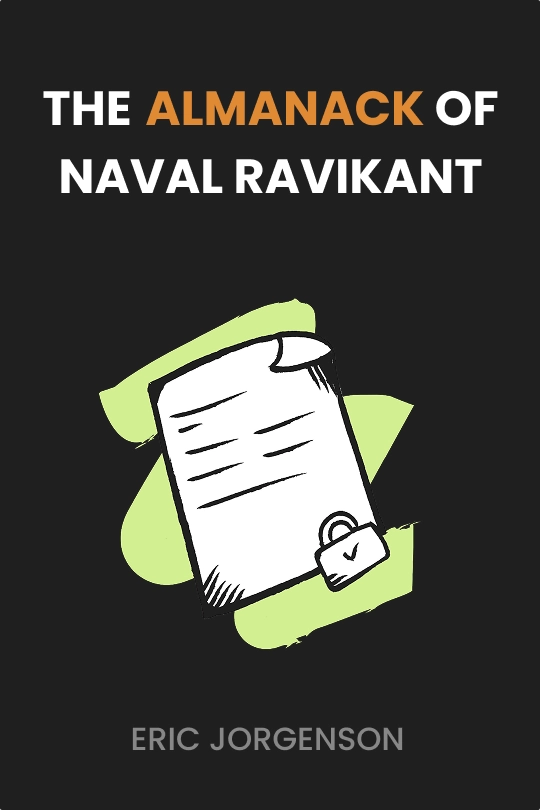
The Almanack of Naval Ravikant
Naval Ravikant, Eric Jorgenson
Stumbling on Happiness
Daniel Gilbert
Transformation in Christ
Dietrich Von Hildebrand
The Artist's Way
Julia Cameron