
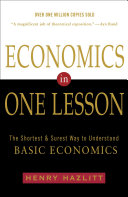
Economics in One Lesson
"Economic policy must be judged by its long-term consequences for all, not its immediate benefits for a select few."
Nook Talks
- 1Trace the consequences of policy for all groups. The central lesson of economics is to evaluate the long-term, secondary effects of any act or policy on the entire community, not just the visible, immediate benefits for a privileged faction.
- 2Reject the broken window as a model for growth. Destruction does not create prosperity; it merely diverts resources from unseen, productive uses to visible repair, resulting in a net loss for society's wealth and well-being.
- 3Understand that government spending is taxation by another name. All public expenditure must ultimately be funded by the private sector, either through direct taxes, inflation, or borrowing, which constitutes deferred taxation and crowds out private investment.
- 4Recognize that machinery creates more jobs in the long run. Technological displacement is temporary; automation lowers costs, increases production, and raises real wages, freeing capital and labor for new, more sophisticated industries and consumer goods.
- 5See inflation as a hidden tax and destroyer of savings. The artificial expansion of the money supply erodes purchasing power, distorts price signals, misallocates capital, and unjustly redistributes wealth from savers and fixed-income earners to debtors and the state.
- 6Identify tariffs and subsidies as burdens on the consumer. Protectionist measures and corporate welfare raise prices, stifle competition, and protect inefficient industries at the direct expense of the broader public, reducing overall economic vitality.
Henry Hazlitt's 'Economics in One Lesson' is a foundational text of libertarian economic thought, distilling the principles of the Austrian School into a single, powerful heuristic: the art of economics lies in examining the long-term consequences of any policy for all groups, not merely the short-term effects for a privileged few. Published in 1946, the book positions itself as a corrective to the economic fallacies Hazlitt saw pervading public discourse, fallacies born from a persistent tendency to overlook secondary and unintended effects.
Hazlitt systematically dismantles these fallacies through a series of concise chapters, each applying his core lesson to a specific interventionist policy. He begins with the parable of the broken window, illustrating how destruction is mistaken for stimulus, and proceeds to analyze tariffs, price controls, minimum wage laws, and government subsidies. In each case, he argues that while the immediate benefit to a particular group is visible, the longer-term costs—borne by consumers, taxpayers, and unseen entrepreneurs—are ignored, leading to a net loss for society.
The book’s methodology is relentlessly logical, tracing the flow of capital and labor through the economy to reveal how government intervention disrupts the price system, misallocates resources, and stifles genuine growth. Hazlitt reserves particular criticism for deficit spending and inflation, which he portrays as forms of deferred taxation that erode savings and create destructive business cycles. His analysis champions the free market not as perfect, but as a spontaneous discovery process far superior to centralized planning.
More than a primer, 'Economics in One Lesson' is a polemic for economic liberty and a warning against the seductive appeal of political quick fixes. Its enduring relevance lies in its application of timeless economic logic to ever-changing political contexts, making it essential reading for anyone seeking to understand the fundamental arguments for limited government, sound money, and the critical importance of seeing the unseen in economic debate.
Readers champion the book's crystalline explanation of free-market principles and its prescient, timeless relevance to modern fiscal debates, particularly regarding stimulus and deficit spending. The core lesson is hailed as an indispensable mental model. Criticisms focus on its one-sided, dogmatic presentation, which dismisses any countervailing evidence or nuance, and a writing style some find dry and repetitious. It is widely seen as a persuasive manifesto for the already-converted rather than a balanced introductory text.
- 1The book's stark ideological purity, praised as clarifying by proponents and criticized as simplistic dogma by detractors.
- 2The remarkable contemporary relevance of its 1946 warnings about government stimulus, deficits, and inflation.
- 3Debates over whether the 'one lesson' framework is a powerful unifying principle or a reductive oversimplification of economics.
- 4The accessibility and clarity of the prose versus perceptions of a dry, repetitive argumentative style.
The Creative Habit
Twyla Tharp, Mark Reiter

Breakthrough: The Quest for Life-Changing Medicines
Dr William Pao

How to Win Friends & Influence People
Dale Carnegie
Boom: Bubbles and the End of Stagnation
Byrne Hobart

The Intelligent Investor
Benjamin Graham
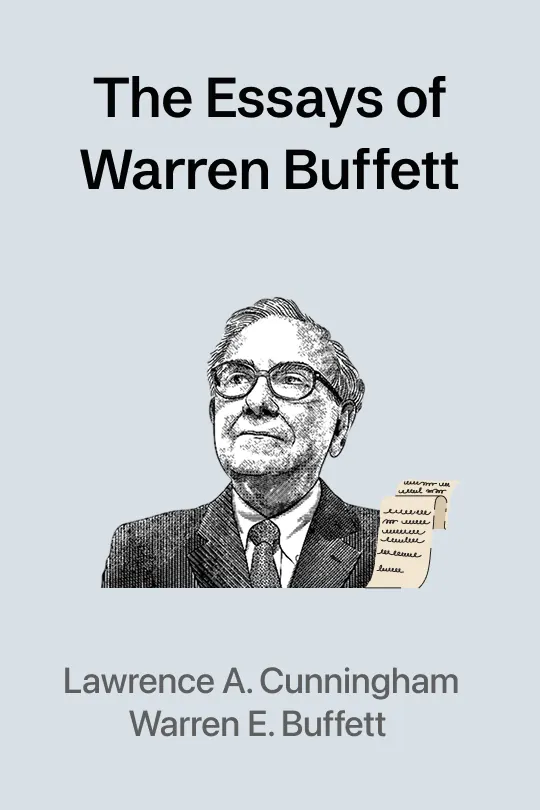
The Essays of Warren Buffett: Lessons for Corporate America
Lawrence A. Cunningham, Warren Buffett

Code: The Hidden Language of Computer Hardware and Software
Charles Petzold
Blueprints: How mathematics shapes creativity
Marcus du Sautoy
The Norwegian Method
Brad Culp
Stumbling on Happiness
Daniel Gilbert
The Crash Course
Chris Martenson
The Art of Contrarian Trading
Carl Futia