
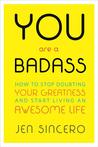
You Are a Badass: How to Stop Doubting Your Greatness and Start Living an Awesome Life
"A profane and practical guide to dismantling self-sabotage and engineering a life you love."
- 1Identify and dismantle your self-sabotaging subconscious beliefs. Our deepest, often unexamined, beliefs dictate our reality. Lasting change requires excavating these limiting stories and consciously replacing them with empowering truths to reshape your external world.
- 2Cultivate radical self-love as a non-negotiable foundation. Success and fulfillment are impossible without a core of genuine self-acceptance. Loving yourself is not an indulgence but the essential fuel for taking risks and pursuing greatness without apology.
- 3Use fear as a compass for growth, not a stop sign. Fear signals proximity to meaningful expansion. The methodology teaches leaning into discomfort and taking calculated risks as the primary mechanism for breaking out of stagnant, safe patterns.
- 4Practice deliberate gratitude to rewire your focus. Consistently acknowledging what is already working shifts your vibrational frequency. This conscious focus on abundance attracts more positive circumstances and opportunities into your life.
- 5Embrace the 'Fuck Yes' mentality to build unstoppable momentum. Half-hearted commitment yields mediocre results. The philosophy demands wholehearted enthusiasm for your goals, creating a psychic and emotional force that overcomes obstacles and magnetizes success.
- 6Take immediate, tangible action, however small. Transformation is a verb. The framework insists on concrete, doable steps taken today, breaking the paralysis of planning and making the desired life a present-tense project.
Jen Sincero’s You Are a Badass operates as a blunt-force trauma to the complacent mind, a self-help manifesto for those allergic to the genre’s typical sanctimony. It posits that the gap between a mediocre existence and an 'awesome life' is not a matter of luck or circumstance, but of unexamined thought patterns and a failure to act. Sincero frames this as waking from 'The Big Snooze,' a state of autopilot governed by limiting beliefs absorbed in childhood. The book’s core argument is that we are the architects of our reality, and by changing our internal dialogue, we can fundamentally alter our external world.
The methodology is a pragmatic synthesis of universal spiritual principles—the law of attraction, the power of intention, meditation—stripped of esoteric jargon. Through 27 concise chapters, Sincero provides exercises for identifying self-sabotage, practicing gratitude, and performing 'body scans' to reconnect with intuition. The prose is punctuated with personal anecdotes of her own journey from struggling writer to successful coach, serving as a living testament to the philosophy. The tone is relentlessly motivational, employing humor and occasional profanity to demystify concepts and jolt the reader out of passivity.
Financial empowerment is presented as a natural extension of this mindset work, with a direct link to the sequel on making money. The underlying theory suggests that blocks to wealth are merely reflections of deeper feelings of unworthiness. By learning to 'love what you can’t change and change what you don’t love,' individuals align themselves with a universal source of abundance—referred to colloquially as 'The Force' or 'Source Energy'—to 'kick some serious ass.'
Ultimately, the book targets the individual who intellectually understands self-help concepts but has failed to implement them. It functions as a catalytic starter kit, compressing foundational wisdom into an accessible, high-energy format designed to provoke immediate action rather than passive contemplation. Its legacy lies in making spiritual agency feel not only possible but urgent and within grasp for a mainstream audience.
The consensus celebrates the book's energizing, no-nonsense approach as a potent gateway for self-help skeptics and beginners. Readers consistently praise its hilarious, relatable voice and actionable format for cutting through procrastination. The primary criticism, often from seasoned genre readers, targets the content as a rehash of familiar principles without novel depth. Some find the relentless, cheerleading tone grating over time, and a few dismiss the financial promises as overly simplistic.
- 1The effectiveness of the book's blunt, profane, and humorous tone in breaking through resistance versus its potential to feel repetitive or grating.
- 2Whether the content offers genuinely new insights or simply repackages classic self-help and law of attraction concepts in a more accessible wrapper.
- 3Debates on the practicality of the financial advice and the realism of 'manifesting' significant income through mindset alone.
- 4The value of the book as an entry point for those new to personal development versus its lack of depth for advanced readers.

The Artist's Way
Julia Cameron
Just Listen: Discover the Secret to Getting Through to Absolutely Anyone
Mark Goulston
The Norwegian Method
Brad Culp
The Essays of Warren Buffett: Lessons for Corporate America
Lawrence A. Cunningham, Warren Buffett

The Almanack of Naval Ravikant
Naval Ravikant, Eric Jorgenson

The Intelligent Investor
Benjamin Graham
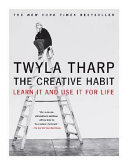
The Creative Habit
Twyla Tharp, Mark Reiter
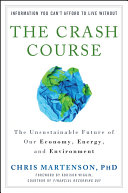
The Crash Course
Chris Martenson

Code: The Hidden Language of Computer Hardware and Software
Charles Petzold

Chip War: The Quest to Dominate the World's Most Critical Technology
Chris Miller

Permanent Record
Edward Snowden
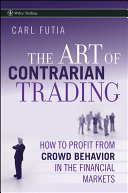
The Art of Contrarian Trading
Carl Futia