
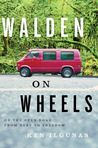
Walden on Wheels: On the Open Road from Debt to Freedom
"A modern odyssey of radical frugality, trading financial chains for a self-built freedom on four wheels."
- 1Treat debt as an existential threat to personal sovereignty. The narrative reframes student debt not as a benign rite of passage but as a form of indentured servitude that compromises future choices and authentic living, demanding aggressive, focused action to eliminate.
- 2Embrace radical, temporary austerity to achieve long-term autonomy. Freedom is purchased through deliberate sacrifice—taking on grueling, menial jobs and forgoing comforts to amass savings rapidly, proving that intense, short-term hardship can buy a lifetime of options.
- 3Reject institutional housing to reclaim economic and personal space. By converting a van into a stealth dormitory, Ilgunas physically decouples from the expensive infrastructure of conventional life, creating a mobile, minimal-cost personal sanctuary that redefines the concept of home.
- 4Find philosophical guidance in Thoreau's principles of simple living. The journey is not merely financial but intellectual, using Thoreau's 'Walden' as a manual for interrogating societal necessities and discovering what is truly required for a deliberate and meaningful life.
- 5Transform a personal experiment into a broader social critique. The van life project evolves from a solipsistic mission into a pointed examination of consumer culture, the suburban ideal, and the often-questionable economics of higher education in America.
- 6Cultivate resilience through voluntary exposure to discomfort. Enduring freezing winters, the fear of discovery, and extreme spatial constraints becomes a forge for character, testing and ultimately strengthening resolve and self-sufficiency beyond the financial realm.
Ken Ilgunas’s 'Walden on Wheels' begins as a stark portrait of a generation’s malaise: the bleak reality of graduating into adulthood shackled by $32,000 in student debt. This financial burden is framed not as a simple inconvenience but as a profound limit on existential freedom, a modern form of indenture that propels Ilgunas toward a radical solution. His mission is mercilessly practical—eradicate the debt at any cost—and he channels the spirit of Henry David Thoreau into a relentless, transcontinental pursuit of solvency.
Ilgunas’s journey to liberation takes him to the Alaskan frontier, where he works a series of grueling, humbling jobs as a tour guide, garbage picker, and night cook. This period of self-imposed exile and austerity is as much a psychological trial as an economic one, a deliberate immersion in hardship to purchase a future of choice. The narrative meticulously details the gritty mechanics of extreme saving, portraying each dollar earned and not spent as a brick in the foundation of his impending autonomy.
With the debt finally cleared, the experiment deepens. Enrolling in a master’s program at Duke University, Ilgunas refuses to re-enter the cycle of borrowing. Instead, he invests his last savings in a used Econoline van, converting it into a clandestine dormitory parked on campus. This second act transforms the memoir from an adventure tale into a pioneering work of lifestyle design. The van, his 'Walden on Wheels,' becomes the site of a daily, clandestine practice of minimalist living, fraught with the challenges of North Carolina winters, the constant threat of campus police, and the intense solitude of confined space.
The book’s significance lies in its synthesis of high-concept philosophy with street-level pragmatism. It is a manifesto for intentional living aimed at those feeling trapped by societal scripts of success and consumption. Ilgunas emerges not just as a debtor who escaped, but as a social critic who used his own life as a laboratory to question the very infrastructure of the American Dream, offering a provocative, if arduous, blueprint for building a life defined by freedom rather than liability.
The consensus celebrates the book as a provocative and necessary critique of debt culture, with Ilgunas’s extreme commitment and self-deprecating humor rendering his journey both inspiring and highly entertaining. However, a significant minority of readers find his tone intermittently insufferable, detecting a judgmental, almost smug condescension toward those who choose conventional paths, the suburbs, or who experience involuntary poverty. This friction between admirable principle and occasional priggishness defines the divided reception.
- 1The ethical line between advocating voluntary simplicity and condescending toward those in involuntary poverty.
- 2The practicality and romance of van life as a legitimate solution to student debt and housing costs.
- 3Ilgunas's harsh critique of suburbs and consumer culture, seen as either incisive or overly simplistic and disdainful.
- 4The balance between the book's inspiring, humorous adventure narrative and its perceived moments of preachy self-righteousness.

Stumbling on Happiness
Daniel Gilbert
The Norwegian Method
Brad Culp
Transformation in Christ
Dietrich Von Hildebrand
The Creative Habit
Twyla Tharp, Mark Reiter

How to Win Friends & Influence People
Dale Carnegie

The Psychology of Money: Timeless Lessons on Wealth, Greed, and Happiness
Morgan Housel

Breakthrough: The Quest for Life-Changing Medicines
Dr William Pao

Chip War: The Quest to Dominate the World's Most Critical Technology
Chris Miller
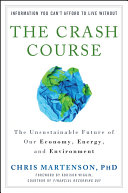
The Crash Course
Chris Martenson
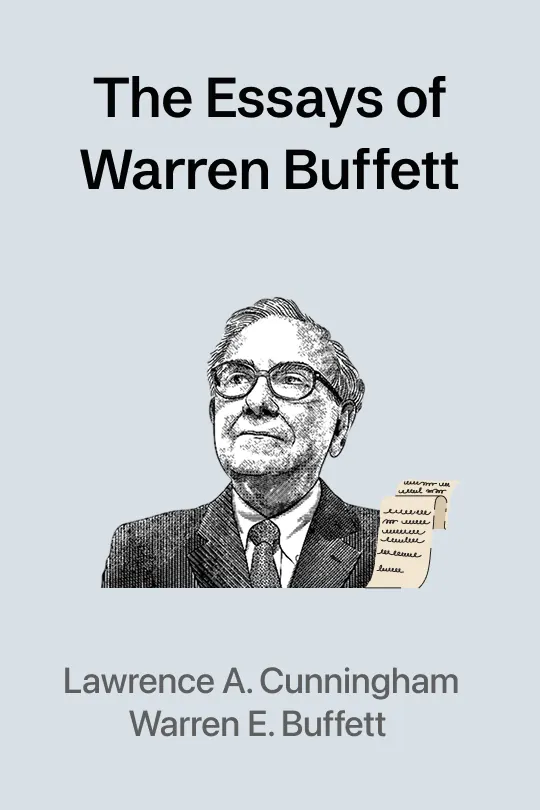
The Essays of Warren Buffett: Lessons for Corporate America
Lawrence A. Cunningham, Warren Buffett

The Intelligent Investor
Benjamin Graham
Sapiens: A Brief History of Humankind
Yuval Noah Harari