
Flow: The Psychology of Optimal Experience
"Master the science of complete immersion to transform ordinary moments into profound, self-directed joy."
Nook Talks
- 1Cultivate the balance between challenge and skill. Optimal experience, or flow, emerges when the perceived challenges of a task slightly exceed one's current skill level, creating a dynamic tension that demands and develops focused attention.
- 2Structure consciousness through autotelic activities. Engage in tasks that are intrinsically rewarding—autotelic experiences—which provide their own purpose and restructure psychic entropy into ordered, enjoyable states of being.
- 3Transform work into a primary source of meaning. By applying flow principles, any occupation can be reframed as a complex system of goals and feedback, converting routine labor into a vessel for deep engagement and fulfillment.
- 4Seek complexity through the differentiation and integration of the self. A life rich in flow experiences cultivates a more complex self—one that both distinguishes new skills and harmoniously integrates them, leading to psychological growth and resilience.
- 5Design immediate feedback loops into your actions. Clear, instantaneous feedback on performance is essential for maintaining flow, allowing for continuous adjustment and a merging of action and awareness without self-conscious interference.
- 6Practice the discipline of voluntary attention. Happiness is not a passive state but a condition forged by the deliberate, effortful focusing of attention on manageable, goal-directed tasks within the present moment.
Mihaly Csikszentmihalyi's seminal work, 'Flow,' presents a rigorous psychological framework for understanding optimal human experience. It identifies a universal state of consciousness where individuals become so absorbed in an activity that nothing else seems to matter—time distorts, self-awareness vanishes, and action and awareness merge. This state, which Csikszentmihalyi terms 'flow,' is presented not as a mystical phenomenon but as a scientifically observable condition attainable through specific, replicable conditions.
Csikszentmihalyi's research, spanning decades and cross-cultural studies, posits that flow occurs within a precise channel: when the challenges of a task are well-matched to an individual's skills, neither inducing anxiety from being too difficult nor boredom from being too simple. The architecture of a flow activity requires clear goals, immediate feedback, and a sense of personal control. The book systematically explores how this state manifests across diverse domains—from art and sport to work and religious practice—arguing that it is the core mechanism behind peak performance and intrinsic motivation.
The investigation extends beyond momentary pleasure, framing flow as the essential component for constructing a meaningful life. Csikszentmihalyi introduces the concept of the 'autotelic personality'—one that readily creates flow experiences—and examines how individuals can transform mundane routines into opportunities for engagement. He further proposes that a life characterized by frequent flow states leads to 'psychological complexity,' a growth pattern where the self becomes both more differentiated and more integrated, fostering resilience and a coherent life narrative.
'Flow' stands as a cornerstone of positive psychology, shifting the focus from pathology to human flourishing. Its impact resonates across fields from education and business to personal development, offering a pragmatic, evidence-based blueprint for achieving sustained engagement and fulfillment. The book is essential reading for anyone seeking to understand the science of happiness, the psychology of motivation, or the art of designing a life worth living.
Readers consistently praise the book's transformative, foundational insight, describing it as a paradigm-shifting work that names a universal but elusive experience. The core concept is celebrated for its profound applicability to work, hobbies, and personal fulfillment. Criticisms focus on the academic prose, which some find dense and occasionally repetitive, arguing that the powerful central idea could be delivered with greater concision. The consensus holds it as an essential, if sometimes challenging, text whose utility justifies the intellectual effort.
- 1The transformative personal recognition of one's own past 'flow states' and how the book provides a framework to intentionally recreate them.
- 2Debate on the book's academic density versus its profound core insight, with some readers finding the prose challenging.
- 3Application of flow principles to professional life, especially in demanding fields like medicine or creative work, to find joy in deep focus.
- 4The book's role as a foundational text in positive psychology, prompting reflection on the nature of happiness and self-directed fulfillment.
The Crash Course
Chris Martenson
Out of Control
Kevin Kelly
The Art of Contrarian Trading
Carl Futia
The Psychology of Money: Timeless Lessons on Wealth, Greed, and Happiness
Morgan Housel
The Creative Habit
Twyla Tharp, Mark Reiter
The Norwegian Method
Brad Culp
Just Listen: Discover the Secret to Getting Through to Absolutely Anyone
Mark Goulston

The Intelligent Investor
Benjamin Graham
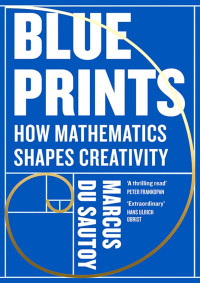
Blueprints: How mathematics shapes creativity
Marcus du Sautoy

The Road to Financial Freedom
Bodo Schäfer
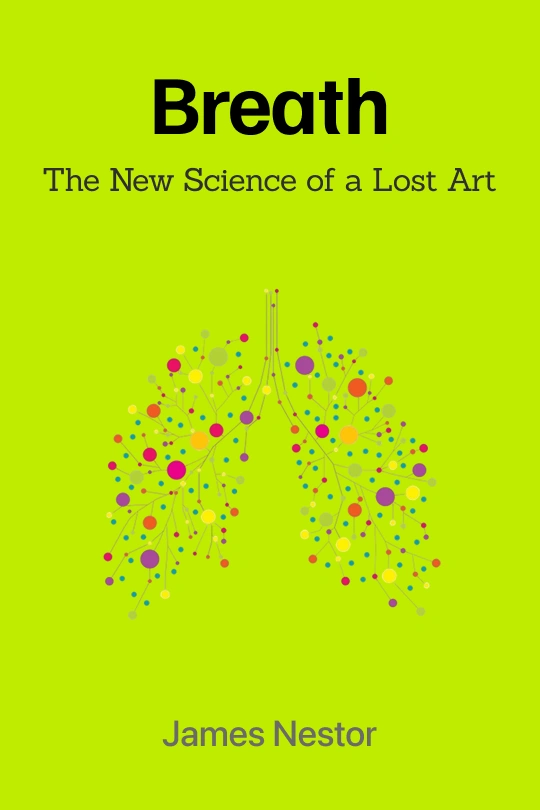
Breath: The New Science of a Lost Art
James Nestor
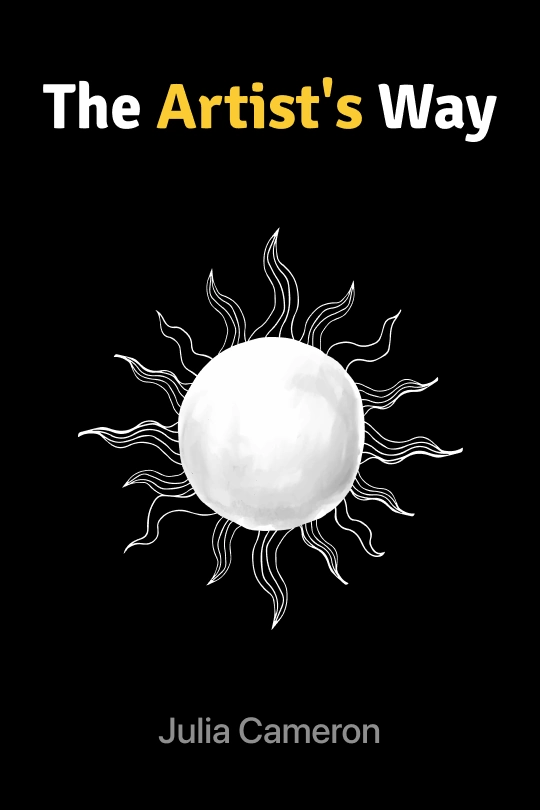
The Artist's Way
Julia Cameron