
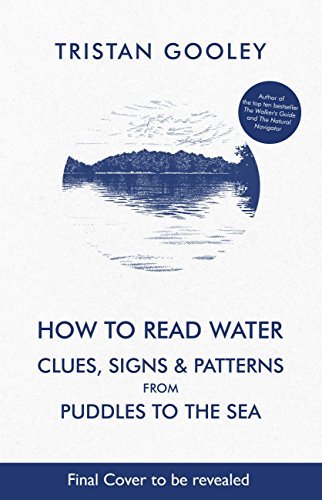
How To Read Water: Clues, Signs & Patterns from Puddles to the Sea
"Decode the hidden language of water to see the world with the eyes of a Polynesian navigator or a Viking sailor."
- 1Read the landscape through its water signatures. Every body of water, from a puddle to an ocean, holds specific clues—color, ripple patterns, sound—that reveal its history, composition, and the forces acting upon it, transforming passive observation into active interpretation.
- 2Navigate using natural aquatic signposts. The shape of waves, the direction of currents, and even the texture of puddles can serve as reliable guides for wayfinding, a skill honed by ancient mariners and still accessible to the modern observer.
- 3Forecast weather by interpreting wave behavior. Subtle changes in swell patterns, wave frequency, and water color are precursors to shifting weather conditions, allowing one to predict storms or fair weather long before they arrive.
- 4Distinguish between safe and hazardous water conditions. Learning to identify the visual and auditory signals of dangerous currents, riptides, and unstable ice is a critical survival skill that the book translates from specialist knowledge into practical public awareness.
- 5Appreciate water as a dynamic ecological narrator. Water tells stories of erosion, pollution, and ecological health. Its color and clarity are not merely aesthetic but are direct reports on mineral content, biological activity, and environmental impact.
Tristan Gooley’s How To Read Water is a field guide to literacy in the planet’s most ubiquitous yet cryptic element. It posits that water is not a blank, passive medium but a textured, legible surface inscribed with the grammar of physics, geology, and meteorology. The book argues that this language, once understood, unlocks a deeper, more participatory relationship with the natural world, turning any waterfront into a page of an open book.
Gooley structures this education as a graduated journey, beginning with the simplest forms. He deciphers the concentric stories told by raindrops in a puddle, explaining how these miniature models teach the principles of wave propagation and interference. This foundational knowledge is then scaled up to rivers, where flow patterns betray submerged obstacles and depth. The core of the text is devoted to the sea, where Gooley synthesizes oceanography, navigation history, and practical observation to explain how to read swell direction, forecast weather from wave patterns, and understand the complex choreography of tides and currents.
The narrative is enriched with firsthand anecdotes from the author’s global expeditions—sailing off Oman, swimming in Sussex, navigating Arctic ice. These are not mere travelogues but practical demonstrations, showing how Viking navigators used wave patterns or how Polynesian wayfinders interpreted cloud reflections on water. The book systematically builds a toolkit of over 700 clues, teaching the reader to decode the color spectrum of water, listen to its sounds for hidden information, and use the reflection of stars on a calm night sea for orientation.
Ultimately, the book’s significance lies in its fusion of empirical science with romantic wonder. It is targeted at sailors, swimmers, anglers, and walkers, but its true audience is anyone with a curiosity about the environment. It serves as a corrective to superficial looking, proposing a methodology for profound seeing. By restoring a lost literacy, Gooley empowers the reader to become a direct interpreter of nature’s signals, transforming every encounter with water from a glance into a conversation.
The critical consensus acknowledges the book's unique and profound premise, praising its ability to deepen one's observational relationship with water through a blend of science and accessible wonder. However, this admiration is tempered by significant frustration with the book's execution. Readers frequently criticize the dense, meandering prose and a stodgy layout that impedes flow, making the material feel needlessly convoluted. The experience is often described as rewarding in moments but demanding considerable patience, leading many to recommend it as a book to be consumed in small, deliberate segments rather than in a continuous read.
- 1The rewarding yet challenging balance between rich scientific detail and overly dense, meandering prose that tests reader patience.
- 2The unique value of learning practical, ancient navigation skills applicable to modern outdoor activities like hiking and sailing.
- 3Frustration with the book's layout and structure, which is seen as impediment to absorbing its otherwise fascinating insights.
Transformation in Christ
Dietrich Von Hildebrand

How to Win Friends & Influence People
Dale Carnegie

The Intelligent Investor
Benjamin Graham

Permanent Record
Edward Snowden
The Norwegian Method
Brad Culp

Just Listen: Discover the Secret to Getting Through to Absolutely Anyone
Mark Goulston
The Creative Habit
Twyla Tharp, Mark Reiter
The Crash Course
Chris Martenson

The Road to Financial Freedom
Bodo Schäfer
Outliers: The Story of Success
Malcolm Gladwell
Stumbling on Happiness
Daniel Gilbert
The Psychology of Money: Timeless Lessons on Wealth, Greed, and Happiness
Morgan Housel