
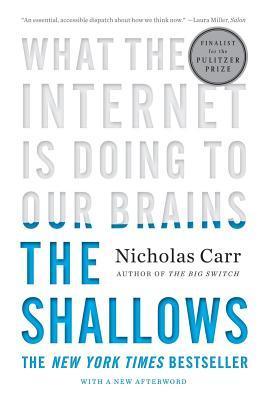
The Shallows: What the Internet Is Doing to Our Brains
"The internet is rewiring our neural circuitry, trading deep focus for fragmented distraction and shallow cognition."
- 1The internet promotes an ethic of speed and efficiency over depth. Its architecture of hyperlinks, alerts, and multimedia prioritizes rapid information sampling, which systematically undermines the sustained, linear attention required for profound understanding and creative thought.
- 2Our brains possess neuroplasticity, changing with our tools. The human brain is not static; it physically reorganizes itself in response to repeated experiences. Constant internet use strengthens circuits for scanning and skimming while weakening those for concentration and contemplation.
- 3Every information technology carries an intellectual ethic. From the alphabet to the printing press, each dominant communication medium shapes how we think. The book promoted focused, inward thought; the internet champions scattered, outward-facing cognition.
- 4Multitasking is a cognitive myth that degrades performance. The brain does not truly multitask but toggles rapidly between tasks, incurring a 'switching cost' that increases errors, impairs memory formation, and prevents deep engagement with any single subject.
- 5We are sacrificing solitude and single-minded concentration. The internet's constant connectivity and interruptions have eroded the tradition of solitary, immersive thought—the very conditions that historically fostered breakthrough ideas, self-reflection, and complex reasoning.
- 6Search engines fragment knowledge into isolated snippets. By directing us only to the most relevant 'twig and leaf,' search algorithms prevent us from encountering the contextual 'forest'—the broader arguments, narrative structures, and accumulated wisdom of a complete work.
When Nicholas Carr framed the provocative question, "Is Google making us stupid?" he ignited a defining anxiety of the digital age. The Shallows expands that seminal essay into a rigorous exploration of the internet's profound intellectual and cultural consequences. Carr argues that our technologies are not merely passive tools but active shapers of human thought, each carrying its own "intellectual ethic" that molds how we perceive, reason, and remember.
Carr grounds his argument in a sweeping intellectual history, tracing how foundational "tools of the mind"—from the alphabet and maps to the printing press and clock—have historically reconfigured society's cognitive rhythms. The printed book, in particular, is presented as the ultimate technology for deep focus, promoting linear thought, sustained argument, and the cultivation of an inner life. This historical frame sets the stage for his central thesis: the internet, our new dominant intellectual technology, is catalyzing a reversal of these gains.
The book's most compelling evidence comes from the field of neuroscience. Carr interweaves the work of pioneers like Michael Merzenich to demonstrate the brain's lifelong neuroplasticity. Our neural pathways physically adapt to our experiences; the repetitive behaviors encouraged by the net—skimming, multitasking, following hyperlinks—literally rewire our circuitry for distraction. We become adept at rapid, shallow processing but lose our capacity for concentration, contemplation, and reflective thought.
Ultimately, The Shallows is a work of urgent cultural criticism that plumbs profound questions about the modern psyche. It positions itself not as a Luddite rant but as a crucial intervention, forcing readers to confront the trade-offs inherent in our seamless digital lives. The book is essential reading for anyone concerned with the preservation of deep reading, complex understanding, and the kind of solitary, uninterrupted thinking from which innovation and wisdom spring.
The consensus affirms Carr's thesis as both prescient and profoundly unsettling. Readers praise the book's intellectual rigor, compelling synthesis of history and neuroscience, and its vital warning about cognitive erosion. The primary critique is not of its argument but of its occasionally dense, repetitive prose, particularly in the neuroscience chapters, which some find challenging. Nonetheless, it is widely regarded as an essential, paradigm-shifting work that articulates a pervasive but previously inchoate modern anxiety.
- 1The accuracy and accessibility of the neuroscience chapters, which some readers found overly technical and difficult to comprehend.
- 2Whether the book's argument is a vital warning or merely nostalgic alarmism, pitting techno-skeptics against digital optimists.
- 3Personal anecdotes about how reading the book itself altered readers' awareness of their own diminished attention spans online.
- 4Debates on the trade-off between the internet's vast informational access and its corrosive effect on deep, sustained concentration.
The Psychology of Money: Timeless Lessons on Wealth, Greed, and Happiness
Morgan Housel
Code: The Hidden Language of Computer Hardware and Software
Charles Petzold

Vacuum Diagrams (Xeelee Sequence, #5)
Stephen Baxter
Breath: The New Science of a Lost Art
James Nestor

The Intelligent Investor
Benjamin Graham

Out of Control
Kevin Kelly

Amusing Ourselves to Death: Public Discourse in the Age of Show Business
Neil Postman

The Essays of Warren Buffett: Lessons for Corporate America
Lawrence A. Cunningham, Warren Buffett

The Artist's Way
Julia Cameron
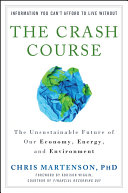
The Crash Course
Chris Martenson

Bad Samaritans
Ha-Joon Chang
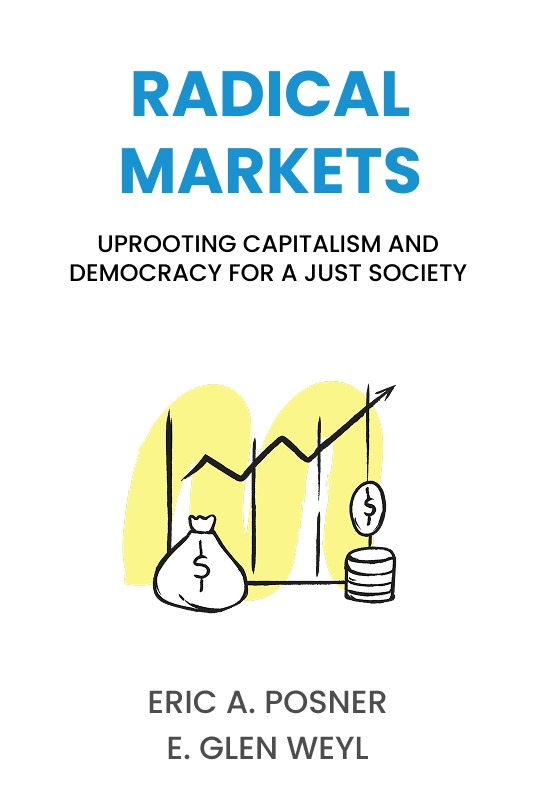
Radical Markets: Uprooting Capitalism and Democracy for a Just Society
Eric A. Posner, E. Glen Weyl