

The Eyes of the Overworld (The Dying Earth, #2)
by Jack Vance
“A cunning scoundrel's picaresque journey across a decadent, dying world, where every act of betrayal is met with poetic and ironic justice.”
Key Takeaways
- 1The anti-hero's charm lies in his spectacular failures. Cugel's overconfidence and moral bankruptcy are the engine of the narrative, creating humor and tension precisely because his schemes so often unravel.
- 2Language constructs reality in a decaying world. Vance's baroque, formal prose is not mere decoration; it establishes the heightened, ritualistic consciousness of a civilization in its final, mannered twilight.
- 3Satire permeates institutions of faith and power. The narrative relentlessly lampoons religious dogma and wizardly authority, presenting them as con games built on gullibility and the human desire for transcendence.
- 4The quest is a vehicle for picaresque worldbuilding. The episodic structure serves to unveil a series of bizarre, self-contained societies and landscapes, each a unique thought experiment in decadence.
- 5The 'Eyes' symbolize the delusion of escapism. The magical lenses offer a vision of a perfect Overworld, critiquing the temptation to prefer a beautiful lie over a grim, authentic reality.
- 6Justice is circular and inherently ironic. The narrative operates on a principle of karmic recursion, where Cugel's attempts to gain advantage inevitably return him to his starting point, unchanged.
Description
Beneath a swollen, red sun, the scoundrel Cugel earns his epithet 'the Clever' through audacity more than acumen. After a botched theft from the powerful Iucounu the Laughing Magician, he is punished not with death, but with a cruel quest: to travel to a distant land and retrieve a magical lens, one of the titular Eyes of the Overworld. To ensure compliance, a parasitic entity named Firx is affixed to his liver, a constant and painful reminder of his debt.
His journey home becomes a sprawling picaresque odyssey across the surreal and perilous landscapes of the Dying Earth. Cugel navigates trackless wastes, confronts rat-people and grues, and insinuates himself into a caravan of zealously doctrinal pilgrims crossing the lethal Silver Desert. Each episode functions as a self-contained satire, showcasing Vance's gift for inventing absurd cultures, from villages sustained by collective illusion to flying men who debate theological minutiae with pedantic fervor.
Through cunning, cowardice, and sheer luck, Cugel survives, though he leaves a trail of betrayal and ruin in his wake. His character remains static—a masterpiece of amoral self-interest—yet the world around him is a vibrant tapestry of decay and invention. The novel is less a conventional narrative of growth than a darkly comic tour of a civilization's end-stage, where magic and forgotten technology blur and every social contract is negotiable.
The book's enduring significance lies in this rich fusion of satirical wit, imaginative density, and a prose style that is both ornate and precise. It established the archetype of the inept, conniving fantasy anti-hero and expanded the Dying Earth from a moody backdrop into a stage for relentless social and philosophical critique, targeting faith, greed, and the human capacity for self-deception with elegant savagery.
Community Verdict
The critical consensus celebrates the novel as a superior and more cohesive entry than its predecessor, unified by the brilliantly conceived anti-hero Cugel. Readers are captivated by Vance's lush, inventive worldbuilding and his uniquely ornate, witty prose, which elevates the picaresque structure into a work of literary fantasy. The central pleasure derives from Cugel's profound unlikeability and his repeated, ironic comeuppances, which are executed with a dark, almost Wodehousian or Monty Python-esque humor.
While a minority find Cugel's relentless amorality wearying or note a diminished sense of the world's melancholic doom, the overwhelming verdict is one of delighted admiration. The book is praised for its intellectual satire, its refusal to cater to simplistic moralism, and its status as a foundational text that influenced generations of writers and game designers with its distinctive voice and imaginative heft.
Hot Topics
- 1The brilliant conception and enduring appeal of Cugel as a uniquely amoral and inept anti-hero, whose failures are more compelling than any success.
- 2Vance's masterful, baroque prose style and extensive vocabulary, which defines the world's decadent atmosphere and dry, formal humor.
- 3The novel's structure as a picaresque satire, using episodic adventures to lampoon religion, social hierarchies, and human greed.
- 4Comparisons to the first Dying Earth book, debating whether the focused narrative here is an improvement over the earlier collection's melancholic tone.
- 5The imaginative density of the worldbuilding, with each new society and creature serving as a self-contained thought experiment in absurdity.
- 6The philosophical underpinnings of the 'Eyes' themselves as a metaphor for escapism and the preference for beautiful illusions over harsh reality.
Related Matches

Popular Books

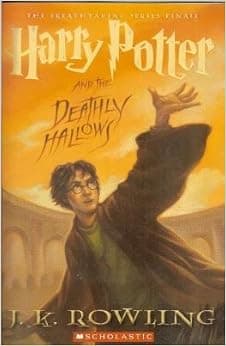
Harry Potter and the Deathly Hallows (Harry Potter, #7)
J.K. Rowling, Mary GrandPre

The Body Keeps the Score: Brain, Mind, and Body in the Healing of Trauma
Bessel A. van der Kolk

The House of Hades (The Heroes of Olympus, #4)
Rick Riordan

Never Split the Difference: Negotiating As If Your Life Depended On It
Chris Voss, Tahl Raz

The Hobbit: Graphic Novel
Chuck Dixon, J.R.R. Tolkien, David Wenzel, Sean Deming

Harry Potter and the Order of the Phoenix (Harry Potter, #5)
J.K. Rowling, Mary GrandPre

We Should All Be Feminists
Chimamanda Ngozi Adichie

Evicted: Poverty and Profit in the American City
Matthew Desmond

A Game of Thrones (A Song of Ice and Fire, #1)
George R.R. Martin

Why We Sleep: Unlocking the Power of Sleep and Dreams
Matthew Walker

Unbroken: A World War II Story of Survival, Resilience, and Redemption
Laura Hillenbrand

A Monster Calls
Patrick Ness, Jim Kay, Siobhan Dowd
Browse by Genres
History
Business
Leadership
Marketing
Management
Innovation
Economics
Productivity
Psychology
Mindset
Communication
Philosophy
Biography
Science
Technology
Society
Health
Parenting
Self-Help
Wealth
Investment
Relationship
Startups
Sales
Money
Fitness
Nutrition
Sleep
Wellness
Spirituality
AI
Future
Nature
Politics
Classics
Sci-Fiction
Fantasy
Thriller
Mystery
Romance
Literary
Historical
Religion
Law
Crime
Arts
Habits
Creativity