
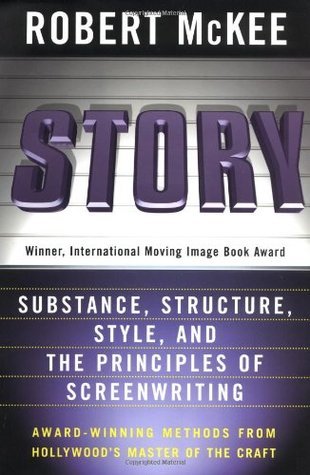
Story: Substance, Structure, Style, and the Principles of Screenwriting
"It demystifies the immutable principles of compelling narrative, transforming intuitive storytelling into a rigorous craft."
Nook Talks
- 1Structure is the primary source of narrative power. A story's emotional and intellectual impact is not accidental but engineered through precise architectural principles, with acts, turning points, and climaxes serving as its load-bearing framework.
- 2Character is revealed through choice under pressure. True character essence is not found in dialogue or description, but in the consequential decisions a protagonist makes when faced with escalating conflict and diminishing options.
- 3Master genre conventions before attempting to subvert them. Genre provides the contract with the audience. Innovation is only meaningful and effective when built upon a foundational, disciplined understanding of a form's established rules and expectations.
- 4The controlling idea unifies all narrative elements. Every scene, character arc, and line of dialogue must ultimately serve the story's central argument or insight, creating a cohesive thematic resonance that elevates plot into meaning.
- 5Write from the inside out, beginning with substance. Effective screenwriting originates not with clever plotting but with a deep understanding of the story's core values, the nature of the character's world, and the fundamental conflict driving the narrative.
- 6Scenes must turn, creating irreversible change. A scene that does not alter the value-charged relationship between characters—shifting from peace to conflict, or lie to truth—is merely an incident, failing to advance the story.
Robert McKee's Story is not merely a manual but a philosophical treatise on the ancient and enduring craft of narrative. It posits that behind every successful screenplay lie universal, time-tested principles, often obscured by industry jargon and romantic notions of innate talent. McKee systematically dismantles the myth of the purely intuitive writer, arguing that powerful storytelling is a rigorous discipline, one that can be learned, analyzed, and mastered through an understanding of its core components: substance, structure, style, and the principles of screenwriting.
The book's formidable architecture is built upon the concept of the "controlling idea," the thematic spine that must dictate every creative choice. From this foundation, McKee elaborates on the scene-by-scene reality of narrative, insisting each must deliver a turning point that irrevocably alters the protagonist's world. He dissects the spectrum of genres, not as marketing categories but as expressions of fundamental human values, and provides a meticulous analysis of story structure—from the beat and scene up through the sequence, act, and the grand design itself.
Beyond mechanics, Story delves into the ethics of the craft, exploring the writer's relationship to truth, society, and the audience. It distinguishes between mere formula and genuine form, championing the latter as the vehicle for originality. The final sections address the practical realities of the writer's life, from cultivating creative habits to navigating the commercial realities of the film industry, all while maintaining artistic integrity.
Its impact transcends screenwriting, offering a canonical framework for anyone engaged in the creation of narrative, from novelists and playwrights to journalists and corporate communicators. The book's legacy is its authoritative synthesis of centuries of dramatic theory into a coherent, actionable system, making the invisible machinery of compelling stories visible and accessible to the dedicated practitioner.
The consensus venerates the book as a foundational, almost biblical text for narrative craft, praised for its authoritative clarity and transformative power for serious writers. Critics, however, find its tone occasionally dogmatic and its focus narrowly classical, potentially stifling for avant-garde or purely character-driven forms. The density of its concepts is acknowledged as demanding, requiring slow, studious engagement rather than a casual read.
- 1The debate over McKee's perceived dogmatism versus the necessity of learning foundational rules before breaking them.
- 2The book's applicability beyond screenwriting to novels, plays, and other forms of creative writing.
- 3The value of its complex structural diagrams and terminology for practical, day-to-day writing.
- 4Comparisons and contrasts between McKee's teachings and other narrative theories, such as those from Joseph Campbell or Lajos Egri.

How to Win Friends & Influence People
Dale Carnegie
The Crash Course
Chris Martenson

Chip War: The Quest to Dominate the World's Most Critical Technology
Chris Miller
Stumbling on Happiness
Daniel Gilbert

The Intelligent Investor
Benjamin Graham

Just Listen: Discover the Secret to Getting Through to Absolutely Anyone
Mark Goulston
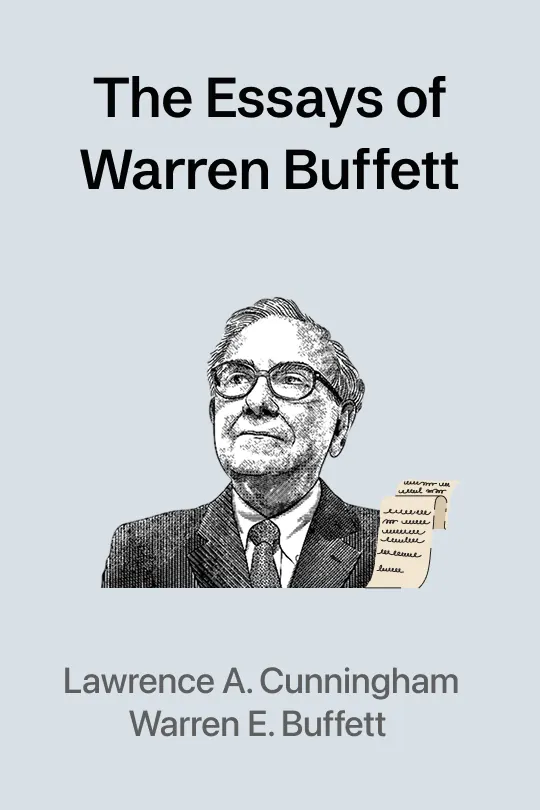
The Essays of Warren Buffett: Lessons for Corporate America
Lawrence A. Cunningham, Warren Buffett

Out of Control
Kevin Kelly

Code: The Hidden Language of Computer Hardware and Software
Charles Petzold

The Road to Financial Freedom
Bodo Schäfer
Transformation in Christ
Dietrich Von Hildebrand
Bad Samaritans
Ha-Joon Chang