
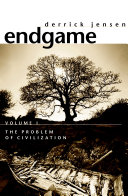
Endgame, Volume 1
"A brutal, essential diagnosis of civilization as a death cult, demanding we trade comfort for life."
- 1Civilization is inherently unsustainable and destructive. The book argues that civilization, by its very structure, is predicated on the systematic conversion of the living world into dead commodities, making long-term survival impossible within its framework.
- 2The dominant culture operates as a death cult. Jensen posits that industrial civilization's relentless consumption and destruction of the biosphere is not an accident but a core, pathological function, akin to a religious devotion to entropy.
- 3Personal comfort is a shackle of complicity. It challenges the reader to recognize how the conveniences of modern life are directly funded by ecological devastation and cultural genocide, forcing a moral reckoning with one's own lifestyle.
- 4Salmon and dams symbolize the war on life. The repeated use of salmon and dam projects serves as a central metaphor for civilization's assault on natural processes, freedom, and indigenous ways of being.
- 5Awakening necessitates unbearable grief and rage. The text insists that a genuine understanding of our predicament is not intellectual but visceral, involving profound emotional and psychological turmoil as the price of clarity.
- 6Resistance is an ethical imperative for the living. Beyond analysis, the book is a call to action, framing active resistance against civilization not as a political choice but as a biological and moral duty for anyone who loves life.
Derrick Jensen’s Endgame, Vol. 1: The Problem of Civilization is a foundational text of the radical environmental and anti-civilization movement. It presents a searing, uncompromising thesis: civilization itself—specifically, large-scale, urban, agricultural civilization—is not merely flawed but is an inherently destructive and unsustainable system. Jensen argues it operates as a death cult, fundamentally at war with the natural world upon which it depends, converting living communities into dead resources in a process he terms "the conversion of the living to the dead."
The book builds its case through a relentless accumulation of evidence and philosophical argument, weaving together ecology, history, anthropology, and personal narrative. It dissects the core myths of progress and technology, demonstrating how they serve to justify perpetual exploitation. Central to its argument is the examination of infrastructure, like dams, which physically and symbolically represent civilization's control and destruction of wild, self-willed nature, using the plight of salmon and impacted Indigenous cultures as primary examples of the cost.
Jensen’s methodology is intentionally confrontational and repetitive, designed to break through the psychic numbing of modern life. He draws from a wide range of thinkers, from Daniel Quinn to Chellis Glendinning, to illustrate that civilization’s violence is not an aberration but a requirement for its existence. The prose oscillates between meticulous logical dissection and raw, emotional outcry, refusing to allow the reader the comfort of detachment.
Endgame is less a book to be agreed with than one to be grappled with. Its target audience is those already sensing the profound disconnect between ecological reality and daily life in the industrial world. It aims not to propose tidy solutions but to force a foundational shift in perception—to recognize civilization as the problem, thereby making genuine resistance conceivable. Its legacy is as a brutal catalyst, a seminal work that has shaped deep ecological thought and activist rhetoric for a generation.
The consensus positions this as a brutally challenging yet indispensable text. Readers describe it as a traumatic, nightmare-inducing experience, criticizing its repetitive, rambling style and overwhelming anger. Yet, even its detractors concede its transformative power. The overwhelming sentiment is one of grim gratitude: it is a book many hated reading but consider vital, a call to arms that validates deep-seated ecological despair and converts it into a reluctant sense of duty.
- 1The book's repetitive, rambling style and heavy use of quotations as a major barrier to engagement.
- 2The emotional and psychological toll of reading its unflinching portrayal of civilizational violence.
- 3The central argument that civilization itself is unsustainable, not just its current form.
- 4The transformative impact, described as a necessary, life-altering confrontation with reality.
Bad Samaritans
Ha-Joon Chang
The Crash Course
Chris Martenson
The Art of Contrarian Trading
Carl Futia
Breath: The New Science of a Lost Art
James Nestor

The Intelligent Investor
Benjamin Graham
Stumbling on Happiness
Daniel Gilbert

Amusing Ourselves to Death: Public Discourse in the Age of Show Business
Neil Postman
The Psychology of Money: Timeless Lessons on Wealth, Greed, and Happiness
Morgan Housel
Radical Markets: Uprooting Capitalism and Democracy for a Just Society
Eric A. Posner, E. Glen Weyl
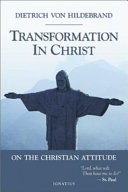
Transformation in Christ
Dietrich Von Hildebrand

Chip War: The Quest to Dominate the World's Most Critical Technology
Chris Miller
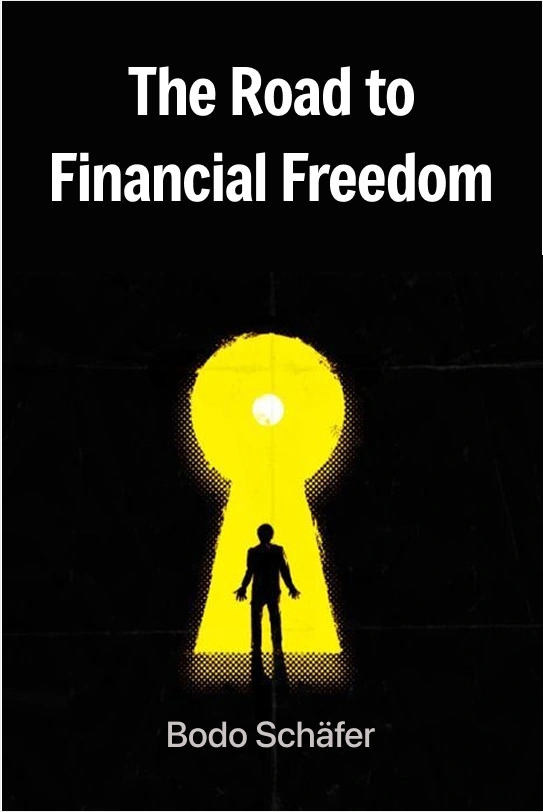
The Road to Financial Freedom
Bodo Schäfer