
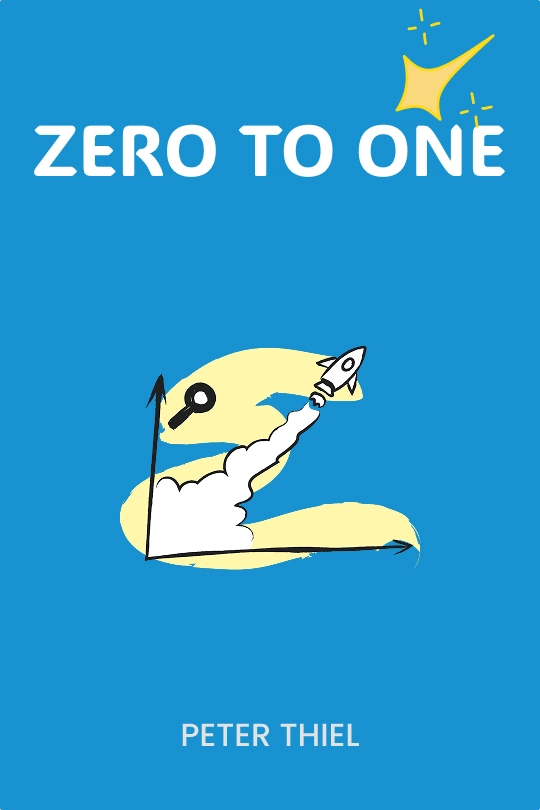
Zero to One: Notes on Startups, or How to Build the Future
"Escape competition by creating a unique monopoly, moving from incremental copycatting to singular, world-defining innovation."
Nook Talks
- 1[object Object]
- 2[object Object]
- 3[object Object]
- 4[object Object]
- 5[object Object]
- 6[object Object]
- 7[object Object]
Peter Thiel’s Zero to One is a foundational polemic and manual for venture-scale innovation, arguing that the future of human progress hinges not on globalization but on technology. It posits a stark dichotomy: horizontal progress, going from 1 to n, means copying things that work—it is globalization. Vertical progress, going from 0 to 1, means doing something new—it is technology. Thiel’s contrarian premise is that we live in an age of technological stagnation outside of bits, not atoms, and that escaping this drift requires a return to the radical ambition of creating monopolies.
Thiel systematically dismantles the business cliché that competition is virtuous. He posits that capitalism and competition are antonyms; perfect competition drives profits to zero. Therefore, every great business is a monopoly that solves a unique problem, granting it pricing power, longevity, and the space to innovate further. The book provides a framework for building such monopolies, starting with capturing a small, specific market before scaling, building a defensible technology advantage, and assembling a founding team with the right balance of ownership, possession, and control.
The argument extends beyond business mechanics into a philosophy of history and human agency. Thiel champions ‘definite optimism’—a future that is planned and built—over the ‘indefinite optimism’ of a financialized world that merely hopes for better days. This requires believing in ‘secrets’: important truths about the world that remain undiscovered or unbelieved. The most valuable companies are built on these secrets, moving society from 0 to 1.
Ultimately, Zero to One is a call to arms for founders, thinkers, and investors. It targets those dissatisfied with incrementalism and eager to define the coming decades. Its legacy is that of a modern capitalist manifesto, challenging readers to ask the singular question that can unlock transformative value: what valuable company is nobody building?
The critical consensus elevates Zero to One as a seminal, philosophically rich work that transcends typical business-book fare. Readers prize its powerful, elegant thesis on monopoly and innovation, finding it intellectually stimulating and provocatively broad. A significant critique, however, targets its execution: the grand societal arguments about technology and stagnation feel tantalizingly underexplored, grafted onto a more conventional startup manual. This creates a jarring, albeit fascinating, tension between its narrow tactical advice and its sweeping, sometimes dogmatic, worldview.
- 1The provocative but underdeveloped link between startup monopolies and societal salvation from technological stagnation.
- 2Praise for the book's foundational philosophy and elegant thesis, contrasting it with typical business literature.
- 3Criticism of the perceived gap between the grand macro-arguments and the more routine startup advice.
- 4Debate over Thiel's concept of 'definite optimism' as a necessary antidote to modern aimlessness.

The Artist's Way
Julia Cameron

The Almanack of Naval Ravikant
Naval Ravikant, Eric Jorgenson
The Uplift War (The Uplift Saga, #3)
David Brin

Breath: The New Science of a Lost Art
James Nestor
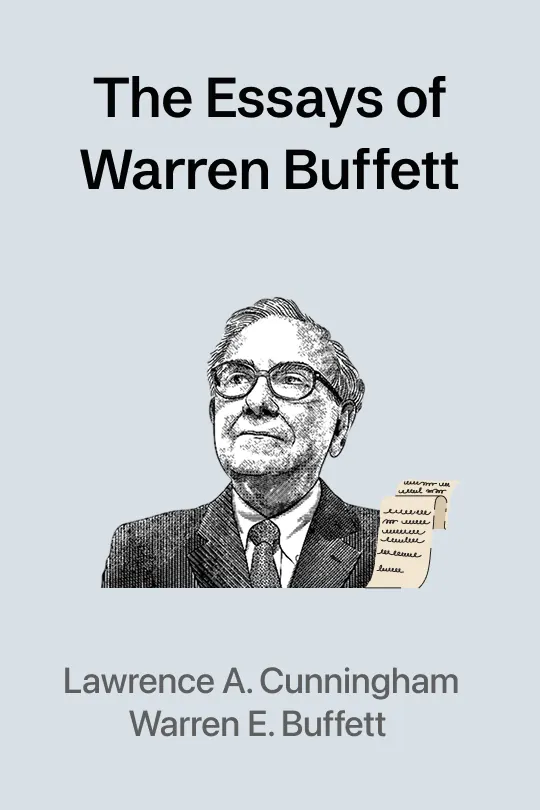
The Essays of Warren Buffett: Lessons for Corporate America
Lawrence A. Cunningham, Warren Buffett
Sapiens: A Brief History of Humankind
Yuval Noah Harari
Chip War: The Quest to Dominate the World's Most Critical Technology
Chris Miller
The Norwegian Method
Brad Culp
Bad Samaritans
Ha-Joon Chang
Transformation in Christ
Dietrich Von Hildebrand
The Crash Course
Chris Martenson

How to Win Friends & Influence People
Dale Carnegie