
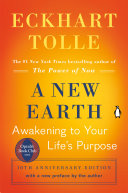
A New Earth: Awakening to Your Life's Purpose
"Transcend the ego's tyranny to discover a life of purpose and end personal and global suffering."
- 1[object Object]
- 2[object Object]
- 3[object Object]
- 4[object Object]
- 5[object Object]
Eckhart Tolle’s A New Earth is not merely a sequel to The Power of Now but a profound expansion of its core thesis, applying the principle of present-moment awareness to the collective dysfunction of humanity. It posits that the root cause of human conflict, both internal and external, is the ego—the conditioned mind-structure that derives its sense of self from continuous thought, comparison, and grievance. The book serves as a detailed map of this egoic mechanism, arguing that our attachment to this false self is the primary barrier to personal peace and the catalyst for global suffering.
Tolle meticulously deconstructs the ego’s various manifestations, from the need to be right and superior to the accumulation of grievances in what he terms the ‘pain-body.’ He illustrates how this psychic entity feeds on drama and negative emotion, creating cycles of reactivity. The narrative then pivots to methodology, offering a clear path for recognizing the ego in operation and, crucially, disidentifying from it. This process hinges on the cultivation of presence, a state of conscious awareness that exists prior to thought.
The work distinguishes between the horizontal dimension of life—our external circumstances and achievements—and the vertical dimension, which is the depth of Being found only in the Now. True purpose, Tolle argues, is found not in what we do but in how we do it; it emerges when our actions are infused with the consciousness of the present moment, transforming even mundane tasks into expressions of awakening.
A New Earth is ultimately a spiritual manifesto with immediate psychological applicability. Its target audience spans from those seeking relief from personal anxiety to individuals concerned with humanity’s trajectory. By framing inner transformation as the essential foundation for global change, the book carves a unique niche, suggesting that the birth of a new earth is contingent upon the awakening of a critical mass of individuals to a higher state of consciousness.
The consensus positions this as a transformative, eye-opening text that fundamentally alters readers' perception of self and others. It is praised for its lucid dismantling of the ego and its practical guidance toward inner peace. However, a significant contingent finds its concepts repetitive, abstract, or difficult to integrate into daily life, with some criticism directed at a perceived lack of concrete steps. Its accessibility is debated; while many call it life-changingly clear, others deem it nebulous or overly simplistic.
- 1The book's revelatory yet burdensome effect of making the ego's operations visible in every interaction.
- 2Debate over its practicality versus abstraction, with readers split on whether it offers actionable tools or merely philosophical concepts.
- 3The role of Oprah Winfrey's endorsement in catapulting the book to fame and shaping its mainstream spiritual appeal.
- 4Comparisons to Tolle's prior work, *The Power of Now*, with discussions on which book is more foundational or impactful.
Boom: Bubbles and the End of Stagnation
Byrne Hobart
The Road to Financial Freedom
Bodo Schäfer
The Art of Contrarian Trading
Carl Futia
Transformation in Christ
Dietrich Von Hildebrand
The Norwegian Method
Brad Culp

The Intelligent Investor
Benjamin Graham
Bad Samaritans
Ha-Joon Chang
Just Listen: Discover the Secret to Getting Through to Absolutely Anyone
Mark Goulston
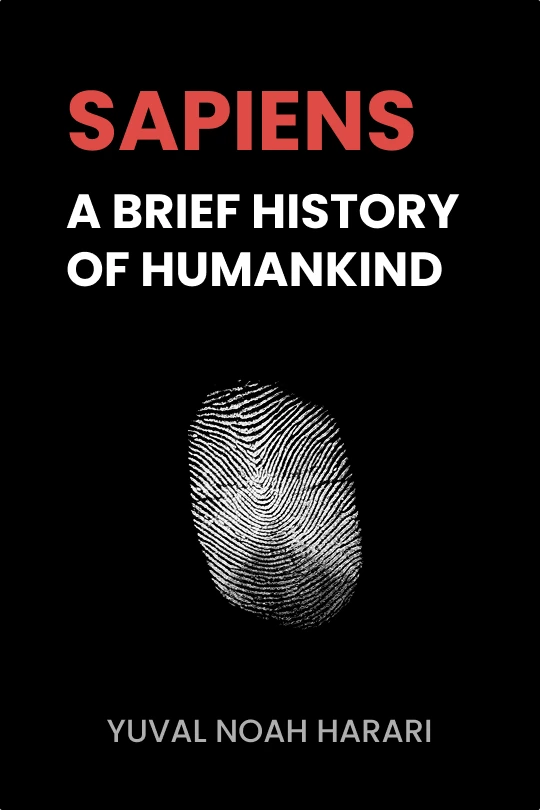
Sapiens: A Brief History of Humankind
Yuval Noah Harari
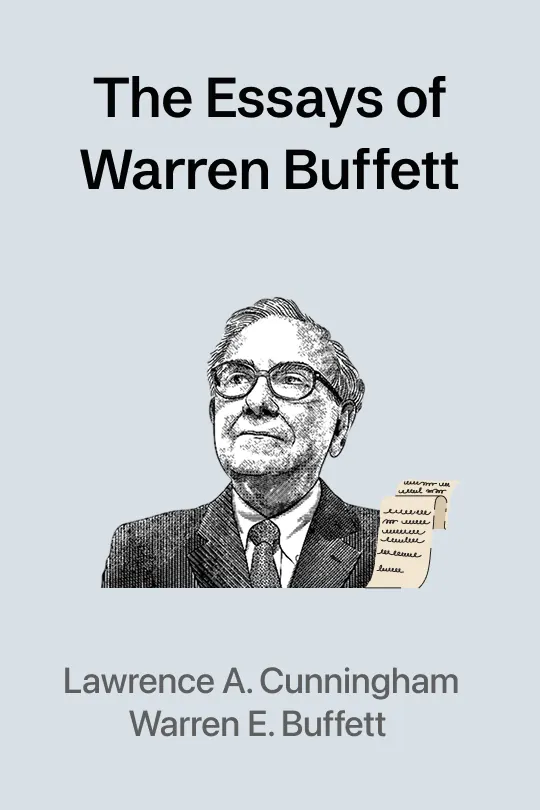
The Essays of Warren Buffett: Lessons for Corporate America
Lawrence A. Cunningham, Warren Buffett
Blueprints: How mathematics shapes creativity
Marcus du Sautoy

Permanent Record
Edward Snowden