
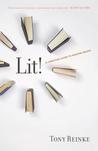
Lit!: A Christian Guide to Reading Books
"A theological and practical manifesto for cultivating a discerning, God-honoring life through the disciplined art of reading."
- 1Establish a theological foundation for reading. Reading is not a neutral act but a spiritual discipline. A robust biblical worldview provides the essential framework for interpreting all literature, allowing one to engage with secular works without compromising faith.
- 2Prioritize Scripture as your primary textual diet. The Bible is the ultimate and indispensable book. All other reading must orbit this central text, which shapes perspective and guards against intellectual and spiritual malnourishment.
- 3Read fiction for profound moral and theological instruction. Well-crafted novels and stories often convey truth about the human condition and God's world with more power and nuance than straightforward nonfiction, teaching empathy and complex understanding.
- 4Cultivate discernment in selecting what to read. Life is too short for bad books. Actively curate a reading list that balances challenge with enjoyment, using trusted sources and clear criteria to filter the endless stream of publications.
- 5Grant yourself permission to quit mediocre books. Not every book merits completion. Abandoning poorly written or unproductive texts is a strategic decision that conserves intellectual energy for works of genuine substance and value.
- 6Read multiple books concurrently across genres. A diversified reading regimen—mixing theology, fiction, history, and practical guides—prevents fatigue, cross-pollinates ideas, and sustains engagement by offering appropriate material for different moods and moments.
- 7Read slowly to achieve deep comprehension, not volume. The goal is understanding and transformation, not tallying finished titles. Slow, reflective reading allows for integration of ideas and yields far greater long-term benefit than hasty consumption.
- 8Engage with challenging and 'dark' literature purposefully. Avoiding difficult themes creates a fragile faith. Carefully reading works that explore suffering and sin can deepen one's understanding of grace, evil, and the world's need for redemption.
Lit! presents a robust Christian theology of reading, arguing that the act is not merely a hobby but a vital spiritual discipline that shapes the soul and sharpens the mind. Reinke posits that in a culture increasingly dominated by fleeting images, the sustained attention required by reading is a counter-cultural act of worship. The book establishes a gospel-centered framework, asserting that all reading must be anchored in the ultimate Word—Scripture—which provides the lens through which every other book should be evaluated.
Building on this foundation, the work systematically explores the purpose and practice of reading. It makes a compelling case for the value of fiction and secular literature, not as mere entertainment, but as legitimate sources of truth, beauty, and moral insight that can enlarge a reader's empathy and understanding of God's world. Reinke dismantles the false sacred-secular divide, guiding readers toward a confident, discerning engagement with the full breadth of human writing.
The second half transitions into eminently practical advice, covering the essential skills for a flourishing reading life. It addresses the mechanics of selection, the strategy of maintaining a concurrent reading diet across genres, the art of note-taking, and the wisdom of knowing when to abandon a book. This section functions as a field manual for building sustainable habits that move beyond guilt-driven reading quotas.
Ultimately, Lit! is targeted at any Christian who feels either overwhelmed by or negligent of reading. It serves as both an apologetic for the literary life and a practical guide to curating one. Its legacy is in equipping believers to approach books not with anxiety or intellectual pride, but with gospel-fueled discernment, seeing reading as a means to love God and neighbor more fully.
Readers celebrate the book as a transformative and practical guide, particularly praising its strong theological foundation and the subsequent actionable advice. The consensus finds the first half intellectually enriching and the second half immensely useful for building better habits. A minor critique notes a desire for more specific contemporary examples or resource lists, but this does not diminish the overwhelming appreciation for its unpretentious, gospel-centered approach to cultivating a purposeful reading life.
- 1The value and theological justification for reading fiction and secular literature as a Christian.
- 2Practical strategies for building a balanced reading diet and knowing when to quit a book.
- 3The emphasis on reading for deep understanding and love of Christ, rather than for mere volume or status.
The Norwegian Method
Brad Culp
Blueprints: How mathematics shapes creativity
Marcus du Sautoy
Breath: The New Science of a Lost Art
James Nestor
The Psychology of Money: Timeless Lessons on Wealth, Greed, and Happiness
Morgan Housel

Chip War: The Quest to Dominate the World's Most Critical Technology
Chris Miller
The Essays of Warren Buffett: Lessons for Corporate America
Lawrence A. Cunningham, Warren Buffett
Code: The Hidden Language of Computer Hardware and Software
Charles Petzold
The Creative Habit
Twyla Tharp, Mark Reiter
Bad Samaritans
Ha-Joon Chang
Stumbling on Happiness
Daniel Gilbert

The Intelligent Investor
Benjamin Graham
The Artist's Way
Julia Cameron