

Where Good Ideas Come From: The Natural History of Innovation
"Innovation thrives not in isolation, but within dense, interconnected networks that allow ideas to collide and recombine."
Nook Talks
- 1[object Object]
- 2[object Object]
- 3[object Object]
- 4[object Object]
- 5[object Object]
- 6[object Object]
Steven Johnson’s Where Good Ideas Come From dismantles the myth of the lone genius struck by a sudden flash of inspiration. Instead, it posits innovation as a natural process with its own history and ecology, one best understood through patterns that recur across biology, technology, and culture. Johnson argues that breakthrough ideas are less like bolts from the blue and more like new species evolving in a rich ecosystem; they require specific, fertile conditions to emerge.
At the heart of the book are seven key patterns that characterize these fertile environments. Johnson introduces concepts like "the adjacent possible," the ever-expanding frontier of potential next steps available at any moment, and "liquid networks," environments of optimal connectivity where ideas can flow and recombine. He explores the critical role of serendipity, error, and exaptation—the borrowing of a tool or concept for a purpose other than its original intent. Through a tapestry of historical examples, from Darwin’s insights on coral reefs to the invention of the World Wide Web, he demonstrates how these patterns operate in concert.
The narrative traces a compelling arc from the natural world to human-made systems, showing how cities and the internet function as unparalleled innovation engines because they maximize connectivity and the collision of diverse hunches. Johnson delves into the importance of tools that preserve and connect ideas over time, such as the Enlightenment-era commonplace book, a direct precursor to modern digital platforms for collective intelligence.
Ultimately, the book is a profound argument for open, networked systems over closed, proprietary ones. It provides a new framework for understanding our collective creative history and offers a practical blueprint for designing more innovative institutions, companies, and social spaces. Its insights are essential for entrepreneurs, educators, and anyone interested in fostering creativity, making it a foundational text in the study of how change actually happens.
The readership praises the book’s intellectually ambitious synthesis of science, history, and technology, finding its core framework for innovation both revelatory and enduringly useful. However, a significant portion of readers find its reliance on evolutionary biology and dense scientific analogies challenging, occasionally distracting from the central thesis. The historical anecdotes, particularly regarding platforms like the commonplace book, are universally celebrated as the most engaging and illuminating sections of the work.
- 1The compelling analogy between coral reef ecosystems and human innovation hubs, which frames the entire book's thesis.
- 2Debate over the author's strong Darwinist perspective and its application to technological and social evolution.
- 3Appreciation for the historical deep dive into Enlightenment-era 'commonplace books' as precursors to modern web platforms.
- 4Frustration with the book's scholarly density, which some found more challenging than typical pop-science works on innovation.

Stumbling on Happiness
Daniel Gilbert

The Crash Course
Chris Martenson

Breath: The New Science of a Lost Art
James Nestor

Bad Samaritans
Ha-Joon Chang

Chip War: The Quest to Dominate the World's Most Critical Technology
Chris Miller
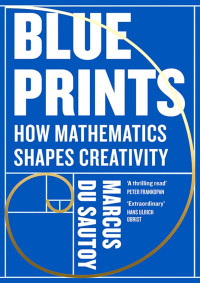
Blueprints: How mathematics shapes creativity
Marcus du Sautoy

The Essays of Warren Buffett: Lessons for Corporate America
Lawrence A. Cunningham, Warren Buffett

The Creative Habit
Twyla Tharp, Mark Reiter

The Norwegian Method
Brad Culp

Permanent Record
Edward Snowden

The Psychology of Money: Timeless Lessons on Wealth, Greed, and Happiness
Morgan Housel

The Art of Contrarian Trading
Carl Futia