
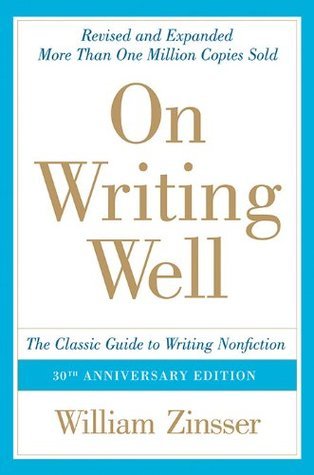
On Writing Well: The Classic Guide to Writing Nonfiction
"Strip your prose of clutter to achieve clarity, humanity, and truth in any form of nonfiction."
Nook Talks
- 1Eliminate every word that does not serve a purpose. Clutter is the disease of American writing. Vigorous prose is clean and concise, achieved through ruthless self-editing that removes the superfluous to let the essential idea shine.
- 2Craft your writing with humanity and warmth. Good nonfiction is not a cold transmission of facts. It connects through the writer's authentic voice, engaging the reader with personality, humor, and a sense of shared discovery.
- 3Master the universal principles before specializing in a genre. The core tenets of clarity, simplicity, and integrity apply equally to memoir, science writing, business reports, and travelogues. Genre-specific advice builds upon this foundational craft.
- 4Your attitude and integrity are the ultimate sources of style. Writing is a moral act. The writer's attention, respect for the reader, and commitment to truth shape the prose at a fundamental level, transcending mere technique.
- 5Learn by studying the work of distinguished practitioners. Zinsser dissects exemplary passages to demonstrate his principles in action, teaching writers to read like craftsmen, analyzing how effective prose is built sentence by sentence.
- 6Approach writing as a humble, disciplined craft. The romantic myth of the inspired genius is discarded. Writing is hard work requiring skill, intelligence, and heart—a daily practice of a dedicated artisan.
William Zinsser’s On Writing Well stands as a foundational text in the craft of nonfiction, less a rulebook than a wise and enduring philosophy of clear communication. It begins from the premise that clutter is the endemic disease of American prose, a barrier between writer and reader that must be surgically removed. Zinsser’s central commandment is simplicity: the relentless pursuit of the clean, the direct, and the human in every sentence, paragraph, and piece.
Zinsser systematically builds his case, moving from foundational principles—clarity, brevity, and the writer’s essential humanity—to their application across a diverse landscape of nonfiction forms. He devotes chapters to interviewing, travel writing, science and technology, business, sports, criticism, and memoir, arguing that the universal tools of the craft adapt to each genre’s unique demands. The methodology is intensely practical, illustrated with copious examples from both his own work and writers he admires, demonstrating how effective prose is built and, just as importantly, how bad prose can be revised.
The book’s deeper argument is that writing is a moral act inextricable from the writer’s character. Good writing, Zinsser posits, springs from integrity, respect for the reader, and a genuine engagement with the subject. The final sections address the writer’s attitudes—confidence, enjoyment, and the inevitable anxieties of the craft—framing the work not as a mystical art but as a disciplined, rewarding practice of a humble artisan.
Its legacy is that of a classic primer, indispensable for students and professionals alike. While its examples are rooted in its time, its principles are timeless, offering a rigorous yet warmly delivered standard for anyone who wishes to write with truth, precision, and grace. It targets every writer, from the novice navigating a first memo to the seasoned journalist, insisting that thoughtful craft elevates all communication.
The consensus venerates this as an essential, pragmatic masterclass in prose fundamentals, particularly its ruthless advocacy for clarity and concision. Readers prize its timeless, actionable advice and warm, mentor-like tone. Criticisms, though fewer, note a dated, sometimes narrow selection of examples and a voice that can feel dry or overly familiar to those already versed in writing guides. It is universally deemed accessible and profoundly useful, if not always exhilarating.
- 1The timeless relevance of Zinsser's 'clutter-cutting' principle versus the dated nature of his literary examples.
- 2Whether the book's warm, mentor-like tone is engaging or occasionally veers into predictable, grandfatherly advice.
- 3Debate on the book's value for fiction writers, with many arguing its core principles of clarity and voice are universally applicable.
- 4The effectiveness of learning through Zinsser's annotated examples of good and bad prose from other writers.
Transformation in Christ
Dietrich Von Hildebrand

Permanent Record
Edward Snowden
The Art of Contrarian Trading
Carl Futia

How to Win Friends & Influence People
Dale Carnegie

Just Listen: Discover the Secret to Getting Through to Absolutely Anyone
Mark Goulston

The Road to Financial Freedom
Bodo Schäfer
The Creative Habit
Twyla Tharp, Mark Reiter
The Crash Course
Chris Martenson
The Norwegian Method
Brad Culp
The Essays of Warren Buffett: Lessons for Corporate America
Lawrence A. Cunningham, Warren Buffett

The Intelligent Investor
Benjamin Graham
Blueprints: How mathematics shapes creativity
Marcus du Sautoy