
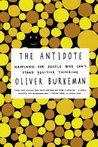
The Antidote: Happiness for People Who Can't Stand Positive Thinking
"Find contentment not by chasing positivity, but by embracing uncertainty, failure, and mortality as essential parts of life."
- 1Pursue negative visualization to inoculate against anxiety. Stoic practices like premeditatio malorum—deliberately imagining worst-case scenarios—reduce fear by making potential losses familiar, thereby diminishing their psychological power and fostering resilience.
- 2Abandon rigid goal-setting for open-ended exploration. Fixating on specific future outcomes creates anxiety and blinds us to alternative paths. A focus on present action and systems, rather than distant targets, yields more adaptable progress.
- 3Accept thoughts and moods without attempting to change them. The effort to suppress or alter negative emotions often amplifies them. Buddhist mindfulness teaches observation without judgment, allowing difficult states to pass naturally.
- 4Embrace uncertainty as the fundamental condition of existence. Our craving for security and predictability generates chronic stress. True comfort comes from acknowledging that control is an illusion and learning to dwell comfortably in the unknown.
- 5Confront mortality to clarify present priorities. Regular contemplation of death, far from being morbid, acts as a focusing mechanism. It strips away trivial concerns and intensifies engagement with what truly matters now.
- 6Separate self-worth from external success or failure. Stoic philosophy distinguishes between what is within our control (our judgments and actions) and what is not (outcomes). Basing esteem on the former provides unshakeable internal stability.
Oliver Burkeman’s The Antidote mounts a provocative and meticulously reported challenge to the multibillion-dollar positive thinking industry. Rejecting the relentless cheerleading of mainstream self-help, Burkeman argues that the obsessive pursuit of happiness—through affirmations, visualization, and goal-setting—is precisely what fuels modern anxiety and dissatisfaction. The book posits that our efforts to violently eliminate negative thoughts and feelings create a psychological rebound effect, trapping us in cycles of stress and self-recrimination.
Burkeman embarks on a series of intellectual journeys to uncover what he terms the “negative path.” He engages with Stoic philosophers who practiced premeditating worst-case scenarios to achieve tranquility, and with Buddhist teachers who advocate mindful acceptance of present-moment experience, however unpleasant. He interviews security experts who demonstrate how our frantic attempts to eliminate risk often make us less safe, and explores cultures that institutionalize uncertainty, like Mexico’s Day of the Dead, which integrates mortality into communal celebration.
The narrative investigates practical alternatives to positive thinking, from “backwards” business strategies that reject rigid five-year plans to the psychological benefits of embracing failure as data. Burkeman examines the work of artists and writers who prioritize disciplined process over fleeting inspiration, arguing that consistent action, not motivational fervor, yields lasting achievement. The book systematically deconstructs the mantra of goal-setting, suggesting it narrows perspective and makes happiness perpetually contingent on a future that never arrives.
Ultimately, The Antidote offers a subversive yet deeply reassuring philosophy for the ambitious but weary. It is a work of intellectual journalism that synthesizes ancient wisdom and contemporary psychology, providing a rigorous framework for anyone skeptical of simplistic optimism. Its audience is the thoughtful pragmatist seeking a sturdier, more durable form of contentment rooted in reality rather than fantasy.
The critical consensus celebrates the book’s intellectual rigor and refreshing counter-narrative to toxic positivity. Readers deeply appreciate its synthesis of Stoic and Buddhist philosophy with modern psychology, finding its arguments both liberating and validating. However, a significant contingent critiques the work as ultimately repackaging familiar wisdom without offering sufficiently novel or practical application. Some find the tone overly journalistic and the conclusions intellectually satisfying yet difficult to implement for those lacking innate discipline, leaving them with insight but without a clear behavioral roadmap.
- 1The practicality of Stoic 'negative visualization' for managing modern anxiety versus its perceived pessimism.
- 2Debate over whether abandoning goal-setting is liberating for creativity or irresponsible for achieving tangible results.
- 3The accessibility of the book's philosophy for those without a naturally disciplined or 'Trollope-like' temperament.
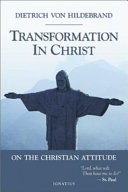
Transformation in Christ
Dietrich Von Hildebrand
The Road to Financial Freedom
Bodo Schäfer

Code: The Hidden Language of Computer Hardware and Software
Charles Petzold
The Psychology of Money: Timeless Lessons on Wealth, Greed, and Happiness
Morgan Housel
Breakthrough: The Quest for Life-Changing Medicines
Dr William Pao
Breath: The New Science of a Lost Art
James Nestor

Permanent Record
Edward Snowden

Out of Control
Kevin Kelly

The Intelligent Investor
Benjamin Graham

Chip War: The Quest to Dominate the World's Most Critical Technology
Chris Miller
The Art of Contrarian Trading
Carl Futia
The Crash Course
Chris Martenson