
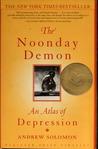
The Noonday Demon: An Atlas of Depression
"A monumental exploration that maps depression's harrowing terrain, transforming personal and collective suffering into profound, hard-won wisdom."
Nook Talks
- 1Depression is a complex, heterogeneous condition without a universal cure. The illness manifests uniquely in each individual, defying simplistic biological or psychological models. Effective treatment requires a personalized, often experimental, approach that acknowledges this irreducible messiness.
- 2Personal narrative is essential to understanding the illness's true weight. Solomon's unflinching autobiographical account grounds clinical and cultural analysis in lived reality. This fusion demonstrates how theory fails without the context of raw, subjective experience.
- 3The social and political dimensions of depression are inescapable. Depression is filtered through cultural attitudes, economic disparity, and healthcare policy. Its diagnosis, treatment, and stigma vary dramatically across national, gender, and class boundaries.
- 4Treatments are a fraught landscape of science, commerce, and hope. From pharmaceuticals to talk therapy, the book scrutinizes the efficacy and ethics of various interventions. It reveals a medical-industrial complex where genuine help coexists with profiteering and spectacle.
- 5Suicide must be understood, not merely condemned or romanticized. Solomon approaches suicide with tragic clarity, examining it as a potential outcome of severe depression. He dissects its philosophical weight and the burden it places on individuals and societies.
- 6The experience of depression can forge a paradoxical, transformative depth. While not glorifying suffering, the work argues that surviving profound despair can cultivate a unique resilience and empathy unavailable to those untouched by such darkness.
Andrew Solomon’s The Noonday Demon: An Atlas of Depression is a definitive, encyclopedic work that charts the vast and shadowed geography of a global illness. It begins not as a clinical textbook but as a deeply personal odyssey, rooted in the author’s own brutal encounters with severe, recurring depression. This personal stake provides the narrative engine for a journey that spans continents, disciplines, and centuries, positioning depression not as a modern malady but as a persistent, shape-shifting facet of the human condition.
Solomon systematically investigates the disease’s manifold aspects across chapters devoted to breakdowns, treatments, addiction, and suicide. He synthesizes cutting-edge neuroscience, the history of psychiatric thought, and cross-cultural anthropology, illustrating how depression is experienced differently in Senegal, Greenland, and Cambodia. The book dissects the pharmacopoeia of antidepressants, laying bare both their biochemical mechanisms and the surreal marketing theatrics of the pharmaceutical industry, while also giving serious consideration to alternative therapies and the enduring value of psychoanalysis.
The analysis extends into the social and political realms, examining how poverty, gender, and public policy determine who suffers in silence and who receives care. Solomon argues that depression is inherently political—a illness whose definition and treatment are contested territories. He navigates these discordant views without seeking a false consensus, allowing the contradictions and complexities to stand, thereby honoring the chaotic reality of the illness itself.
Ultimately, this is a work of monumental synthesis and humane scholarship. It is targeted at sufferers, caregivers, clinicians, and any reader seeking to comprehend one of civilization’s oldest and most isolating plagues. Its legacy lies in its refusal to offer easy answers, instead providing a comprehensive, empathetic framework for understanding despair. The book concludes not with a promise of eradication, but with a hard-earned argument for the possibility of meaning forged in the crucible of suffering, making it an indispensable atlas for navigating the darkest of human seasons.
Readers unanimously praise the book's staggering scope and empathetic depth, hailing it as a definitive, life-changing resource on depression. The primary critique centers on its daunting density and considerable length, which some find overwhelming. A minority of reviewers express discomfort with Solomon's nuanced exploration of the link between mental illness and violence, perceiving it as overly sympathetic to perpetrators. The consensus, however, is that its intellectual and emotional rigor justifies the commitment, offering unparalleled insight.
- 1The book's monumental length and dense, academic prose, which is seen as both a necessary depth and a significant barrier to completion.
- 2Solomon's personal narrative and vulnerability, which are celebrated for grounding the clinical research in powerful, relatable humanity.
- 3Ethical debates surrounding the author's complex discussion of depression, violence, and societal responsibility.
- 4The work's comprehensive utility for those personally affected by depression versus its value as a scholarly, cultural text for a general audience.

Sapiens: A Brief History of Humankind
Yuval Noah Harari

The Road to Financial Freedom
Bodo Schäfer

Bad Samaritans
Ha-Joon Chang
The Crash Course
Chris Martenson

Code: The Hidden Language of Computer Hardware and Software
Charles Petzold

The Book of Basketball: The NBA According to The Sports Guy
Bill Simmons

The Creative Habit
Twyla Tharp, Mark Reiter

The Essays of Warren Buffett: Lessons for Corporate America
Lawrence A. Cunningham, Warren Buffett

How to Win Friends & Influence People
Dale Carnegie

The Art of Contrarian Trading
Carl Futia

Stumbling on Happiness
Daniel Gilbert

The Artist's Way
Julia Cameron