
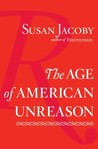
The Age of American Unreason
"A trenchant diagnosis of America's cultural decline, tracing the flight from Enlightenment reason to a society addicted to infotainment and junk thought."
- 1Distinguish between historical anti-intellectualism and modern anti-rationalism. Earlier American skepticism of elites was tempered by respect for facts. Today's crisis is a wholesale rejection of logic and evidence, enabled by digital media and a collapse of intellectual standards in public discourse.
- 2Recognize aliteracy as a more insidious threat than illiteracy. The conscious choice not to read, despite the ability, represents a cultural surrender. It cedes the public square to visual and emotional infotainment, eroding the capacity for sustained, complex thought and democratic engagement.
- 3Identify the corrosive synergy between fundamentalism and mass media. Triumphalist religion and profit-driven media jointly foster a credulous public. They replace secular knowledge and scientific literacy with received opinion and pseudo-intellectual frameworks, shaping policy and education from a basis of faith, not reason.
- 4Confront the failure of public education as a cultural choice. Educational decline is not an accident but a reflection of societal values that prize utility over wisdom and mock intellectual ambition. This devaluation creates a vicious cycle, producing citizens unequipped to critique the very system that failed them.
- 5Trace the political cost of the flight from reason. A disengaged, poorly informed electorate is vulnerable to demagoguery and simplistic narratives. The health of a republic depends on a citizenry capable of critical thinking, a capacity now in perilous deficit.
Susan Jacoby’s The Age of American Unreason is a work of cultural pathology, offering a stark and meticulously researched autopsy of the American mind. It argues that the United States is in the grip of a pervasive anti-rationalism, a condition distinct from the cyclical anti-intellectualism of its past. This new malaise represents a fundamental rejection of the Enlightenment principles of logic, evidence, and secular knowledge upon which the nation was founded, threatening the very underpinnings of its democratic experiment.
Jacoby constructs her case through a historical narrative, contrasting the reasoned discourse of the Founding Fathers with the gradual ascent of what she terms "junk thought." She examines the pivotal roles played by the decline of print culture, the rise of mass "infotainment," and the strategic political empowerment of religious fundamentalism. The book dissects how these forces have cultivated a lazy and credulous public, one increasingly marked by scientific and historical illiteracy and a preference for emotive, media-driven language over substantive argument.
The analysis extends into the realms of education and politics, documenting a public school system that reflects and reinforces a culture disdainful of intellectual rigor. Jacoby highlights the alarming rise of "aliteracy"—the willful avoidance of reading—and the marginalization of fair-minded public intellectuals. This creates a vacuum filled by partisan polemicists and celebrity pundits, further degrading the quality of public debate.
Ultimately, the book serves as both a dire warning and a call to intellectual arms. Its significance lies in its unflinching synthesis of history, media criticism, and political observation, targeting readers concerned with civic health and cultural preservation. Jacoby posits that recognizing this "overarching crisis of memory and knowledge" is the essential first step toward reclaiming a public square capable of reason.
Readers greet Jacoby’s thesis with a potent mixture of grim recognition and frustrated agreement. They praise the book’s erudite historical framing and its compelling, if depressing, diagnosis of a nation in cognitive decline. The central critique, however, is one of tone and scope: many find her perspective unrelentingly pessimistic and elitist, arguing it dismisses popular culture wholesale and offers scant practical remedy. While her scholarship is respected, the consensus is that the work functions better as a provocative polemic than a balanced guide to cultural repair.
- 1Debate over the book's perceived elitism and dismissal of all popular culture as inherently anti-intellectual.
- 2Discussion on the accuracy of her historical analysis contrasting past anti-intellectualism with present anti-rationalism.
- 3Criticism of the book's pessimistic tone and its failure to propose concrete solutions for the crisis it outlines.
- 4Agreement with her diagnosis of 'aliteracy' and the damaging effects of infotainment on public discourse.
The Creative Habit
Twyla Tharp, Mark Reiter
The Lessons of History
Will Durant
Radical Markets: Uprooting Capitalism and Democracy for a Just Society
Eric A. Posner, E. Glen Weyl

Chip War: The Quest to Dominate the World's Most Critical Technology
Chris Miller

Bad Samaritans
Ha-Joon Chang
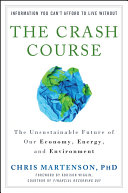
The Crash Course
Chris Martenson

Code: The Hidden Language of Computer Hardware and Software
Charles Petzold
Out of Control
Kevin Kelly

Amusing Ourselves to Death: Public Discourse in the Age of Show Business
Neil Postman
The Road to Financial Freedom
Bodo Schäfer

The Almanack of Naval Ravikant
Naval Ravikant, Eric Jorgenson
Stumbling on Happiness
Daniel Gilbert