

Poor Charlie's Almanack: The Wit and Wisdom of Charles T. Munger
"A masterclass in avoiding stupidity and cultivating a latticework of mental models for clearer thinking and better decisions."
Nook Talks
- 1[object Object]
- 2[object Object]
- 3[object Object]
- 4[object Object]
- 5[object Object]
- 6[object Object]
Poor Charlie's Almanack is less a conventional book than an intellectual portrait, assembling the speeches, writings, and philosophy of Charles T. Munger, the longtime partner of Warren Buffett. It presents not a linear narrative but a mosaic of his core idea: that true wisdom is multidisciplinary. Munger argues that the man with a hammer sees every problem as a nail, and thus a robust intellect requires a "latticework" of mental models drawn from psychology, economics, physics, biology, and history.
At the heart of Munger's philosophy is inversion. He contends that much of success comes not from brilliant strokes of genius but from the consistent avoidance of folly, stupidity, and catastrophic error. This leads to his famous checklist of standard causes of human misjudgment—two dozen psychological biases like denial, envy, and incentive-caused bias that routinely distort clear thinking. The book provides the tools to diagnose and disarm these cognitive failures.
The almanack also details Munger's approach to investing and business, which is an extension of his worldview. It emphasizes extreme patience, the discipline to sit with cash awaiting a few truly exceptional "no-brainer" opportunities, and the courage to bet heavily when the odds are profoundly favorable. This requires a rare temperament that combines academic curiosity with pragmatic action.
Ultimately, the book's significance lies in its advocacy for lifelong learning and character development. It is a guide for building reliable judgment, aimed at investors, business leaders, and any serious thinker seeking to navigate a complex world with fewer blind spots and greater intellectual rigor. Its legacy is that of a modern-day Benjamin Franklin, offering pragmatic wisdom for developing not just wealth, but a sound and effective mind.
The reader consensus venerates the book as a transformative compilation of timeless wisdom, praising its dense, multidisciplinary insights into clear thinking and decision-making. Critics, while few, find its non-linear, speech-based format repetitive and occasionally disjointed, wishing for a more synthesized narrative. The overwhelming sentiment is one of deep gratitude for its intellectual heft, with many describing it as a lifelong reference to be revisited annually.
- 1The practical application and construction of Munger's 'latticework of mental models' for everyday decision-making.
- 2Debates on the book's structure, with some finding the speech format authentic and others desiring a more edited, linear argument.
- 3The profound value of the 'psychology of human misjudgment' checklist as a tool for self-diagnosis and improved judgment.
- 4Munger's principle of 'inversion'—focusing on avoiding stupidity rather than seeking brilliance—as a foundational life strategy.
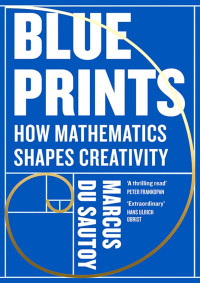
Blueprints: How mathematics shapes creativity
Marcus du Sautoy

How to Win Friends & Influence People
Dale Carnegie

Permanent Record
Edward Snowden

Just Listen: Discover the Secret to Getting Through to Absolutely Anyone
Mark Goulston
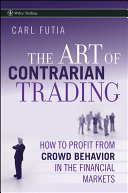
The Art of Contrarian Trading
Carl Futia
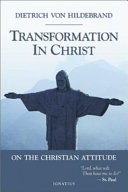
Transformation in Christ
Dietrich Von Hildebrand

Sapiens: A Brief History of Humankind
Yuval Noah Harari

Breath: The New Science of a Lost Art
James Nestor
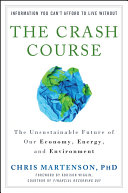
The Crash Course
Chris Martenson

Out of Control
Kevin Kelly
The Norwegian Method
Brad Culp

The Road to Financial Freedom
Bodo Schäfer