

The Inner Game of Tennis: The Classic Guide to the Mental Side of Peak Performance
"Transcend self-interference by quieting the critical mind, unlocking natural excellence in any performance."
Nook Talks
- 1Distinguish between the critical Self 1 and the natural Self 2. Performance anxiety stems from Self 1's judgmental commentary, which disrupts the innate, fluid capabilities of Self 2. Mastery requires silencing the former to trust the latter.
- 2Cultivate non-judgmental awareness as the primary skill. Instead of critiquing mistakes, practice simple observation. This detached focus removes the emotional stakes that create tension and impede organic learning and action.
- 3Use external focus points to quiet internal dialogue. Direct attention to sensory details—the ball's seams, the sound of contact, the rhythm of breath. This occupies the analytical mind, allowing the body to perform without interference.
- 4Replace effortful trying with relaxed concentration. Straining for control often produces the opposite of the intended result. Peak performance emerges from a state of focused calm, not from forceful will or positive thinking.
- 5Understand that learning is discovery, not correction. The body learns best through experiential feedback, not verbal instruction. Create clear mental images of desired outcomes and allow the nervous system to self-organize toward them.
- 6Apply the inner game principles beyond sports to life. The conflict between the doubting mind and the capable self is universal. The methodology offers a framework for overcoming mental obstacles in business, arts, and personal development.
W. Timothy Gallwey's The Inner Game of Tennis is not merely a sports manual but a seminal work in performance psychology, proposing that the principal opponent one faces is never across the net but within one's own mind. Published in the 1970s, it identified a universal pattern: the internal dialogue of doubt, instruction, and criticism that sabotages natural ability. Gallwey frames this as a conflict between two selves—Self 1, the anxious, analytical teller, and Self 2, the embodied, intuitive doer. The book's revolutionary premise is that excellence is not an additive process of cramming in more technique, but a subtractive one of removing mental interference.
Gallwey's methodology centers on shifting from a state of judgmental 'trying' to one of non-judgmental awareness. He introduces practical tools such as focused observation, where a player might simply watch the ball's spin or listen to the sound of impact, thereby quieting Self 1's chatter. This creates space for Self 2, which possesses all the innate coordination and knowledge required, to execute the action fluidly. The process is one of trust and discovery, where learning occurs organically through feedback from the action itself rather than from a coach's constant correction.
The book systematically explores applications of this core principle—from mastering basic strokes to breaking out of slumps—and delves into the psychology of competition, concentration, and meaning. Gallwey distinguishes his work from simplistic positive thinking, arguing that true confidence is a byproduct of this attentive, interference-free state. He posits that the 'inner game' is ultimately about presence: the ability to exist fully in the present moment, where performance naturally unfolds.
Its impact has far transcended tennis, seeding the modern coaching and personal development industries. The framework provides a powerful lens for anyone engaged in a skilled activity, from executives and musicians to writers and students, making it a timeless guide to achieving relaxed concentration and unlocking potential stifled by self-criticism.
Readers hail it as a transformative classic, its principles applicable far beyond the court to music, business, and personal growth. The consensus celebrates its profound yet simple psychology—the dichotomy of Self 1 and Self 2—as a revelatory tool for quieting self-sabotage. Criticisms are minor, occasionally noting the tennis-specific examples can feel repetitive, but this is overwhelmingly overshadowed by praise for its foundational wisdom. It is deemed exceptionally accessible, with a clear, metaphor-rich style that makes complex mental concepts tangible and actionable.
- 1The universal applicability of the Self 1 vs. Self 2 framework to non-sport domains like public speaking and creative work.
- 2Debating the book's core as a guide to mindfulness and presence versus a pure performance manual.
- 3The practical effectiveness of specific focus techniques, such as watching the ball's seams or listening to its sound.

The Essays of Warren Buffett: Lessons for Corporate America
Lawrence A. Cunningham, Warren Buffett

Sapiens: A Brief History of Humankind
Yuval Noah Harari

How to Win Friends & Influence People
Dale Carnegie

Permanent Record
Edward Snowden
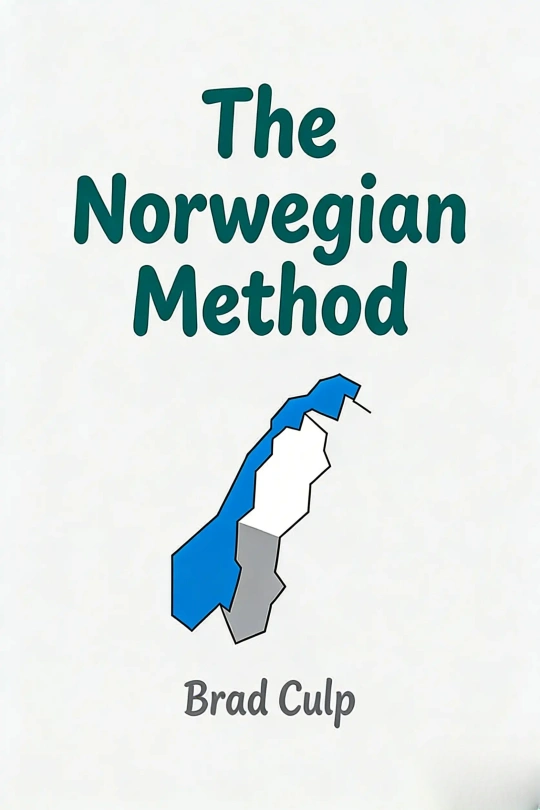
The Norwegian Method
Brad Culp
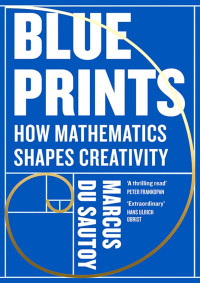
Blueprints: How mathematics shapes creativity
Marcus du Sautoy

Chip War: The Quest to Dominate the World's Most Critical Technology
Chris Miller

The Art of Contrarian Trading
Carl Futia

The Psychology of Money: Timeless Lessons on Wealth, Greed, and Happiness
Morgan Housel

Stumbling on Happiness
Daniel Gilbert

The Almanack of Naval Ravikant
Naval Ravikant, Eric Jorgenson

The Intelligent Investor
Benjamin Graham