
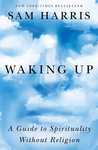
Waking Up: A Guide to Spirituality Without Religion
"A neuroscientist's case for meditation as a rational practice, divorcing profound self-inquiry from religious dogma."
- 1Separate the subjective experience from religious doctrine. The core insight of contemplative practice is an empirical investigation of consciousness itself, which is independent of the cultural and metaphysical narratives that often surround it.
- 2Use mindfulness to deconstruct the illusion of the self. Sustained attention reveals the self not as a continuous entity but as a fleeting construct of thought and sensation, a realization with liberating psychological consequences.
- 3Ground spiritual inquiry in neuroscience and psychology. Scientific understanding of the brain provides a crucial framework for interpreting meditative states, demystifying them without diminishing their potential personal significance.
- 4Approach meditation as a tool for ethical clarity. By reducing the mind's habitual reactivity and fostering equanimity, the practice naturally cultivates a more compassionate and less self-centered orientation toward the world.
- 5Recognize consciousness as the fundamental reality. All experience, including the apparent external world, is contingent upon consciousness, making its direct investigation the most important empirical project for any sentient being.
Sam Harris’s Waking Up confronts a central paradox of modern intellectual life: the divorce between scientific materialism and the profound, transformative experiences described by mystics and contemplatives throughout history. Harris, a neuroscientist and prominent skeptic, argues that this chasm is neither necessary nor wise. The book posits that there are truths about the nature of the human mind accessible through practices like meditation, truths that do not require a leap into religious faith but rather a disciplined, first-person investigation.
Harris structures his argument as both a philosophical treatise and a seeker’s memoir, detailing his own journeys to meet meditation masters and his experiments with psychedelics. He meticulously dissects the core teachings of Buddhism, particularly Dzogchen and Advaita Vedanta, stripping them of cultural baggage to isolate their phenomenological claims. The central thrust is the examination of consciousness itself and the illusory nature of the self—the persistent feeling of being a subject inside one’s head—which he argues can be directly apprehended as false through sustained mindfulness.
The book delves into the neuroscience supporting meditation’s benefits, from altering brain structure to regulating emotion, while carefully distinguishing these mechanistic explanations from the qualitative nature of conscious experience. Harris is particularly concerned with the ethical implications of this work, suggesting that seeing through the illusion of the separate self can form a natural foundation for compassion and moral reasoning, unmoored from religious commandment.
Ultimately, Waking Up is a manifesto for a secular spirituality. It is aimed squarely at non-believers, scientists, and rationalists who suspect that ignoring the contemplative path means neglecting a critical dimension of human potential. Harris’s project is to reclaim the territory of deep, personal transformation for the enlightenment toolkit of reason and evidence, offering a rigorous path to meaning without mythology.
The consensus finds Harris's rational framing of meditation a vital gateway for skeptics, praising its intellectual rigor and demystifying approach. Readers consistently value the synthesis of neuroscience with contemplative practice. However, a significant faction criticizes the book for being overly cerebral, arguing that its philosophical density can feel abstract and lacks the practical, step-by-step guidance many seekers expect from a 'guide.' The tone is appreciated by his existing audience but can alienate those seeking a more experiential or traditionally spiritual manual.
- 1The effectiveness of Harris's purely secular approach versus the perceived need for more traditional spiritual or community support structures.
- 2Debate over whether the book's philosophical and neuroscientific focus comes at the expense of providing actionable, practical meditation instructions for beginners.
- 3Discussion surrounding Harris's treatment of consciousness and the 'self' as an illusion, with some finding it liberating and others intellectually unsatisfying or difficult to grasp experientially.
Just Listen: Discover the Secret to Getting Through to Absolutely Anyone
Mark Goulston
The Norwegian Method
Brad Culp
Transformation in Christ
Dietrich Von Hildebrand

Permanent Record
Edward Snowden
Boom: Bubbles and the End of Stagnation
Byrne Hobart

How to Win Friends & Influence People
Dale Carnegie
The Psychology of Money: Timeless Lessons on Wealth, Greed, and Happiness
Morgan Housel
Blueprints: How mathematics shapes creativity
Marcus du Sautoy

Chip War: The Quest to Dominate the World's Most Critical Technology
Chris Miller

The Art of Contrarian Trading
Carl Futia

The Intelligent Investor
Benjamin Graham
Breath: The New Science of a Lost Art
James Nestor