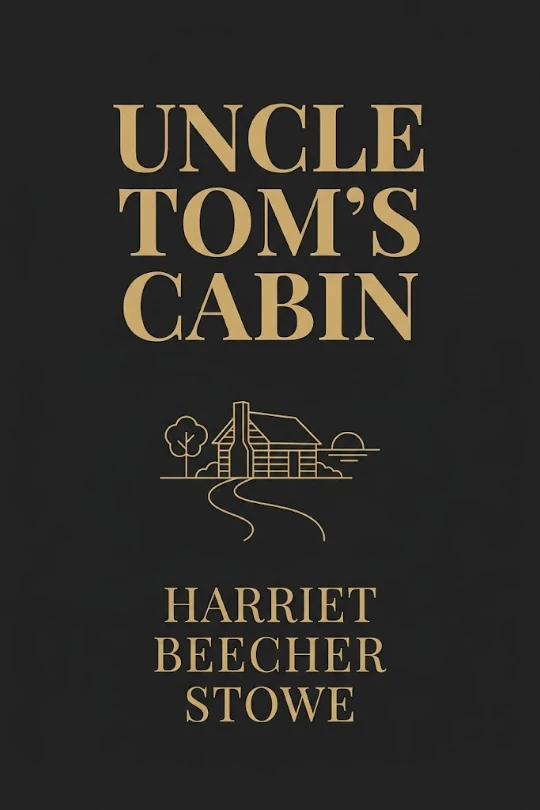
Uncle Tom's Cabin
Book Summaries
Hosts: Clara
Timeline
Summary Preview
In June of 1851, readers of a small abolitionist newspaper called *The National Era* encountered something unexpected. A new serialized story began appearing in weekly installments, written by a woman named Harriet Beecher Stowe. She called it *Uncle Tom's Cabin; or, Life Among the Lowly*. What started as a modest project to fill column space would become the most influential novel of the nineteenth century—outsold only by the Bible itself.
Stowe did not set out to write a bestseller. She set out to change minds. The immediate spark was the Fugitive Slave Act of 1850, a federal law that required citizens in free states to return escaped slaves to their owners. To Stowe, this law forced every American to participate in what she saw as a moral crime. Northerners who had previously felt distant from slavery could no longer look away. The law reached into their communities, their homes.
Stowe, already an active abolitionist, decided to do something that legal arguments and political speeches had failed to accomplish. She would tell a story. She would make her readers *feel* what slavery meant—not through abstract arguments about states' rights or constitutional compromises, but through the eyes of enslaved people themselves. She would show them families torn apart, mothers fleeing with their children, and good people trapped in an evil system.
The strategy worked beyond anything she could have imagined. The serialized story gripped its audience. Readers wrote letters begging for more installments. A publisher convinced Stowe to expand the story into a full novel, and when it appeared in book form in 1852, it sold 300,000 copies in its first year in the United States alone. In Britain, where it was equally popular, over a million copies circulated. The book was translated into dozens of languages. It was adapted into plays, songs, and merchandise. "Uncle Tom" became a household name.
Yet Stowe's novel was not merely a commercial phenomenon. It was a deliberate political intervention. She structured her book around two parallel plots that together revealed the full horror of American slavery. The first follows Uncle Tom, a pious and loyal slave on a Kentucky plantation, as he is sold down the river—first to a kind but passive master in New Orleans, then to the brutal Simon Legree on a cotton plantation deep in the South. Tom's journey is a descent into the heart of darkness, a test of faith that ends in martyrdom.
The second plot follows Eliza, a young enslaved mother who learns that her son Harry has been sold to a slave trader. She makes the desperate decision to flee. Her escape northward, aided by Quakers and sympathetic whites, becomes a race against time and the slave catchers who pursue her. Where Tom's story shows the slow crushing of hope, Eliza's story offers the possibility of freedom.
Stowe wove these two narratives together to make a single argument: slavery destroys everyone it touches. The enslaved suffer physically and emotionally. The masters, even the "kind" ones, become morally corrupted. The laws that protect the system make criminals of ordinary citizens. And the Christian faith that so many Americans profess is betrayed by a system that treats human beings as property.
She wrote directly to her readers, especially mothers, asking them to imagine their own children being torn from them. She used the Bible to challenge slaveholders who claimed Scripture supported their institution. She created characters who defied the stereotypes of her time—Tom, whose faith never breaks; Eliza, whose maternal love drives her to superhuman feats; George Harris, whose intelligence and dignity expose the lie that black people were naturally suited for bondage.
The novel was banned in Southern states, where it was seen as dangerous propaganda. Confederate soldiers reportedly used copies of the book to light their campfires. But in the North, it became a rallying cry. When Abraham Lincoln met Stowe during the Civil War, he reportedly said, "So this is the little lady who made this big war." Whether or not the story is true, it captures the book's impact. *Uncle Tom's Cabin* did not start the war, but it changed the moral landscape of the nation.
Stowe's novel was not without its flaws. Modern readers rightly criticize its racial stereotypes, its paternalistic tone, and its suggestion that freed slaves might be best suited for colonization in Africa. The character of Tom himself has been misunderstood for generations—the term "Uncle Tom" became an insult for a black person who submits to white authority, when Stowe intended Tom as a Christ-like figure whose passive resistance is a form of spiritual triumph.
But the book's historical significance is undeniable. It gave a human face to an abstract political issue. It made millions of Americans confront the reality of slavery in their own country. And it demonstrated, perhaps for the first time on such a scale, that a work of fiction could change the course of history.
The story that began as weekly installments in a small newspaper would outlive its era, its controversies, and its author. It remains a monument to the power of storytelling—a reminder that sometimes the most effective weapon against injustice is not a law or a speech, but a story that makes us see the humanity in those we have been taught to ignore.
What happens when a good man is sold to a bad master? When a mother must choose between her child and her life? When faith is tested by the worst that human beings can do to each other? Stowe's answers to these questions would shape a nation's conscience—and the first of those answers begins with a family gathering in a humble cabin on a Kentucky evening.
About the Book
Harriet Beecher Stowe's Uncle Tom's Cabin is a landmark novel that exposed the brutal reality of American slavery through two parallel stories: Tom's tragic journey south into martyrdom and Eliza's desperate escape north to freedom. Written to challenge the Fugitive Slave Act, this book transformed a political issue into a human one, making millions confront the sin of treating people as property.
Key Takeaways
A Story Can Change What a Nation Believes Is Possible
Harriet Beecher Stowe's novel transformed an abstract political debate into a visceral human experience, proving that fiction can alter the moral landscape of an entire country more effectively than laws or speeches.
The Kindest Master Is Still a Master, and Still a Sinner
The tragedy of Mr. Shelby and Augustine St. Clare reveals that decency within an evil system is not virtue but complicity; kindness without action is a betrayal of those it claims to protect.
Love Is the Only Force That Can Reach What Discipline Cannot
Little Eva's unconditional love transforms Topsy where Ophelia's rigid Northern morality and religious instruction failed, demonstrating that human connection breaks through the deepest walls of trauma and despair.
A Mother's Love Is the Most Powerful Rebellion Against Injustice
Eliza's desperate leap across the ice-choked Ohio River, driven by maternal love, becomes the novel's central image of resistance—a force that defies laws, slave catchers, and the very elements to assert that a child cannot be property.
Faith Is Not the Absence of Suffering, but the Refusal to Be Broken by It
Tom's martyrdom on Legree's plantation shows that true spiritual victory lies not in escaping pain, but in maintaining love and forgiveness even when the body is destroyed—a power that converts his own tormentors.
The Law Is Not Moral Simply Because It Is Legal
Senator Bird's transformation from voting for the Fugitive Slave Act to personally driving a runaway slave to freedom illustrates that conscience must override legislation when human suffering is at stake.
Freedom Is Not Given; It Is Claimed Through Sacrifice and Solidarity
Tom's willing death to protect Cassy and Emmeline's escape creates a chain of redemption that reunites a family shattered for decades, proving that one person's faithfulness can ripple outward to liberate generations.
The Measure of a Life Is Not What It Accumulates, but What It Leaves Behind
George Shelby's vow at Tom's grave and his subsequent emancipation of all his slaves transforms Tom's death into a living memorial—a cabin that stands not as a monument to suffering, but as a call to continue the work of justice.
Who Should Listen?
History enthusiasts who want to understand how a single work of fiction shaped the moral landscape of pre-Civil War America.
Readers of classic literature who appreciate narratives that combine emotional power with political and religious commentary.
Activists and social justice advocates interested in how storytelling can be used as a tool for moral persuasion and systemic change.
Students and educators studying the abolitionist movement, the Fugitive Slave Act, or the role of women in 19th-century reform.