
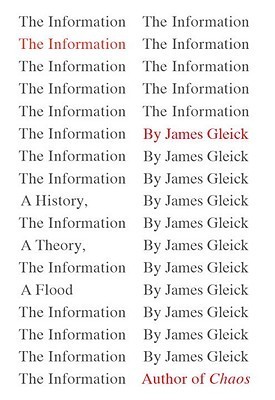
The Information: A History, a Theory, a Flood
"Traces how information became the defining principle of modernity, from ancient scripts to the digital deluge."
- 1Information is the fundamental substance of reality. The book posits that information, not matter or energy, constitutes the primary building block of the universe and human consciousness. This paradigm shift reframes everything from biology to physics as information-processing systems.
- 2Communication technologies reshape human cognition. Each leap—from oral tradition to writing, the printing press to the telegraph—fundamentally altered how humans think, remember, and perceive the world. The medium is not merely a channel but an architect of thought.
- 3Claude Shannon's theory of information is revolutionary. Shannon's mathematical framework separated meaning from signal, quantifying information as a measurable entity. This abstraction enabled the digital age, providing the bedrock for data compression, cryptography, and telecommunications.
- 4The history of computation is a history of logic. From Charles Babbage's Analytical Engine to Alan Turing's universal machine, the pursuit of mechanical reasoning reveals a deep intellectual lineage. Ada Lovelace's insight that machines could manipulate symbols beyond numbers was prophetic.
- 5We are now drowning in a self-generated flood. The exponential growth of information has created a paradoxical state of overload, where abundance leads to fragmentation and noise. Our challenge is no longer access but filtration, synthesis, and finding meaning within the chaos.
- 6Biological and cultural evolution are informational processes. Genes and memes operate as replicators transmitting information across generations. This framework unites natural selection with the spread of ideas, showing how life and culture are both sustained by coded instructions.
James Gleick's The Information is a monumental archaeology of the idea that now defines our age. It begins not with computers, but in the deep past, when human thought was ephemeral, vanishing with the breath that carried it. The invention of writing, and later the alphabet, represented the first great informational revolutions, externalizing memory and enabling the accumulation of knowledge across generations. Gleick meticulously charts this pre-history through unexpected conduits: the complex messaging of African talking drums, the combinatorial logic of dictionary-making, and the birth of probability theory.
At the heart of the narrative is the 20th-century intellectual upheaval that gave information its modern, quantifiable form. The book provides compelling portraits of the pivotal figures in this transformation: Charles Babbage and his visionary, unbuilt engines; Ada Lovelace, who glimpsed their potential for symbol manipulation beyond mere calculation; and Alan Turing, who conceptualized the universal machine. The central hero is Claude Shannon, the MIT mathematician whose 1948 paper, "A Mathematical Theory of Communication," divorced information from meaning, defining it purely by its statistical surprise and creating the bit as its fundamental unit. This abstraction became the invisible foundation for the digital world.
The final movement of the book explores the astonishing consequences of this revolution. Information theory permeates biology, reframing DNA as a genetic code, and invades physics, suggesting the universe itself may be a computational entity. It gives rise to chaos theory, quantum computing, and the science of networks. Gleick examines the concept of the meme, Richard Dawkins's unit of cultural transmission, as information replicating in the ecosystem of the mind.
Ultimately, The Information is a story of accelerating change, culminating in our present condition of perpetual connectivity and data saturation. It is essential reading for anyone seeking to understand not just the technological infrastructure of the modern world, but the profound cognitive and philosophical shifts that have accompanied our journey from scarcity to overwhelming abundance. The book argues that to comprehend our era, we must first understand the long and intricate history of how we record, transmit, and process the very substance of our reality.
The consensus positions this as an intellectually formidable and sweeping synthesis, praised for its ambitious scope and lucid explanations of complex theories like those of Shannon and Turing. Readers consistently describe it as "dense" and "demanding," requiring slow, deliberate engagement. The primary critique is not of its quality but its accessibility; some find the middle sections on pure information theory excessively technical, leading to skimming. Yet, even those overwhelmed commend its profound educational value and its success in contextualizing our digital moment within a deep historical narrative.
- 1The book's demanding density and technical depth, which some find brilliantly comprehensive and others find overwhelming and skimmable.
- 2Appreciation for the revelatory historical connections, such as the chapter on African talking drums as an information technology.
- 3Debates over the book's pacing and structure, with some feeling the early historical sections are more engaging than the theoretical middle.
- 4The profound impact of learning about pivotal but overlooked figures like Ada Lovelace and Claude Shannon.
Bad Samaritans
Ha-Joon Chang
Code: The Hidden Language of Computer Hardware and Software
Charles Petzold

Chip War: The Quest to Dominate the World's Most Critical Technology
Chris Miller
Outliers: The Story of Success
Malcolm Gladwell
Sapiens: A Brief History of Humankind
Yuval Noah Harari

The Intelligent Investor
Benjamin Graham
Out of Control
Kevin Kelly
The Lessons of History
Will Durant
The Artist's Way
Julia Cameron
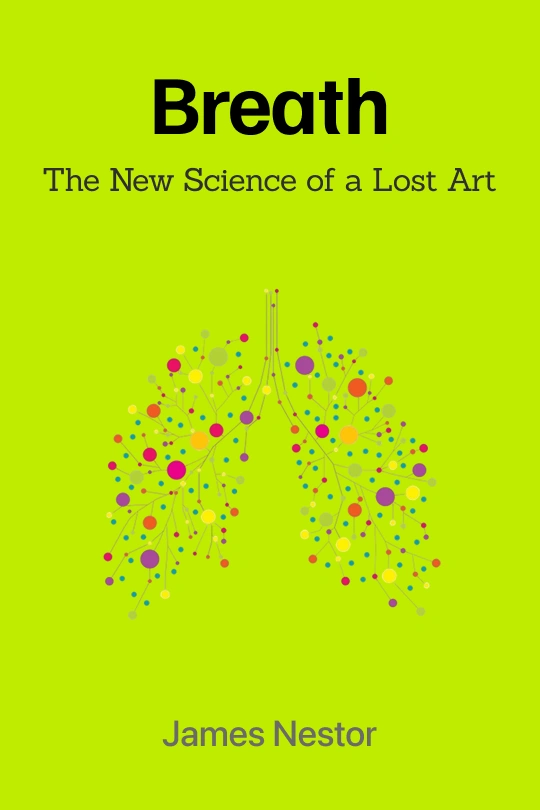
Breath: The New Science of a Lost Art
James Nestor
Transformation in Christ
Dietrich Von Hildebrand
Vacuum Diagrams (Xeelee Sequence, #5)
Stephen Baxter