

Outliers: The Story of Success
by Malcolm Gladwell
“Success is not a personal trait but a product of hidden advantages, cultural legacies, and the raw accumulation of time.”
Key Takeaways
- 1The 'self-made' success is a profound myth. Extraordinary achievement is rarely born from individual merit alone; it is heavily reliant on a complex web of hidden advantages, unique opportunities, and inherited legacies.
- 2True mastery requires 10,000 hours of dedicated practice. Achieving world-class expertise in any field demands roughly 10,000 hours of hard work, but accumulating this time requires early access to extraordinary and rare opportunities.
- 3Timing and arbitrary circumstances dictate outcomes. Factors completely out of one's control, such as being born in a specific month or a specific historical era, create cumulative advantages that separate extreme achievers from their equally talented peers.
- 4Cultural legacies deeply influence behavior and aptitude. Inherited cultural backgrounds—from the relentless work ethic of rice farmers to deferential attitudes toward authority—silently shape how individuals navigate challenges and seize opportunities.
- 5Raw intelligence is insufficient without practical intelligence. A high IQ cannot guarantee success without the social savvy and supportive upbringing required to advocate for oneself and effectively maneuver through societal institutions.
- 6Cultural communication structures can dictate success or failure. Deeply ingrained cultural norms regarding authority and power distance dictate how individuals communicate in high-stakes environments, directly impacting outcomes such as airline safety.
- 7Meaningful work fuels the persistence necessary for success. Individuals are driven to work exceptionally hard when their efforts offer autonomy, complexity, and a direct, tangible relationship between the work put in and the rewards reaped.
- 8Society must intentionally equalize systemic opportunities. By recognizing that success is largely a product of environment rather than just innate talent, society can restructure its institutions—like education—to provide opportunities for everyone, not just the lucky few.
Description
Malcolm Gladwell's *Outliers* dismantles the myth of the self-made individual, arguing that extraordinary achievement is never solely a function of personal merit. Instead, Gladwell posits that outliers—those who operate at the extreme outer edge of success—are invariably the beneficiaries of hidden advantages, extraordinary opportunities, and cultural legacies that others do not possess. The book challenges the simplistic narratives of genius and grit, redirecting our gaze toward the ecosystem of success.
Gladwell builds his case through a series of compelling narratives and sociological studies. He introduces the "10,000-Hour Rule," illustrating how the Beatles' marathon performances in Hamburg and Bill Gates' unique access to a time-sharing computer as a teenager were not mere anecdotes but essential, quantifiable prerequisites for mastery. He further examines how arbitrary cut-off dates for youth hockey and kindergarten enrollment create lasting advantages for the relatively older children, demonstrating how systemic quirks can dictate destiny.
The analysis then expands to encompass broader historical and cultural forces. Gladwell explores why a disproportionate number of New York's most powerful lawyers share a specific birth year, linking their success to the demographic trough of the Great Depression. He delves into the "culture of honor" in the American South and the rice-paddy legacy underpinning Asian mathematical prowess, arguing that deeply ingrained cultural scripts profoundly influence behavior and aptitude. The book contends that these background forces are not incidental but foundational.
Ultimately, *Outliers* is a paradigm-shifting work of social science for a general audience. It re-frames our understanding of success from a biography of the individual to a biography of the community, era, and circumstance. The book's lasting impact lies in its call to recognize and structure society to cultivate latent talent, suggesting that by understanding the true ingredients of success, we can create a world with many more of it.
Community Verdict
Readers widely praise the book for its engaging, anecdote-driven style and its compelling, paradigm-shifting core thesis about the hidden architecture of success. The central concepts, particularly the 10,000-Hour Rule, resonate powerfully and are frequently cited as transformative. However, a significant critical strand finds the argument overly simplistic, accusing Gladwell of cherry-picking examples to fit a provocative narrative while ignoring counter-evidence and the role of pure chance. The prose is celebrated for its accessibility but occasionally criticized for sacrificing academic rigor for popular appeal.
Hot Topics
- 1The validity and oversimplification of the '10,000-Hour Rule' as the sole path to mastery.
- 2Debate over whether the book downplays individual agency and grit in favor of circumstantial determinism.
- 3Discussion on the compelling yet selectively chosen case studies, such as the Beatles and Bill Gates.
- 4The impact of arbitrary systemic cut-off dates in education and sports on lifelong success trajectories.
- 5The provocative analysis of cultural legacies, like the 'rice paddy' theory for mathematical aptitude.

Popular Books

Harry Potter and the Deathly Hallows (Harry Potter, #7)
J.K. Rowling, Mary GrandPre

The Body Keeps the Score: Brain, Mind, and Body in the Healing of Trauma
Bessel A. van der Kolk

The House of Hades (The Heroes of Olympus, #4)
Rick Riordan

Never Split the Difference: Negotiating As If Your Life Depended On It
Chris Voss, Tahl Raz

The Hobbit: Graphic Novel
Chuck Dixon, J.R.R. Tolkien, David Wenzel, Sean Deming

Harry Potter and the Order of the Phoenix (Harry Potter, #5)
J.K. Rowling, Mary GrandPre

We Should All Be Feminists
Chimamanda Ngozi Adichie

Evicted: Poverty and Profit in the American City
Matthew Desmond

A Game of Thrones (A Song of Ice and Fire, #1)
George R.R. Martin

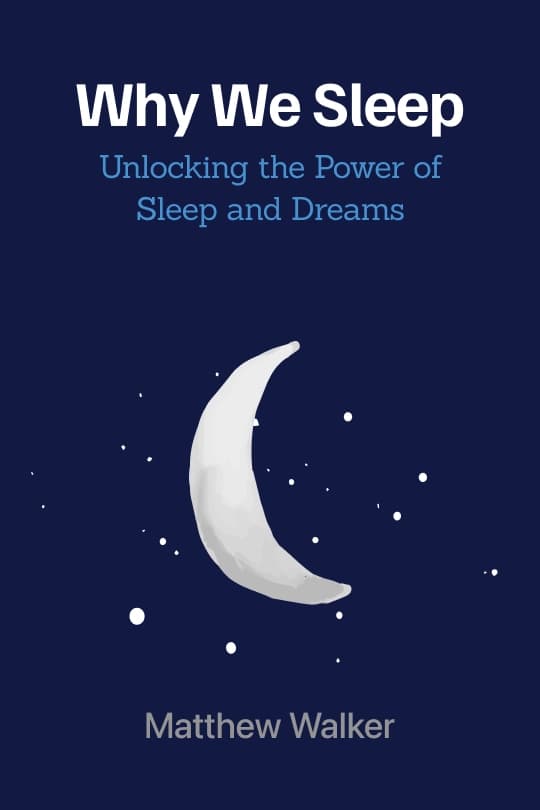
Why We Sleep: Unlocking the Power of Sleep and Dreams
Matthew Walker

Unbroken: A World War II Story of Survival, Resilience, and Redemption
Laura Hillenbrand

A Monster Calls
Patrick Ness, Jim Kay, Siobhan Dowd
Browse by Genres
History
Business
Leadership
Marketing
Management
Innovation
Economics
Productivity
Psychology
Mindset
Communication
Philosophy
Biography
Science
Technology
Society
Health
Parenting
Self-Help
Personal Finance
Investment
Relationship
Startups
Sales
Fitness
Nutrition
Wellness
Spirituality
Artificial Intelligence
Future
Nature
Classics
Sci-Fiction
Fantasy
Thriller
Mystery
Romance
Literary
Historical Fiction
Politics
Religion
Crime
Art
Creativity