
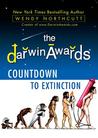
The Darwin Awards Countdown to Extinction
"A darkly hilarious chronicle of humanity's most spectacular failures in judgment, proving natural selection is still at work."
- 1Stupidity is a self-correcting evolutionary mechanism. The book posits that catastrophic lapses in judgment, often resulting in death or sterilization, actively remove flawed genetic and memetic material from the human population, serving a grimly comedic evolutionary purpose.
- 2Hubris is the primary catalyst for Darwin Award-worthy acts. A recurring theme is the fatal overestimation of one's own skill or understanding of physics, chemistry, or biology, where confidence fatally outstrips competence in spectacularly inventive ways.
- 3Humor is a legitimate lens for examining human mortality. The series demonstrates how the absurd disconnect between intention and outcome in these tales transforms tragedy into farce, allowing for a detached, intellectual engagement with the concept of death.
- 4Complex systems fail in predictable, often simple, ways. Many incidents illustrate how a single point of failure—a missing safety guard, a misunderstood chemical reaction, a misplaced trust in duct tape—can cascade into a fatal conclusion, highlighting fundamental principles of risk.
- 5The format delivers humor in efficient, digestible portions. The book's structure of brief, self-contained anecdotes interspersed with scientific commentary is engineered for intermittent consumption, providing immediate comedic payoff without narrative commitment.
The Darwin Awards series, a cultural institution founded by Wendy Northcutt, operates on a simple, darkly humorous premise: it commemorates individuals who have improved the human gene pool by removing themselves from it through astonishingly ill-conceived actions. 'Countdown to Extinction' continues this tradition, presenting a fresh anthology of verified tales where ingenuity and idiocy collide with fatal, or sterilizing, consequences. The award criteria are strict—nominees must eliminate their own capacity for reproduction through a spectacular misapplication of judgment, often involving a profound misunderstanding of basic physics, chemistry, or common sense.
Each entry is a concise forensic comedy, detailing the chain of decisions that leads from a seemingly mundane situation to an unforgettable finale. The narratives range from the tragically simple, like using a lighter to peer into a gasoline tank, to the bizarrely complex, such as constructing a homemade rocket sled. The book is meticulously illustrated, adding a visceral dimension to the tales, and structured into thematic chapters that group failures by type—improvised engineering, weaponized curiosity, or catastrophic celebrations.
Interspersed between the anecdotes are brief scientific interludes that contextualize the folly. These segments explain the relevant principles of kinetic energy, explosive chemistry, or human biology that the award winners so blithely ignored, transforming the schadenfreude into an inadvertent lesson in practical science. This juxtaposition elevates the material from mere gallows humor to a peculiar form of cautionary literature, where every story serves as a case study in risk assessment gone awry.
The book’s enduring appeal lies in its ability to make readers simultaneously wince and laugh, confronting the uncomfortable truth that human intelligence is not uniformly distributed. It functions as a mirror, reflecting our own potential for catastrophic error while providing the safe, vicarious thrill of witnessing someone else's ultimate bad day. It targets an audience with a taste for morbid curiosity and intellectual dark humor, solidifying the franchise's legacy as a definitive chronicler of humanity's unforced errors.
The consensus views the book as a reliably entertaining, if formulaic, entry in the long-running series. Readers praise its perfect suitability as a low-commitment diversion—ideal for waiting rooms or brief respites—where the quick-hit anecdotes deliver consistent, dark laughs. The intermittent science facts are highlighted as an unexpected and welcome bonus that adds educational texture to the folly. Criticisms are mild, centering on a sense of familiarity for series veterans, with some noting the humor can feel repetitive or the format overly simplistic for a sustained reading session.
- 1The ethical line between dark humor and mocking tragedy, and whether the series crosses it.
- 2The book's effectiveness as a tool for teaching practical science and risk awareness through negative examples.
- 3Debates on the ideal reading format: binge-reading versus intermittent, short-burst consumption.

The Intelligent Investor
Benjamin Graham
The Artist's Way
Julia Cameron
The Road to Financial Freedom
Bodo Schäfer
Radical Markets: Uprooting Capitalism and Democracy for a Just Society
Eric A. Posner, E. Glen Weyl
The Creative Habit
Twyla Tharp, Mark Reiter
Sapiens: A Brief History of Humankind
Yuval Noah Harari
Transformation in Christ
Dietrich Von Hildebrand

Code: The Hidden Language of Computer Hardware and Software
Charles Petzold
Amusing Ourselves to Death: Public Discourse in the Age of Show Business
Neil Postman

How to Win Friends & Influence People
Dale Carnegie
Outliers: The Story of Success
Malcolm Gladwell
The Crash Course
Chris Martenson