

Contagious: Why Things Catch On
"Unlocks the six core principles that transform ordinary ideas into social epidemics."
- 1Build products and ideas with inherent Social Currency. People share things that make them look savvy or in-the-know. Crafting content that confers status or insider knowledge is a primary engine for word-of-mouth transmission.
- 2Embed powerful Triggers in the everyday environment. Top-of-mind leads to tip-of-tongue. Ideas linked to frequent cues in the environment, like peanut butter triggering jelly, are discussed more often and stay culturally relevant longer.
- 3Harness high-arousal Emotion to drive sharing. Content that evokes awe, excitement, or amusement is shared more than that which evokes sadness or contentment. Activation, not just sentiment, fuels the impulse to pass something on.
- 4Make your message publicly Observable. Visible things create their own advertisement. Designing products or behaviors that are easily seen by others generates social proof and accelerates imitation, making private choices public trends.
- 5Ensure your idea has Practical Value for sharing. Useful information is a social gift. Content that helps people save time, money, or improve their lives is shared as a genuine act of community care, building trust and reciprocity.
- 6Wrap your message in a compelling Story. Facts are shared; narratives are lived. Embedding a core idea within a memorable story ensures it is carried forward intact, bypassing psychological resistance to overt persuasion.
In an age saturated with advertising, the most powerful form of marketing remains the oldest: word-of-mouth. Jonah Berger’s Contagious dismantles the myth that virality is a mysterious, digital-age accident or the sole province of massive advertising budgets. Instead, he posits that social transmission is governed by a predictable, analyzable set of psychological principles. Drawing on a decade of rigorous research into everything from New York Times articles to everyday consumer products, Berger argues that whether something catches on is less about luck and more about a specific, replicable design.
Through a series of compelling case studies—from the unlikely popularity of a high-end steakhouse’s cheesesteak to the staggering shares of a blender demonstration video—Berger identifies and elucidates six foundational principles, encapsulated in the acronym STEPPS. These are Social Currency, Triggers, Emotion, Public, Practical Value, and Stories. Each chapter dissects one principle, demonstrating how it functions as a cognitive and social lever. For instance, the principle of Triggers explains why we talk more about a brand linked to a daily routine than a more emotionally resonant one, while Public explores how observable behaviors create self-perpetuating cycles of adoption.
The book moves beyond mere academic observation to provide a practical framework. It translates complex behavioral science into actionable strategies for crafting messages, designing products, and structuring policies that people naturally want to share. Berger shows how subtle tweaks in presentation, from highlighting remarkable inner qualities to building narratives around utility, can dramatically increase an idea’s infectious potential.
Contagious is ultimately a treatise on human social psychology as much as it is a marketing manual. Its insights are relevant for entrepreneurs, policymakers, educators, and anyone seeking to understand the mechanics of cultural influence. By demystifying what makes ideas resonate, it provides a crucial toolkit for navigating and shaping the modern landscape of attention, where peer validation has decisively outpaced corporate messaging in driving what we value and discuss.
The critical consensus praises the book’s accessible framework and actionable, research-backed insights, finding the STEPPS model immediately useful for marketers and entrepreneurs. However, a significant contingent critiques the content as overly simplistic, arguing that the principles are repackaged commonsense rather than groundbreaking discovery. Some readers also note that the heavy reliance on consumer product case studies can feel repetitive and limits the book’s perceived depth, leaving them wanting more nuanced application beyond commercial contexts.
- 1Debate over whether the STEPPS framework offers genuinely novel insight or is merely a repackaging of established marketing and psychological commonsense.
- 2Discussion on the book's heavy reliance on anecdotal consumer case studies versus broader, more rigorous academic or sociological evidence.
- 3Criticism of the perceived simplicity and repetitive structure, with some readers desiring more complex, nuanced analysis of the principles.

The Road to Financial Freedom
Bodo Schäfer

Breakthrough: The Quest for Life-Changing Medicines
Dr William Pao
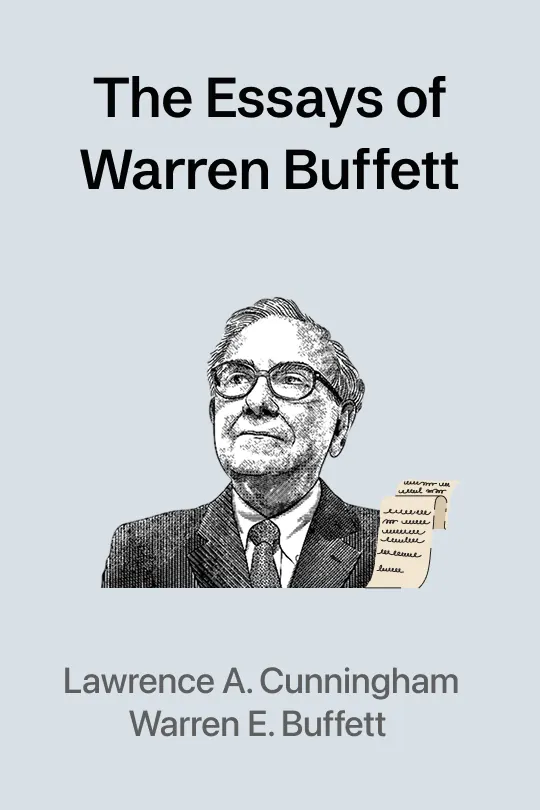
The Essays of Warren Buffett: Lessons for Corporate America
Lawrence A. Cunningham, Warren Buffett
The Norwegian Method
Brad Culp

Blueprints: How mathematics shapes creativity
Marcus du Sautoy

Out of Control
Kevin Kelly
Breath: The New Science of a Lost Art
James Nestor

Transformation in Christ
Dietrich Von Hildebrand

The Psychology of Money: Timeless Lessons on Wealth, Greed, and Happiness
Morgan Housel
How to Win Friends & Influence People
Dale Carnegie

Permanent Record
Edward Snowden

Bad Samaritans
Ha-Joon Chang