
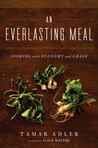
An Everlasting Meal: Cooking with Economy and Grace
"Transforms cooking from a chore into a graceful, instinctive practice of resourcefulness and deep sensory pleasure."
- 1Treat boiling water as the foundational kitchen act. It is the starting point for pasta, vegetables, and stocks, a simple yet profound gesture that activates ingredients and begins the chain of a meal.
- 2Cook with your senses, not just a recipe. True cooking fluency comes from observing texture, smell, and taste, allowing instinct to guide adjustments rather than rigid instructions.
- 3See ends and scraps as the beginning of your next meal. Vegetable peels, bones, and cooking liquids are not waste but the essential building blocks for stocks, soups, and sauces, creating a continuous cycle of flavor.
- 4Revive simple ingredients through thoughtful technique. A neglected onion, celery stalk, or potato can become a centerpiece through methods like slow cooking, roasting, or dressing with good oil and salt.
- 5Embrace imperfection and rescue dishes gone awry. A over-salted soup or a broken sauce is not a failure but a puzzle, solvable with a splash of water, a grated potato, or a new complementary ingredient.
- 6Let economy be a catalyst for creativity, not limitation. Constraints of budget or pantry force a deeper engagement with ingredients, leading to more inventive and personally satisfying culinary outcomes.
In 'An Everlasting Meal,' Tamar Adler resurrects the spirited, philosophical approach to cooking championed by M.F.K. Fisher, arguing that the path to good eating is not through luxury or complex recipes, but through a mindful and economical relationship with ingredients. The book positions cooking not as a series of discrete tasks, but as a continuous, graceful process where one meal thoughtfully begets the next. This is a manifesto against waste and culinary anxiety, proposing instead a kitchen governed by instinct, respect, and continuity.
Adler structures her lessons around fundamental, often overlooked acts: boiling water, cooking an egg, preparing a pot of beans. She demonstrates how mastering these simple techniques creates a resilient culinary foundation. The narrative then expands into the art of resourcefulness, detailing how to transform vegetable ends into a rich broth, leftover roast into a vibrant salad, and stale bread into a luxurious pudding. Each chapter builds on the last, illustrating a circular kitchen economy where nothing is truly discarded and everything possesses potential.
The prose itself is a central instrument of Adler's argument. She writes about food with a lyrical, sensory precision that elevates the mundane—a description of simmering beans becomes a meditation on patience and transformation. This stylistic choice serves a pedagogical purpose: by teaching readers to see, smell, and taste with greater acuity, she empowers them to cook without constant reference to external rules. The book is less a manual and more a guide to developing a personal cooking intelligence.
Ultimately, 'An Everlasting Meal' is a work of quiet subversion, wresting cooking from the domains of high-pressure performance and passive consumption. It is targeted at anyone who wishes to reclaim cooking as a daily practice of creativity and care, offering not just techniques but a sustaining philosophy. Its legacy lies in empowering readers to begin from wherever they are, with whatever they have, and find grace in the process.
The critical consensus celebrates the book as a lyrical and philosophical masterpiece that transforms the reader's relationship to the kitchen, praised for its beautiful prose and empowering, instinct-based approach. However, a significant contingent finds it frustratingly impractical, criticizing the lack of concrete recipes, precise measurements, and step-by-step guidance they expected from a cookbook, which renders its wisdom inaccessible to true beginners.
- 1The divide between appreciating the book's beautiful, literary prose versus its utility as a practical, recipe-driven cookbook.
- 2Whether the author's instinctive, sensory-based method is liberating for experienced cooks or alienating for nervous beginners.
- 3The powerful, nostalgic resonance of the writing, which many compare to learning in a grandmother's kitchen.
- 4Debates on the book's structure and editing, with some finding it meandering or in need of more rigorous organization.

The Psychology of Money: Timeless Lessons on Wealth, Greed, and Happiness
Morgan Housel

Breakthrough: The Quest for Life-Changing Medicines
Dr William Pao
Transformation in Christ
Dietrich Von Hildebrand

The Intelligent Investor
Benjamin Graham
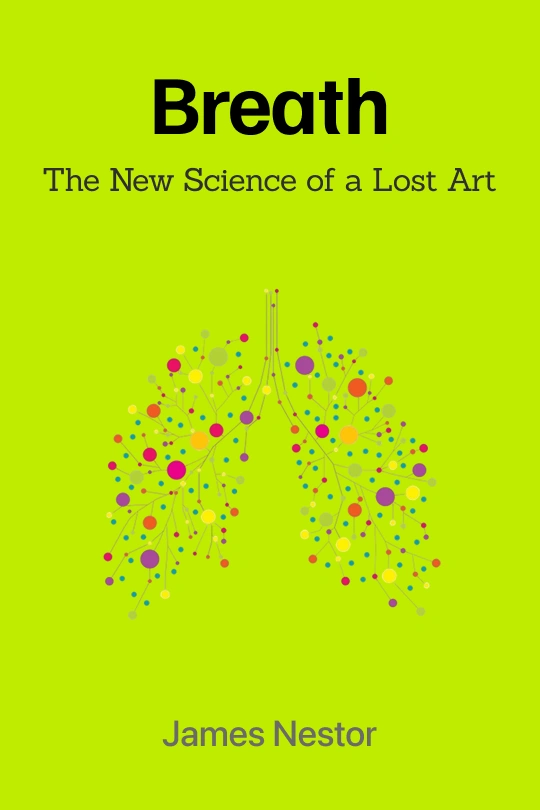
Breath: The New Science of a Lost Art
James Nestor

The Almanack of Naval Ravikant
Naval Ravikant, Eric Jorgenson

The Road to Financial Freedom
Bodo Schäfer
Blueprints: How mathematics shapes creativity
Marcus du Sautoy

The Artist's Way
Julia Cameron
The Norwegian Method
Brad Culp

Out of Control
Kevin Kelly
Stumbling on Happiness
Daniel Gilbert