
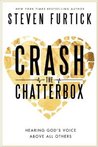
Crash the Chatterbox: Hearing God's Voice Above All Others
"Replaces the internal noise of insecurity and fear with the declarative truth of your God-given identity."
- 1Identify and name the four core lies of the chatterbox. The internal dialogue that sabotages potential is not random; it systematically attacks through specific channels of insecurity, fear, condemnation, and discouragement. Recognizing these categories is the first step toward disarming them.
- 2Actively choose your spiritual dialogue. Belief is not a passive state but an active selection. You possess the agency to switch from the Enemy's shouts to God's whispers, deliberately selecting truth over lies as you would a radio station.
- 3Arm yourself with the specific promises of God. Vague positivity cannot crash a specific lie. Victory requires countering each debilitating thought with a precise, scriptural promise about your identity in Christ and His strength available to you.
- 4Embrace the process as a continual, not a one-time, victory. Silencing the chatterbox is a daily discipline of recalibration, not a permanent state of achievement. The focus is on consistent practice—learning to live out God's truth amid ongoing internal and external battles.
- 5Ground your identity in divine affirmation, not human performance. The core struggle is one of misplaced identity. The book argues that true security and courage flow from accepting who God says you are, which remains constant regardless of your failures or successes.
Steven Furtick’s Crash the Chatterbox confronts the universal human experience of a paralyzing internal monologue—the relentless stream of doubts, fears, and negative self-assessments he terms "the chatterbox." Furtick posits that this noise is not merely psychological static but a spiritual battle for identity, one that systematically deploys lies of insecurity, fear, condemnation, and discouragement to prevent believers from stepping into their God-given purpose. The central premise is that the voice you choose to internalize will ultimately dictate the future you experience.
Furtick structures the book as a practical field guide for this conflict, moving beyond diagnosis to active strategy. He argues that believers have been endowed with the ability to consciously select their spiritual dialogue. Through personal anecdotes, scriptural exegesis, and candid reflections on his own struggles, he demonstrates how to "tune in" to God’s promises with the same intentionality one uses to select music. The methodology involves identifying the specific lie at play, locating its biblical antithesis in God’s promises, and deliberately speaking that truth to crash the system of broken beliefs.
The book’s impact lies in its fusion of pastoral theology with accessible, modern psychology, making it particularly resonant for a generation inundated with external and internal noise through social media and digital culture. It reframes a common struggle not as a personal failing but as a recognizable spiritual dynamic with a concrete, scriptural solution. While rooted in evangelical Christian doctrine, its core message about mastering one’s internal narrative to unlock potential has broader existential appeal.
Targeted at any individual feeling hindered by self-doubt or negative thought patterns, Crash the Chatterbox offers a framework for replacing a soundtrack of failure with one of divine affirmation. Its legacy is as a practical manual for spiritual and emotional resilience, providing readers with the tools to hear a voice of truth above the cacophony of fear.
Readers largely praise the book's raw authenticity and practical utility, finding Furtick's candid admissions about his own struggles both relatable and disarming. The central metaphor of the "chatterbox" is widely celebrated as a powerful and accessible framework for managing negative self-talk. Criticisms are less about content and more often contextual, with some readers expressing ambivalence towards the author's celebrity pastor status or a desire for deeper theological exposition. The consensus is that it delivers a compelling, actionable message with a direct and often humorous style that resonates with a contemporary audience.
- 1The authenticity and relatability of Furtick's personal confessions about his own insecurities and failures.
- 2The effectiveness of the 'chatterbox' metaphor as a tool for identifying and combating negative internal dialogue.
- 3Discussions and some skepticism regarding the author's public persona as a wealthy megachurch pastor.

Bad Samaritans
Ha-Joon Chang

Blueprints: How mathematics shapes creativity
Marcus du Sautoy

Boom: Bubbles and the End of Stagnation
Byrne Hobart

The Creative Habit
Twyla Tharp, Mark Reiter
Transformation in Christ
Dietrich Von Hildebrand

The Essays of Warren Buffett: Lessons for Corporate America
Lawrence A. Cunningham, Warren Buffett

Stumbling on Happiness
Daniel Gilbert

Sapiens: A Brief History of Humankind
Yuval Noah Harari

Permanent Record
Edward Snowden

Code: The Hidden Language of Computer Hardware and Software
Charles Petzold

The Norwegian Method
Brad Culp

The Artist's Way
Julia Cameron