
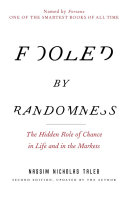
Fooled by Randomness: The Hidden Role of Chance in Life and in the Markets
"It reveals how our innate pattern-seeking blinds us to the pervasive, decisive influence of luck in success and failure."
Nook Talks
- 1Distinguish between luck and skill in outcomes. Most success stories, especially in volatile fields like finance, are attributable to random chance rather than superior skill. Survivorship bias leads us to study the lucky winners and mistakenly attribute their results to genius.
- 2Beware of the narrative fallacy in explanation. The human mind compulsively weaves convincing after-the-fact stories to explain random events, creating a false sense of understanding and predictability. This addiction to causal explanation obscures the true role of contingency.
- 3Accept the asymmetry of probability and impact. Rare, high-impact events—'black swans'—dominate historical change, yet their extreme improbability leads us to ignore them. Robust systems are built by focusing on consequences, not just probabilities.
- 4Cultivate skepticism toward historical data. The past is a misleading guide to a future full of unseen possibilities. Relying on historical patterns for prediction is a dangerous game, as the sample is always incomplete and silent about what could have happened.
- 5Manage risk by focusing on survival. The primary goal in a random world is not to maximize gains but to ensure you remain in the game. Avoiding ruin, by being robust to negative black swans, is more critical than chasing optimal returns.
- 6Recognize the psychological cost of randomness. Living with uncertainty induces emotional strain, leading to stress and poor decision-making. A stoic acceptance of randomness is necessary to maintain equanimity and make clear-headed choices in the face of volatility.
Fooled by Randomness is a philosophical and practical inquiry into the hidden machinery of chance that governs our world, particularly within the deceptive calm of financial markets. Nassim Nicholas Taleb argues that we are biologically and culturally wired to misunderstand probability, constructing narratives of skill and causality where only luck operates. The book dismantles the edifice of certainty built by traders, historians, and media pundits, exposing the silent role of randomness in crafting what we later call destiny.
Taleb employs a toolkit drawn from probability theory, evolutionary psychology, and cognitive science to dissect our vulnerabilities. He introduces concepts like the narrative fallacy, where we retrofit stories onto past events; survivorship bias, which blinds us to the silent graveyard of failed strategies; and the problem of induction, which highlights the fragility of knowledge derived from limited past data. Through vivid anecdotes of overconfident traders and literary references from Poincaré to Montaigne, he illustrates how easily we confuse noise for signal.
The central metaphor of the book is the Monte Carlo simulator—a thought experiment that runs alternative histories to reveal the fragility of any single observed outcome. This tool demonstrates that the most successful person in a room could simply be the luckiest, not the most skilled. Taleb emphasizes the asymmetry of risk: rare, catastrophic events matter far more than frequent, minor ones, yet our minds are ill-equipped to grasp this.
As the foundational volume of the Incerto series, the book’s impact lies in its pedagogical clarity and intellectual provocation. It is aimed at anyone making decisions under uncertainty, from investors and entrepreneurs to professionals and general readers. Its legacy is a lens of skeptical empiricism, training readers to see the world not as a well-ordered story but as a complex, opaque system where humility before randomness is the highest form of wisdom.
The consensus hails this as a foundational, mind-altering text that permanently reshapes one's perception of luck and causality. Readers praise its pedagogical clarity, lively anecdotes, and intellectual rigor, often describing it as more accessible and carefully explanatory than Taleb's later works. A recurring critique notes a preference for the more assertive, 'grumpy' voice of The Black Swan, with some finding this earlier volume almost too mild in its tone, despite the potency of its ideas.
- 1The book's accessibility and pedagogical value compared to Taleb's denser, more polemical later works like *The Black Swan*.
- 2Its role as a gateway to probabilistic thinking, often recommended as a prerequisite to understanding broader concepts of uncertainty and risk.
- 3The transformative impact of its core thesis on readers' personal and professional decision-making frameworks.
Stumbling on Happiness
Daniel Gilbert
Bad Samaritans
Ha-Joon Chang

The Artist's Way
Julia Cameron
The Psychology of Money: Timeless Lessons on Wealth, Greed, and Happiness
Morgan Housel
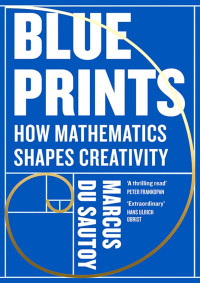
Blueprints: How mathematics shapes creativity
Marcus du Sautoy

Breakthrough: The Quest for Life-Changing Medicines
Dr William Pao
The Art of Contrarian Trading
Carl Futia

Code: The Hidden Language of Computer Hardware and Software
Charles Petzold
The Crash Course
Chris Martenson

Breath: The New Science of a Lost Art
James Nestor
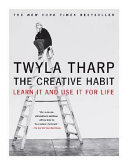
The Creative Habit
Twyla Tharp, Mark Reiter
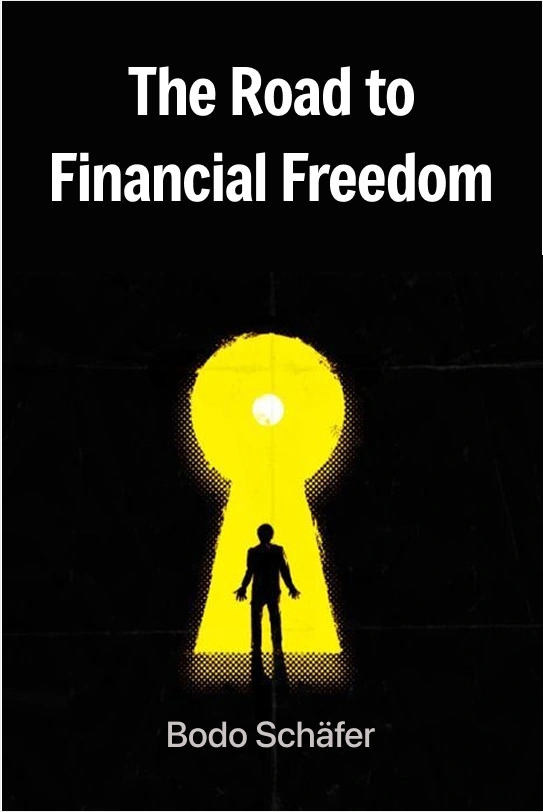
The Road to Financial Freedom
Bodo Schäfer