
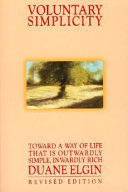
Voluntary Simplicity (rev)
"A visionary blueprint for transforming personal consumption into a radical act of ecological and spiritual renewal."
- 1Define simplicity as conscious choice, not deprivation. The philosophy rejects ascetic poverty, framing simplicity as an intentional, affirmative selection of what genuinely nourishes life. It is a path of empowerment, not denial, centered on aligning actions with deeper values.
- 2Cultivate an ecology of frugality, awareness, and growth. The practice rests on three interdependent pillars: mindful consumption to reduce waste, ecological sensitivity to reconnect with natural systems, and continuous personal development to foster inner richness.
- 3Decouple personal fulfillment from material accumulation. True wealth is redefined as qualitative—found in relationships, community, creativity, and spiritual depth. This internal shift liberates energy from the compulsive cycle of earning and spending.
- 4View individual lifestyle changes as political acts. Each choice for simplicity constitutes a quiet rebellion against unsustainable consumer culture. Collectively, these choices build momentum for systemic economic and environmental transformation.
- 5Design a life of balance as a dynamic, personal process. There is no monolithic formula. The journey involves continuous adjustment across work, consumption, and community to find a unique equilibrium that feels both sustainable and deeply fulfilling.
Duane Elgin’s Voluntary Simplicity emerged in the early 1980s as a foundational text for a growing movement seeking an alternative to the relentless consumption of modern industrial society. It articulates a philosophy that is neither a retreat into poverty nor a nostalgic longing for a primitive past, but a forward-looking, conscious choice for a life of balance. Elgin positions this choice as a direct, pragmatic response to the converging crises of environmental degradation, social fragmentation, and personal alienation, framing simplicity as a sophisticated adaptation to planetary limits.
At its core, the book dissects the twin components of its title. "Voluntary" signifies the exercise of freedom and intention, a deliberate opting-out of the consumer treadmill. "Simplicity" is defined not by a specific set of possessions or practices, but as an outward expression of inner clarity—a life structured to minimize distraction and clutter in order to maximize engagement with what is most meaningful. Elgin grounds this theory in a sociological survey from the late 1970s, presenting vignettes from early adopters whose lives demonstrate the philosophy's diverse, practical applications.
The work systematically builds the case for a tripartite ecology of personal and planetary health: frugality of consumption, ecological awareness, and personal growth. These are not sequential steps but interconnected dimensions of a unified way of being. Frugality frees resources and time; ecological awareness re-establishes a sense of kinship with the living world; and personal growth cultivates the inner resilience and creativity required to sustain the practice. Elgin argues that this integrated approach fosters an "inward richness" that makes external austerity not only bearable but desirable.
Ultimately, Voluntary Simplicity is a work of prophetic social criticism and practical guidance. Its enduring significance lies in its dual focus: it is both a manual for personal transformation and a political argument that redefines citizenship. Elgin contends that by healing our relationship with material things, we simultaneously address systemic ecological overshoot and forge a more humane, sustainable, and satisfying culture. The book speaks directly to seekers, environmentalists, and anyone feeling the profound dissonance between modern affluence and authentic well-being.
Readers consistently praise the book's compassionate, visionary philosophy, finding its core message of intentional living to be profoundly inspiring and timeless. The survey-based first section is frequently cited as dry or dated, yet it provides valuable historical grounding. A significant point of critique centers on the final section's apocalyptic tone, which some find alarmist and disconnected from the practical, hopeful guidance of the earlier chapters. The consensus holds it as an essential, foundational text, albeit one whose stylistic execution is uneven.
- 1The enduring relevance of the 1977 survey data versus its perceived datedness and dry presentation.
- 2The tension between the book's uplifting, practical philosophy and its alarmist, apocalyptic concluding section.
- 3Debates over the definition of simplicity as a positive, voluntary choice versus a form of restrictive austerity.
The Art of Contrarian Trading
Carl Futia
Radical Markets: Uprooting Capitalism and Democracy for a Just Society
Eric A. Posner, E. Glen Weyl
Bad Samaritans
Ha-Joon Chang
Sapiens: A Brief History of Humankind
Yuval Noah Harari

The Artist's Way
Julia Cameron

The Intelligent Investor
Benjamin Graham

How to Win Friends & Influence People
Dale Carnegie
Breath: The New Science of a Lost Art
James Nestor
The Essays of Warren Buffett: Lessons for Corporate America
Lawrence A. Cunningham, Warren Buffett

Amusing Ourselves to Death: Public Discourse in the Age of Show Business
Neil Postman

Permanent Record
Edward Snowden
Out of Control
Kevin Kelly