
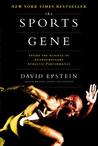
The Sports Gene: Inside the Science of Extraordinary Athletic Performance
"A rigorous dismantling of the nature-nurture binary, revealing how biology and environment conspire to forge athletic greatness."
- 1Reject the simplistic 10,000-hour rule for athletic mastery. Deliberate practice is necessary but insufficient; innate biological constraints, from skeletal structure to muscle fiber composition, create a ceiling that practice alone cannot breach for elite performance.
- 2Understand sport-specific body archetypes as genetic lotteries. Elite sports are populations of anatomical outliers—the tall, the short, the disproportionately limbed. Success often begins with a body pre-adapted to the specific mechanical demands of a given discipline.
- 3Distinguish trainable skills from immutable genetic endowments. While skills like pitch recognition can be honed, foundational traits such as aerobic capacity (VO2 max) or the proportion of fast-twitch muscle fibers have a significant, inherited baseline that dictates potential.
- 4Recognize the role of genetic adaptations in racialized performance patterns. The book investigates, without endorsing simplistic racial determinism, how population genetics and evolutionary pressures (e.g., altitude adaptation) may contribute to observed dominance in certain sports by specific regional groups.
- 5Leverage genetic testing for injury prevention, not talent scouting. The most pragmatic application of sports genetics lies in identifying predispositions to conditions like hypertrophic cardiomyopathy, not in predicting future champions from saliva samples of children.
- 6Appreciate the 'unseen' physiological advantages of elite athletes. Superior performance often stems from subtle, inherited advantages like larger-than-average hearts, more efficient lactate clearance, or unique joint elasticity, which provide marginal gains that become decisive at the highest level.
David Epstein’s The Sports Gene ventures into the complex, often contentious intersection of biology and athleticism, challenging the comforting narrative that willpower and practice alone craft champions. The book systematically interrogates the nature-versus-nurture debate through the lens of modern genetics and sports science, moving beyond platitudes to examine the precise physiological endowments that separate the extraordinary from the merely excellent.
Epstein structures his investigation around a series of compelling case studies and scientific findings. He explores how distinct sports select for specific, often rare, anatomical blueprints—from the skeletal dimensions of elite basketball players to the unique calf structure of champion jumpers. The narrative delves into the genetics of traits like muscle fiber composition, aerobic capacity, and even pain tolerance, illustrating how these inherited characteristics create a range of potential. A significant portion is devoted to critically examining popular theories like the '10,000-hour rule,' arguing that while deliberate practice is essential, it operates within the boundaries set by one's genetic makeup.
The book does not shy away from sensitive and politically charged inquiries, including the science behind the stunning success of Kenyan distance runners and Jamaican sprinters, analyzing the roles of altitude adaptation, population genetics, and cultural funneling. It also tackles the rationale for sex segregation in sports, grounded in the profound physiological differences mediated by biology. Epstein further explores the emerging, ethically fraught frontier of genetic testing for talent identification and injury risk.
Ultimately, The Sports Gene offers a nuanced synthesis for a broad audience—sports fans, coaches, and science readers alike. It replaces simplistic dichotomies with a more sophisticated understanding of athletic excellence as an emergent property of a unique individual reacting with a specific training environment. Its legacy is a foundational text that recalibrates the conversation around human performance, emphasizing that equality of opportunity does not imply equality of outcome in the realm of elite physical achievement.
The readership praises the book's engaging, journalistic narrative that makes complex science accessible, often comparing its style favorably to Malcolm Gladwell's work. Readers consistently highlight the compelling anecdotes and the effective debunking of the pure 'practice makes perfect' ethos as its greatest strength. Criticisms are mild but noted; some find the middle sections to wander or become slightly repetitive in their case-study approach, and a few express a desire for even deeper dives into the primary genetic science behind the stories.
- 1The compelling critique and contextualization of Malcolm Gladwell's 10,000-hour rule, which many readers found to be a revelatory correction.
- 2The fascinating analysis of anatomical archetypes and how certain body types are pre-selected for specific sports, sparking reflection on personal athletic experiences.
- 3The nuanced and cautious discussion on race, genetics, and athletic performance, which readers found thought-provoking and responsibly handled.
- 4The ethical dilemmas surrounding genetic testing in youth sports for talent identification or injury risk, which generated significant debate.

The Essays of Warren Buffett: Lessons for Corporate America
Lawrence A. Cunningham, Warren Buffett

Chip War: The Quest to Dominate the World's Most Critical Technology
Chris Miller

Outliers: The Story of Success
Malcolm Gladwell
Breakthrough: The Quest for Life-Changing Medicines
Dr William Pao

Sapiens: A Brief History of Humankind
Yuval Noah Harari

The Intelligent Investor
Benjamin Graham

The Artist's Way
Julia Cameron

The Art of Contrarian Trading
Carl Futia

The Road to Financial Freedom
Bodo Schäfer
The Crash Course
Chris Martenson

Transformation in Christ
Dietrich Von Hildebrand

The Almanack of Naval Ravikant
Naval Ravikant, Eric Jorgenson