
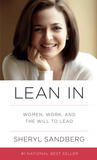
Lean In: Women, Work, and the Will to Lead
"A manifesto for dismantling the internal and external barriers that prevent women from achieving leadership parity."
- 1Sit at the table and own your ambition. Women systematically underestimate their abilities and hold back from opportunities. Professional success requires actively claiming your seat, advocating for yourself, and embracing the possibility of being disliked for assertiveness.
- 2Make your partner a true domestic and professional ally. Gender equality at work is impossible without equality at home. The most critical career decision a woman makes is whom she marries; seek a partner who will share domestic responsibilities as a true co-parent and co-manager of the household.
- 3Don't leave before you leave. Women often mentally check out of their careers years before starting a family, turning down promotions or challenges in anticipation of future motherhood. This prematurely stalls momentum. Lean in until the moment you must step away.
- 4Seek and speak your truth with authentic communication. Professional growth requires honest feedback and vulnerable conversations. Women should negotiate more assertively for salary, share personal challenges to foster systemic change, and mentor others while being mentored themselves.
- 5View leadership not as a hierarchy but as a collective responsibility. Leadership is an activity, not a position. It requires taking initiative, encouraging participation, and creating environments where all voices are heard. This redefinition makes leadership more accessible and less intimidating.
Sheryl Sandberg’s Lean In ignited a global firestorm upon publication, framing the stalled gender revolution in corporate leadership not merely as a structural problem but as a complex interplay of institutional barriers and deeply ingrained internal inhibitions. The book argues that while overt discrimination has diminished, a more subtle constellation of biases and self-limiting behaviors continues to hold women back from the highest echelons of power. Sandberg positions herself not as a pundit with all the answers, but as a high-profile insider confessing her own vulnerabilities and missteps, making a data-driven case for personal and cultural transformation.
Sandberg meticulously dissects the psychological and social forces that cause qualified women to "leave before they leave," downplay their achievements, and avoid seizing opportunities for fear of not being universally liked. She introduces concepts like "the impostor syndrome" and the "tiara syndrome"—the hope that hard work alone will be noticed and rewarded with a crown—as internal hurdles. The narrative is punctuated with personal anecdotes, from her early career negotiations to the challenges of balancing motherhood with her role as Facebook's COO, grounding statistical realities in relatable human experience.
The book’s most provocative contribution may be its insistence that equality begins at home. Sandberg contends that the most critical career decision a woman makes is choosing a life partner willing to be an equal domestic participant. She advocates for men to "lean in" to family life, framing shared childcare and housework not as "helping" but as fundamental equity. This shifts the argument from corporate policy alone to the bedrock of personal relationships, suggesting that professional parity is impossible without a redistribution of domestic labor.
Ultimately, Lean In is a pragmatic call to action aimed at professional women and the organizations that employ them. It targets those navigating the mid-career labyrinth, offering concrete strategies for negotiation, self-advocacy, and building supportive networks. Its legacy is dual: it spawned a grassroots movement of "Lean In Circles" for peer mentorship while also attracting fierce criticism for its focus on elite, corporate women, sparking essential debates about class, race, and the limits of individual solutionism for systemic inequality.
The reviews reveal a polarized but thoughtful readership. Supporters, primarily professional women, find it an empowering, actionable playbook that validates their workplace experiences and provides concrete strategies for advancement. Critics consistently fault its narrow focus on privileged, corporate-class women, arguing it overlooks systemic barriers faced by those without resources or supportive partners. A significant contingent appreciates its catalytic role in conversation while wishing for more structural analysis beyond individual behavior change.
- 1The debate over its focus on elite corporate women versus broader systemic economic and racial inequalities.
- 2Whether the 'don't leave before you leave' advice is practical or adds pressure to women planning families.
- 3The necessity and feasibility of finding a truly equal domestic partner as a prerequisite for career success.
- 4Critiques of Sandberg's billionaire status undermining the relatability of her personal anecdotes and solutions.

How to Win Friends & Influence People
Dale Carnegie

Just Listen: Discover the Secret to Getting Through to Absolutely Anyone
Mark Goulston

Out of Control
Kevin Kelly

Permanent Record
Edward Snowden

Stumbling on Happiness
Daniel Gilbert

The Crash Course
Chris Martenson

The Art of Contrarian Trading
Carl Futia

The Fifth Discipline
Peter M. Senge
The Creative Habit
Twyla Tharp, Mark Reiter

The Essays of Warren Buffett: Lessons for Corporate America
Lawrence A. Cunningham, Warren Buffett

Chip War: The Quest to Dominate the World's Most Critical Technology
Chris Miller

Bad Samaritans
Ha-Joon Chang