
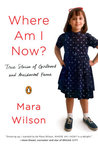
Where Am I Now?
"A former child star maps the universal, disorienting journey from constructed identity to authentic self."
- 1Fame is a costume that never truly fits. Childhood celebrity constructs a public persona that obscures the developing private self, creating a lifelong project of disentanglement and self-discovery beyond the glare of the spotlight.
- 2Grief and anxiety are non-negotiable companions to growth. The early loss of a parent and the pressures of performance forge a psyche where melancholy and acute self-awareness become integral, not pathological, parts of a rich inner life.
- 3Reject the narrative of tragic former stars. Surviving Hollywood's machinery without scandal is an act of quiet rebellion, proving that a fulfilling, ordinary life after fame is a more radical success story than any comeback.
- 4Authenticity is found in specificity, not universality. The most resonant truths emerge from hyper-personal details—a first kiss on a canoe trip, learning about sex on a TV set—grounding existential questions in tangible, lived experience.
- 5Humor is the scalpel for dissecting pain. Crack comic timing and witty observation serve as essential tools for processing trauma, allowing for clear-eyed examination without succumbing to sentimentality or confessional excess.
Mara Wilson’s Where Am I Now? is not a conventional Hollywood memoir. It is a meticulously crafted collection of essays that uses the extraordinary circumstance of being a famous child actor—the star of Matilda and Mrs. Doubtfire—as a lens to examine the universal, often painful, process of constructing an identity. The book begins not with red carpets, but with dislocation: the profound sense of being a perpetual outsider, whether as the only child on an adult film set, a depressive amid cheerleaders, or a neurotic New Yorker in Los Angeles. Wilson establishes her central inquiry: how does one find a true self when the world has already decided who you are?
The narrative body deconstructs the mythology of the child star with unsparing clarity and dry wit. Wilson recounts learning about sex from Melrose Place actors and navigating first kisses on bizarre celebrity outings, framing these as the surreal education that replaced a normal childhood. The essays delve into the core trauma of losing her mother to cancer at a young age, an event that intertwined grief with her public life. She dissects the industry’s brutal economics of "cuteness" and its expiration date, detailing her conscious retreat from acting not as a failure, but as an act of self-preservation. The prose moves seamlessly between the poignant and the hilarious, treating each memory as a specimen to be examined for clues about who she was becoming.
Ultimately, the collection transcends its specific milieu to become a treatise on self-acceptance. Wilson charts her journey through clinical depression, OCD, and the arduous work of building a life defined by writing and storytelling rather than scripted lines. She finds belonging not in fame’s echo chamber, but in the embrace of fellow "weirdos" and the quiet satisfaction of creative control. The book argues that obscurity, when chosen, can be a state of profound freedom.
Where Am I Now? solidifies Wilson’s transition from actress to a significant literary voice, offering a generation that grew up with her films a mature, nuanced narrative of survival and reinvention. Its true subject is the awkward, non-linear work of integration—piecing together a coherent person from the fragments of past selves, public and private, and finally answering the titular question with hard-won authority.
The critical consensus celebrates Wilson’s exceptional candor and literary skill, which transform a niche memoir into a universally relatable document. Readers are disarmed by her precise, witty prose and the profound empathy with which she renders anxiety, grief, and displacement. The primary critique, echoed by a minority, is a desire for deeper excavation of her film career and a more linear narrative structure. Overall, the collection is hailed as a refreshingly honest and insightful departure from salacious celebrity tales, resonating deeply with anyone who has ever felt out of step with the world.
- 1The book's profound resonance for readers who also grew up feeling 'weird' or anxious, regardless of their connection to her films.
- 2Discussions about the ethical treatment of child actors, fueled by Wilson's clear-eyed, non-sensationalist account of industry pressures.
- 3Debate over the narrative structure, with some desiring more Hollywood anecdotes and others praising the thematic, essayistic approach.
- 4Appreciation for her nuanced portrayal of grief and mental health, particularly OCD and depression, which readers find validating and accurately depicted.
The Essays of Warren Buffett: Lessons for Corporate America
Lawrence A. Cunningham, Warren Buffett
Breakthrough: The Quest for Life-Changing Medicines
Dr William Pao
Just Listen: Discover the Secret to Getting Through to Absolutely Anyone
Mark Goulston

Code: The Hidden Language of Computer Hardware and Software
Charles Petzold

The Intelligent Investor
Benjamin Graham
The Norwegian Method
Brad Culp
The Road to Financial Freedom
Bodo Schäfer
The Creative Habit
Twyla Tharp, Mark Reiter
Breath: The New Science of a Lost Art
James Nestor
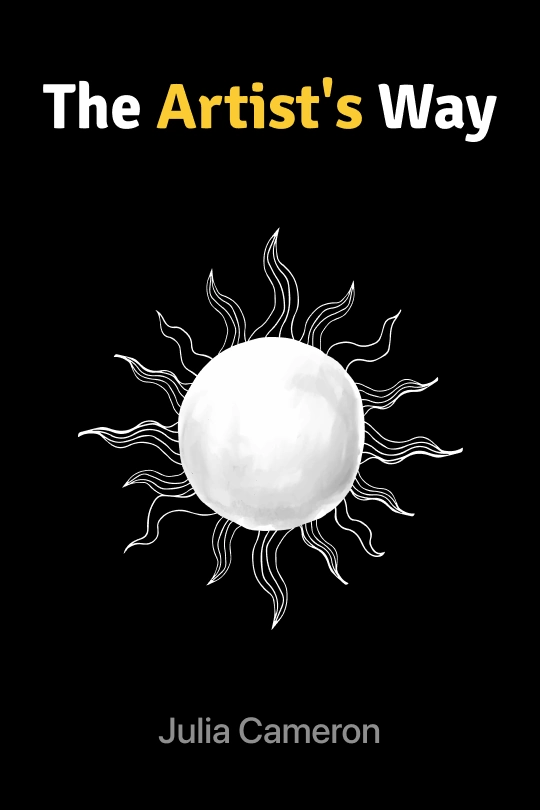
The Artist's Way
Julia Cameron
The Book of Basketball: The NBA According to The Sports Guy
Bill Simmons

Chip War: The Quest to Dominate the World's Most Critical Technology
Chris Miller