
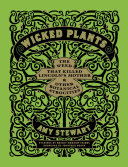
Wicked Plants
"A darkly fascinating field guide to the botanical world's most elegant and efficient killers, lurking in plain sight."
- 1Recognize the deceptive beauty of lethal flora. Many poisonous plants possess alluring flowers or familiar-looking leaves, a camouflage that makes them particularly dangerous to the unsuspecting forager, gardener, or child.
- 2Understand plant toxins as historical actors. Botanical poisons have shaped political assassinations, wars, and personal tragedies, proving that plant biology is inextricably woven into the human narrative.
- 3Cultivate a respectful caution in nature. This book is not an inducement to paranoia but a call for informed vigilance, transforming a simple walk in the garden or woods into a more discerning engagement.
- 4Appreciate the macabre artistry of scientific illustration. The detailed, Gothic etchings serve a crucial pedagogical function, visually encoding the specific morphological features that identify a plant as hazardous.
- 5Decode the taxonomic clues in a plant's Latin name. Learning a plant's scientific binomial is a critical first step in positive identification, separating harmless look-alikes from their deadly botanical cousins.
Amy Stewart’s Wicked Plants is a meticulously researched compendium that reframes the natural world as a gallery of silent, patient assassins. It moves beyond simple field guide taxonomy to explore the intersection of botany, history, and human folly. The book reveals how the plant kingdom, often perceived as passive and decorative, is in fact armed with a sophisticated arsenal of chemical and mechanical weapons designed for defense, predation, and survival.
Organized alphabetically and punctuated by thematic chapters on 'Criminal' plant families, each entry is a compact case study. Stewart provides the plant’s common and Latin names, its geographical origins, and a precise description of its toxic or injurious mechanisms—from cardiac glycosides to neurotoxins and projectile thorns. These clinical details are then vividly animated by historical anecdotes, linking the hemlock that killed Socrates to the castor bean plots of the Cold War and the opium poppies that fueled empires.
The narrative is elevated from mere catalog to cultural history through these stories, illustrating how plants have been deliberate instruments of murder, accidental agents of tragedy, and catalysts for social change. The book’s Gothic sensibility is amplified by Briony Morrow-Cribbs’s intricate and haunting copperplate etchings, which lend the work the aesthetic of a Victorian grimoire, making the sinister elegance of these species visually palpable.
Ultimately, Wicked Plants serves as both a cautionary text and a work of dark celebration. It targets the intellectually curious gardener, the history enthusiast, and the general reader with a taste for the macabre, offering not fear but a profound respect for nature’s dual capacity for beauty and brutality. It leaves the reader with the unsettling yet captivating knowledge that danger in the garden is often cloaked in exquisite form.
The critical consensus celebrates the book's exceptional production value and engaging, macabre premise. Readers are uniformly captivated by the exquisite Gothic illustrations and the compelling fusion of historical anecdote with botanical fact. The primary critique centers on the book's structure, which many find better suited to sporadic browsing than sustained reading, with some entries feeling frustratingly brief. It is widely regarded as a perfect gift book and a superb conversation piece, albeit one with more stylistic depth than encyclopedic thoroughness.
- 1Universal praise for the book's physical design, including its cover, binding ribbon, and particularly the detailed, macabre botanical etchings.
- 2Debate over the book's optimal use: a compelling cover-to-cover read versus a reference tome best enjoyed in short, episodic bursts.
- 3Discussion of the work's balance between entertaining, anecdotal storytelling and a desire for more rigorous scientific or practical detail.
The Art of Contrarian Trading
Carl Futia
The Road to Financial Freedom
Bodo Schäfer
The Artist's Way
Julia Cameron
The Lessons of History
Will Durant

Chip War: The Quest to Dominate the World's Most Critical Technology
Chris Miller
Bad Samaritans
Ha-Joon Chang
How to Win Friends & Influence People
Dale Carnegie
The Essays of Warren Buffett: Lessons for Corporate America
Lawrence A. Cunningham, Warren Buffett
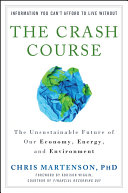
The Crash Course
Chris Martenson
Outliers: The Story of Success
Malcolm Gladwell
Just Listen: Discover the Secret to Getting Through to Absolutely Anyone
Mark Goulston

Code: The Hidden Language of Computer Hardware and Software
Charles Petzold