
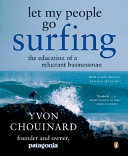
Let My People Go Surfing
"A radical business philosophy proves that environmental stewardship and corporate profitability are not just compatible, but mutually essential."
- 1Define a company's purpose beyond profit. A business must serve a higher mission, such as environmental protection, to guide every decision and create lasting, meaningful impact beyond financial statements.
- 2Build quality to last and reduce consumption. Creating durable, repairable products challenges the throwaway economy, fostering customer loyalty while directly diminishing ecological harm through decreased waste and resource use.
- 3Integrate environmentalism into the corporate DNA. Sustainability cannot be a side project; it must be embedded in material sourcing, manufacturing processes, and supply chain logistics from inception to end-of-life.
- 4Cultivate a workplace that values life outside of it. Flexible policies that allow employees to surf or pursue passions foster immense loyalty, creativity, and productivity, rejecting the burnout culture of conventional corporations.
- 5Lead by example to inspire industry-wide change. Demonstrating the commercial viability of ethical practices provides a tangible blueprint for other businesses, creating a ripple effect that can transform market standards.
- 6Adopt a long-term, patient view of capital and growth. Rejecting quarterly pressures for sustainable, managed growth ensures resilience and aligns the company's future with the planet's long-term health.
Yvon Chouinard’s memoir is less a conventional business history than a philosophical manifesto forged on the anvil of experience. It traces the evolution of Patagonia from a small, blacksmith-forged climbing gear operation into a global exemplar of responsible capitalism. The narrative is anchored in Chouinard’s own journey as a climber and surfer, whose love for the wild places of the earth fundamentally shaped his antipathy towards the destructive norms of industrial production. The book positions Patagonia not as a mere clothing company, but as an experiment in aligning every corporate action with ecological and social integrity.
The core of the text meticulously outlines the company's unique operational philosophy, famously encapsulated in its title. Chouinard details the development of Patagonia's foundational principles—from product design and production to marketing and finance. He explains the rigorous implementation of using organic cotton, recycled polyester, and pioneering fair labor practices, framing each not as a marketing tactic but as a non-negotiable ethical imperative. The methodology is presented as a holistic system where environmental audits, product lifecycle assessments, and a commitment to donating 1% of sales to grassroots activists are standard procedure.
Beyond internal practices, the book delves into the broader activism and thought leadership Patagonia embodies. Chouinard discusses initiatives like the "Don’t Buy This Jacket" campaign, which directly challenged consumerism, and the founding of organizations like 1% for the Planet. This section argues that a corporation’s greatest responsibility is to use its influence to address root causes, even when it means advocating for reduced consumption of its own products.
Ultimately, Let My People Go Surfing serves as a critical case study for entrepreneurs, managers, and citizens disillusioned with the extractive economy. It demonstrates that a business can be a powerful tool for environmental and social regeneration without sacrificing profitability or quality. The book’s enduring legacy is its proof that principled rebellion within the market system is not only possible but necessary, offering a tangible, hopeful model for the future of enterprise.
Readers champion the book as a seminal, persuasive blueprint for conscious capitalism, praising its concrete examples of integrating environmental ethics into profitable operations. The consensus finds Chouinard's philosophy comprehensive and authentically lived, elevating it above mere anecdote. Some critique the early narrative pacing as slow, but the powerful, principled conclusion universally resonates, solidifying its status as an inspiring manifesto rather than a simple corporate biography.
- 1The practical viability of Patagonia's sustainability model as a template for other businesses.
- 2Comparison of Chouinard's comprehensive philosophy to other progressive business leaders like Ricardo Semler.
- 3The book's power to personally convert readers to stronger environmental and conservationist values.
- 4Debate on balancing radical missions like reducing consumption with the realities of corporate growth.

Stumbling on Happiness
Daniel Gilbert

The Intelligent Investor
Benjamin Graham
The Norwegian Method
Brad Culp

Code: The Hidden Language of Computer Hardware and Software
Charles Petzold

The Book of Basketball: The NBA According to The Sports Guy
Bill Simmons
Breath: The New Science of a Lost Art
James Nestor

The Road to Financial Freedom
Bodo Schäfer
The Creative Habit
Twyla Tharp, Mark Reiter

How to Win Friends & Influence People
Dale Carnegie

The Essays of Warren Buffett: Lessons for Corporate America
Lawrence A. Cunningham, Warren Buffett

Permanent Record
Edward Snowden

Breakthrough: The Quest for Life-Changing Medicines
Dr William Pao