
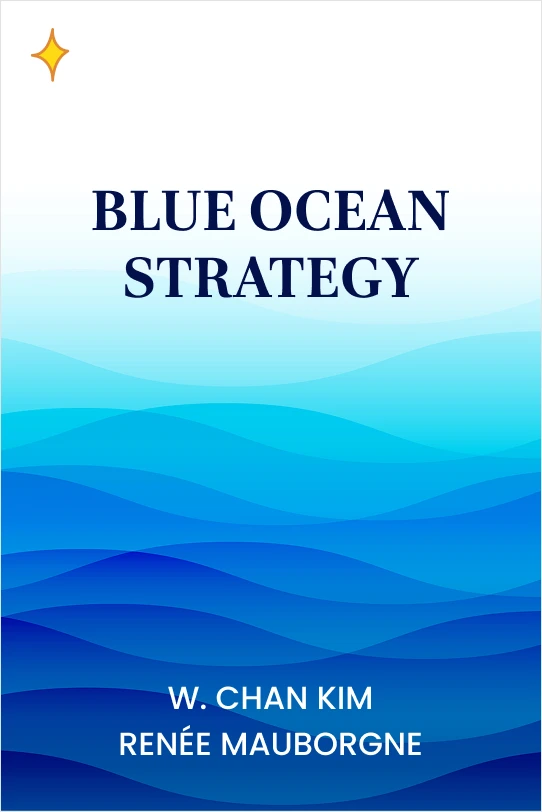
Blue Ocean Strategy: How To Create Uncontested Market Space And Make The Competition Irrelevant
"Escape cutthroat competition by creating and capturing new, uncontested market spaces where demand is generated, not fought over."
Nook Talks
- 1[object Object]
- 2[object Object]
- 3[object Object]
- 4[object Object]
- 5[object Object]
- 6[object Object]
Blue Ocean Strategy presents a fundamental reconceptualization of competitive strategy, arguing that enduring success lies not in battling rivals in saturated, bloody "red oceans," but in creating "blue oceans" of uncontested market space. The book positions itself as a direct challenge to the competition-centric dogma of traditional strategic thought, proposing a systematic framework for rendering competition irrelevant by making it orthogonal to a company's success.
The methodology is anchored in the concept of "value innovation"—the simultaneous pursuit of differentiation and low cost. To achieve this, the authors introduce analytical tools like the Strategy Canvas, which visually maps the current competitive landscape, and the Four Actions Framework, a disciplined process for reconstructing market boundaries. This framework forces managers to ask which factors can be eliminated, reduced, raised, or created to break the industry's accepted value-cost trade-off and open new demand.
Illustrated with a series of compelling case studies—from Cirque du Soleil's reinvention of the circus to Yellow Tail wine's democratization of a complex market—the book demonstrates how strategic moves, rather than a company's inherent resources or its industry's conditions, are the primary drivers of market creation and high performance. These moves systematically appeal to "non-customers" and align a company's entire activity system to support the new value proposition.
More than a tactical playbook, Blue Ocean Strategy offers a paradigm shift in strategic thinking. Its principles provide a structured, repeatable process for leaders across industries—from startups to large corporations—to shift from a mindset of benchmarking and outperforming rivals to one of market creation and value innovation, thereby charting a path to profitable growth that is both defensible and sustainable.
The critical consensus positions the book as a seminal and powerfully intuitive strategic framework, praised for its compelling core metaphor and actionable tools like the Four Actions Framework. However, a significant contingent of readers finds the execution repetitive and padded, arguing that the central thesis could be effectively distilled into a long-form article. Others critique the case studies as retrospectively obvious or difficult to replicate, questioning the practical ease of discovering a true blue ocean in established industries.
- 1The repetitive nature of the book's exposition, with many arguing the core concept is stretched thin across excessive pages.
- 2Debate over the practicality and replicability of the strategy outside the book's curated, retrospective case studies.
- 3The perceived gap between the elegant theoretical framework and the immense difficulty of its real-world execution and organizational adoption.

Breakthrough: The Quest for Life-Changing Medicines
Dr William Pao
The Crash Course
Chris Martenson

Bad Samaritans
Ha-Joon Chang

Permanent Record
Edward Snowden
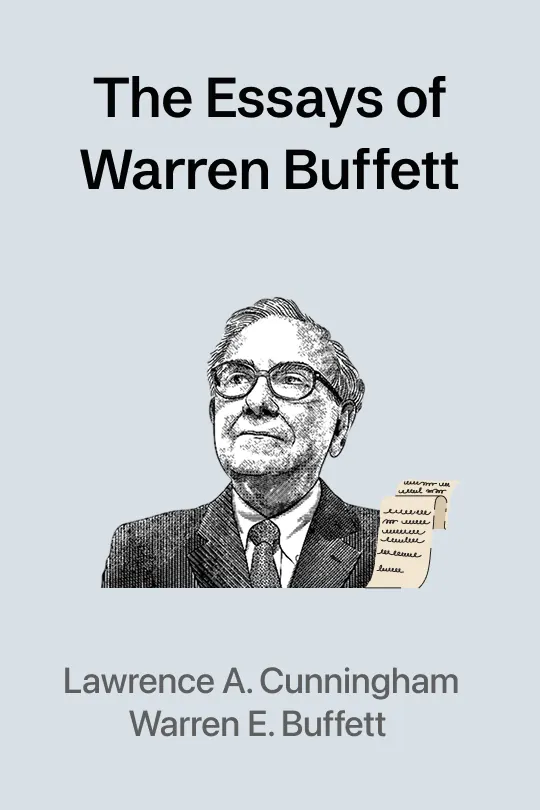
The Essays of Warren Buffett: Lessons for Corporate America
Lawrence A. Cunningham, Warren Buffett

Just Listen: Discover the Secret to Getting Through to Absolutely Anyone
Mark Goulston

The Road to Financial Freedom
Bodo Schäfer

Sapiens: A Brief History of Humankind
Yuval Noah Harari

The Artist's Way
Julia Cameron
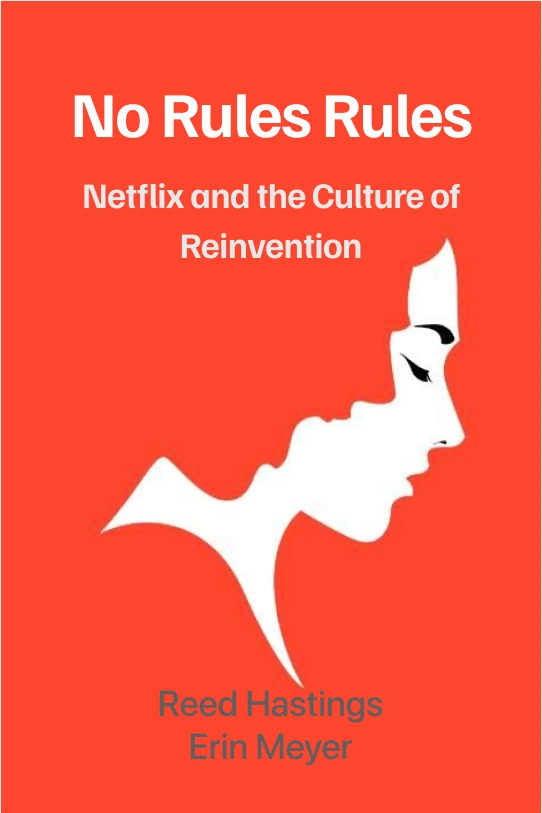
No Rules Rules: Netflix and the Culture of Reinvention
Reed Hastings, Erin Meyer

The Creative Habit
Twyla Tharp, Mark Reiter

The Almanack of Naval Ravikant
Naval Ravikant, Eric Jorgenson