

The Most Important Thing: Uncommon Sense for the Thoughtful Investor
"Master the psychological and analytical second-level thinking required to navigate market cycles and avoid catastrophic errors."
- 1[object Object]
- 2[object Object]
- 3[object Object]
- 4[object Object]
- 5[object Object]
- 6[object Object]
Howard Marks’s The Most Important Thing distills a legendary investment career into a philosophical framework for navigating uncertainty. It moves beyond formulas and ratios to address the essential, non-quantifiable elements of the craft: psychology, market cycles, and the nuanced judgment required to consistently separate price from value. The book is structured as a series of insightful memos, the very tool Marks used to communicate with Oaktree Capital’s clients, offering a rare glimpse into the real-time thought process of a master investor.
At its core is the concept of “second-level thinking,” a rigorous, counterintuitive mode of analysis that asks not just “Is this a good company?” but “How is this company better than the consensus believes, and how might that consensus be wrong?” This intellectual discipline is applied to understanding market cycles, which Marks portrays not as mechanical patterns but as inevitable oscillations driven by swings in psychology between fear and greed. The investor’s task is to recognize these extremes and act with contrarian resolve.
The book meticulously explores the interdependent pillars of a successful investment philosophy. Marks argues that while assessing intrinsic value is critical, controlling risk is paramount; the avoidance of permanent loss takes precedence over the pursuit of gain. He champions patient opportunism—the ability to hold capital in reserve until the rare moment when price and value are radically misaligned. This defensive, probability-based approach acknowledges the fundamental uncertainty of markets and the humbling reality that much of the future is unknowable.
More than a manual on security analysis, this work is a treatise on critical thinking under conditions of imperfect information. Its significance lies in its synthesis of timeless value-investing principles with a profound understanding of behavioral economics. It speaks directly to the thoughtful investor—amateur or professional—seeking not a checklist of rules, but a durable mental model for making better decisions when it matters most.
The consensus positions this as an essential text on investment philosophy rather than tactical advice. Readers praise its profound insights into market psychology, risk, and second-level thinking, finding it intellectually transformative. Criticisms focus on its perceived lack of actionable, technical guidance for retail investors and its occasionally repetitive, memoir-like style, which some feel dilutes its instructional punch. It is broadly regarded as challenging but invaluable for developing a sophisticated investor mindset.
- 1The practical utility of its high-level philosophical advice for everyday, non-professional retail investors.
- 2The clarity and transformative power of the core concept of 'second-level thinking' in analyzing investments.
- 3Debate over whether the content is profound wisdom or a repetition of basic, obvious investment principles.
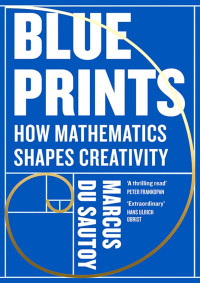
Blueprints: How mathematics shapes creativity
Marcus du Sautoy

The Road to Financial Freedom
Bodo Schäfer

The Norwegian Method
Brad Culp
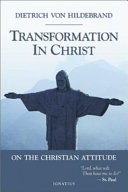
Transformation in Christ
Dietrich Von Hildebrand
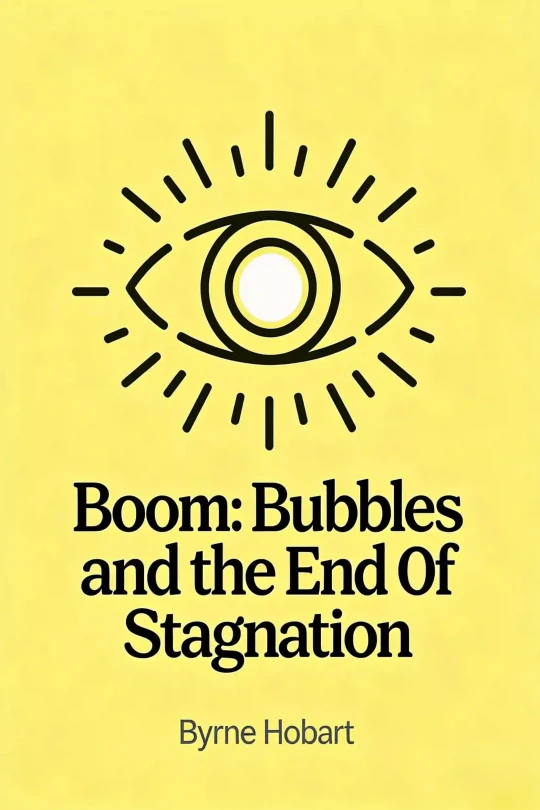
Boom: Bubbles and the End of Stagnation
Byrne Hobart

Breakthrough: The Quest for Life-Changing Medicines
Dr William Pao

Code: The Hidden Language of Computer Hardware and Software
Charles Petzold

The Psychology of Money: Timeless Lessons on Wealth, Greed, and Happiness
Morgan Housel
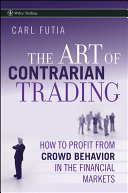
The Art of Contrarian Trading
Carl Futia

Out of Control
Kevin Kelly

The Almanack of Naval Ravikant
Naval Ravikant, Eric Jorgenson
The Crash Course
Chris Martenson