
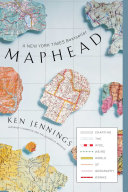
Maphead: Charting the Wide, Weird World of Geography Wonks
"A revelatory journey into the obsessive minds who find meaning, adventure, and identity in the contours of our mapped world."
- 1[object Object]
- 2[object Object]
- 3[object Object]
- 4[object Object]
- 5[object Object]
- 6[object Object]
Ken Jennings, famed for his Jeopardy! prowess, turns his erudite and empathetic curiosity toward his own lifelong passion: an unabashed love for maps. Maphead ventures beyond the simple utility of cartography to explore the vibrant subculture of those for whom maps are objects of obsession, beauty, and profound personal significance. Jennings posits that in an age of turn-by-turn navigation and geographic illiteracy, these "mapheads" are the last guardians of a deeper, more intimate relationship with the physical world.
Through a series of engaging reportorial chapters, Jennings profiles the diverse tribes within this demimonde. He meets high-stakes collectors hunting priceless antique atlases, "roadgeeks" who meticulously document highway interchange designs, and modern-day treasure hunters engaged in the global game of geocaching. He delves into the intense world of National Geographic Bee prodigies and the cartographers behind digital platforms who are reshaping how we perceive space. The narrative also explores the human impulse to map not just the real, but the imagined, analyzing the detailed geographies of fantasy novels and science fiction franchises.
The book is framed by a blend of memoir, history, and social commentary. Jennings traces the evolution of mapmaking from ancient clay tablets to Google Earth, arguing that each technological shift changed not only what we know about the world, but how we think about our place within it. He examines the paradox that today’s perfect, ubiquitous digital maps may be making us less spatially intelligent, less likely to get gloriously lost, and less connected to the stories embedded in the landscape. The work is ultimately a defense of deep, idiosyncratic expertise and the joy of knowing places not as abstract points, but as layered contexts of history, culture, and personal experience.
Maphead serves as both a celebration and a gentle elegy. It is essential reading for anyone who has ever traced a route with their finger on a paper map or felt the thrill of placing themselves on a grander grid. It argues persuasively that in outsourcing our sense of place to algorithms, we risk losing a fundamental dimension of human curiosity and a vital tool for understanding the interconnectedness of our world.
The consensus celebrates the book as a witty, affectionate, and validating tribute to a niche passion. Readers, particularly self-identified map enthusiasts, feel deeply seen and enjoy Jennings's accessible, humorous prose. The primary critique is a lack of cohesive depth; the book is perceived as a charming series of vignettes rather than a sustained argument, leaving some desiring more analytical heft or a sharper thesis about cartography's cultural role.
- 1The relatable nostalgia of childhood map obsession, with many readers sharing personal stories of atlases and National Geographic maps.
- 2Debate over whether the book's structure is engagingly eclectic or frustratingly scattered, lacking a unifying narrative thread.
- 3Appreciation for the chapters on geocaching and fantasy mapmaking as particularly vivid entries into specific subcultures.
- 4Reflections on how GPS technology has eroded personal navigation skills and changed our fundamental relationship with physical space.
The Essays of Warren Buffett: Lessons for Corporate America
Lawrence A. Cunningham, Warren Buffett

The Intelligent Investor
Benjamin Graham
Stumbling on Happiness
Daniel Gilbert
The Almanack of Naval Ravikant
Naval Ravikant, Eric Jorgenson
Sapiens: A Brief History of Humankind
Yuval Noah Harari
Radical Markets: Uprooting Capitalism and Democracy for a Just Society
Eric A. Posner, E. Glen Weyl
Amusing Ourselves to Death: Public Discourse in the Age of Show Business
Neil Postman
Out of Control
Kevin Kelly
The Artist's Way
Julia Cameron
Code: The Hidden Language of Computer Hardware and Software
Charles Petzold
Bad Samaritans
Ha-Joon Chang
The Lessons of History
Will Durant